Was Goliath a Nephilim? On explicit biblical grounds, no. Scripture presents him as a giant warrior from Gath, tied to a clan descended from Rapha, not as an angel-human hybrid or direct child of the Genesis 6 Nephilim.
The more useful question is why the confusion exists at all.
Goliath stands downstream from a web of biblical giant language—Nephilim, Anakim, Rephaim, Rapha—and House of David blends that biblical material with later Jewish tradition. The show is at its best when it sends viewers back to Scripture, and at its weakest when viewers mistake its legend-making for biblical genealogy.
No: the Bible calls Goliath a giant from Gath, not a Nephilim
The word “Nephilim” appears only twice in the Hebrew Bible: Genesis 6:4 and Numbers 13:33. That already limits what we can say with confidence.
Nephilim, Anakim, Rephaim, Goliath, Watchers: a quick map
| Term or figure | Where it belongs | Careful conclusion |
|---|---|---|
| Nephilim | Genesis 6; Numbers 13 | Pre-Flood group in Genesis; later invoked by fearful spies as a giant-warrior category |
| Anakim | Numbers, Deuteronomy, Joshua | Tall Canaanite peoples associated by the spies with Nephilim |
| Rephaim / Rapha | Deuteronomy 2–3; 2 Samuel 21; 1 Chronicles 20 | Giant-clan language connected with Og and the warriors of Gath |
| Goliath | 1 Samuel 17; 2 Samuel 21; 1 Chronicles 20 | Philistine champion from Gath; connected with Rapha’s giant clan; never called Nephilim |
| Watchers | Second Temple literature such as 1 Enoch | Angelic rebels in later Jewish retellings of Genesis 6; useful background, not biblical terminology |
Genesis places the Nephilim in the pre-Flood world, in connection with the “sons of God” and the “daughters of men.” It does not define the word in detail, and it does not mention Goliath, Gath, Philistines, Rapha, or David.
The only other use comes from the frightened spies in Numbers 13. That matters for Goliath because Numbers 13 is not God giving Israel a technical genealogy of Canaanite giants. It is Israel’s spies interpreting terrifying enemies through the memory of an older, darker category.
“The connection between the Anakim and the Nephilim is made—but it comes from the lips of terrified spies, not a definitive statement from God or Moses. It suggests that the term ‘Nephilim’ may have become a kind of shorthand for extraordinary warriors—an archetype lodged in the cultural memory, rather than a strict genetic claim.”
That reading leaves room for the word “Nephilim” to carry real symbolic weight after the Flood without forcing every later giant into a literal angel-human bloodline.
“In short, ‘Nephilim’ might have evolved into a semi-technical term for larger-than-life figures—much like we call real-life heroes ‘superheroes’ today without claiming they have actual superpowers. It carried overtones of size, ferocity, and mystery.”
This is where many modern debates go wrong. They treat “Nephilim” as though it must always be a genetic label. But Numbers 13 gives us a plausible biblical example of the term functioning as memory, fear, and archetype.

Goliath in 1 Samuel 17
First Samuel 17 introduces Goliath as a Philistine champion from Gath. The text emphasizes his height, armor, weaponry, and intimidation.
What the chapter never does is call him a Nephilim. The battle is framed theologically, not biologically. Goliath’s size is real, but the point of the chapter is the Lord’s victory over the proud enemy of Israel.
Rapha and the giant clan of Gath
To trace Goliath’s family line, the clearer texts are the giant-war notices at the end of David’s life. Second Samuel 21 and 1 Chronicles 20 describe other Philistine giants from Gath and connect them to Rapha.
First Chronicles 20 also mentions Lahmi, the brother of Goliath the Gittite, and another giant with six fingers on each hand and six toes on each foot. These texts put Goliath in a recognizable giant clan from Gath. The Hebrew behind “giants” is connected with Rapha or the Rephaim, a term used elsewhere for formidable ancient peoples such as Og of Bashan.
The distinction is simple but important:
“Nowhere in Scripture is Goliath explicitly called a Nephilim. As discussed earlier, Goliath is described as a descendant of Rapha in Gath (2 Samuel 21), part of a clan of giants, but the term Nephilim is never applied to him.”
GotQuestions.org reaches a similar caution in its article “Was Goliath a Nephilim?”:
“Goliath was very likely not the offspring of humans and angels, and he is never called a Nephilim; however, he was a fierce, gigantic warrior and might have been described, in the parlance of the Philistines or Israelites, as a ‘modern-day Nephilim.’”
That is the cleanest biblical answer: Goliath may resemble what people feared when they said “Nephilim,” but Scripture identifies him by Gath, Philistine warfare, and Rapha/Rephaim giant-clan language.
Why Genesis 6 still matters
Rejecting the claim that Goliath is biblically called a Nephilim does not make Genesis 6 ordinary. The older Jewish and Christian reading understood the “sons of God” as heavenly beings, not merely righteous Sethite men marrying women from Cain’s line. I think that older supernatural reading best fits the text.
The reasons are textual. The phrase bene elohim, “sons of God,” refers elsewhere in the Old Testament to heavenly beings in God’s court, especially in Job 1:6 and Job 38:7. Genesis 6 also distinguishes “sons of God” from “daughters of men,” not one human family line from another. Then the narrative moves quickly toward the Flood, a judgment of extraordinary scope.
The argument can be put this way:
“The language of Genesis 6 itself strongly supports a supernatural reading:
• Bene Elohim is consistently used elsewhere (Job 1:6; Job 38:7) to refer to angelic beings.
• The lack of qualification in Genesis—treating ‘sons of God’ and ‘daughters of men’ as distinct categories—suggests an extraordinary, not mundane, event.
• The rapid shift to divine judgment through the Flood shows how severe this corruption was.”
That does not make every detail of later tradition automatically biblical. It does mean the Sethite interpretation is not the strongest reading of Genesis 6 in my view. Augustine and later Christian interpreters had reasons for preferring it, especially discomfort with the idea of angelic beings crossing boundaries with human women. But discomfort is not exegesis. The grammar and early interpretive history both lean strongly toward a supernatural rebellion.
Second Temple literature then expands that rebellion in vivid detail. In 1 Enoch especially, the angelic rebels become the Watchers. They descend, make a pact, take wives, teach forbidden knowledge, and father giants whose violence fills the earth. Jubilees also develops angelic material around the early world, though not always in the same way. These writings help explain the interpretive world around passages like Jude 6 and 2 Peter 2:4, where sinning angels are kept for judgment.
But they remain background. They are not the controlling authority. Scripture gives the doctrine; Second Temple literature gives context and reception history. That distinction lets us affirm a supernatural Genesis 6 without importing every Enochic detail into the Bible—or into Goliath’s family tree.
What House of David gets right—and where it turns Scripture into legend
Goliath’s story is one of the Bible’s clearest giant narratives and one of its most misunderstood.
When House of David has Orpah tell her son he is “the last of the Nephilim,” it taps straight into that confusion.
House of David leans heavily on the Genesis 6, Watchers, and Nephilim tradition. It echoes heavenly rebellion, draws from 1 Enoch-like imagery, mixes in throne-rebellion and apocalyptic motifs, and places Goliath inside that mythic atmosphere.
The key scene is Orpah telling Goliath he is “the last of the Nephilim.” Heard carelessly, that sounds like the show is asserting a hard biological claim: Goliath descends directly from pre-Flood angel-human hybrids. But the scene is framed through Orpah, not through an omniscient narrator.
“But it’s important to notice: this is the voice of Goliath’s mother, Orpah, not an omniscient narrator. She is telling Goliath a story—a powerful story that gives him a mythic identity whether or not it’s true.
The show isn’t asserting that Goliath is truly of Nephilim descent. Instead, it shows that his mother wants him to believe he is, to instill pride, legacy, defiance, and perhaps a sense of destiny against Israel’s God.”
That is the right way to read the moment. Orpah is shaping her son’s identity. Her speech belongs to Philistine memory, family mythology, and spiritual defiance. It may explain something about Goliath’s pride, but it does not prove anything certain about his ancestry.
When Watchers traditions help—and when they blur lines
The show deserves credit for taking Genesis 6 seriously enough to make viewers ask hard questions. It does not treat the Old Testament as flat moralism. It senses that David and Goliath belongs inside a larger biblical world of unseen powers, rebellion, giants, covenant, and judgment.
Still, House of David compresses material that Scripture keeps distinct. Genesis 6’s “sons of God,” 1 Enoch’s Watchers, Isaiah 14-style throne rebellion, Revelation 12-style dragon imagery, and Goliath’s later Philistine identity are woven into one dramatic sequence. As television, the fusion has force. As exegesis, it can mislead. No single biblical chapter says all of that at once.
The largest liberty: omitting the Flood
The show’s biggest problem is not that it uses Watchers tradition. It is that it uses Watchers and Nephilim material while largely omitting the Flood. In Genesis 6–9, the Flood is God’s direct judgment on the corruption of the earth. In 1 Enoch, the Flood is also bound to the violence of the giants and the punishment of the rebel angels.
“One of the most glaring omissions is the Flood. Genesis 6–9 portrays the Flood as God’s primary judgment on the earth’s corruption, wiping out all inhabitants except for those on the Ark and cleansing creation.
The Book of Enoch also connects the Flood directly to the violence caused by the giants.
In House of David, however, the punishment focuses entirely on the angels’ banishment to ‘eternal darkness,’ leaving out the Flood altogether, with the idea that the Nephilim somehow were able to survive and continue ‘begetting’ more of their kind.”
Once the Flood drops out, an unbroken Nephilim bloodline becomes easier to imagine. That is exactly where viewers need caution. Scripture gives us pre-Flood Nephilim, post-Flood giants, and a fearful spy report invoking Nephilim language. It does not give us a continuous family tree from Genesis 6 to Goliath.
Synthesis vs. Scripture: a comparison grid
| Layer | What it contributes | Boundary to keep |
|---|---|---|
| Genesis 6 | Sons of God, daughters of men, Nephilim, and judgment leading into the Flood | Authoritative but sparse; does not name Watchers or Goliath |
| Numbers 13 | Spies link Anakim with Nephilim language | Human fear-report, not God’s direct genealogy |
| 1 Enoch and Jubilees | Watchers traditions, giant violence, and Flood judgment in later Jewish interpretation | Ancient context and reception history, not Scripture |
| House of David | Fuses Genesis 6, Enochic material, and apocalyptic imagery around Goliath | Dramatic storytelling, not a Bible commentary |
| Careful conclusion | Affirms supernatural Genesis 6 and real giant clans such as Rapha | Does not turn Orpah’s legend into biblical genealogy |
My overall judgment on the show is still appreciative:
“I think House of David handled it about as well as one could hope for in a modern production.
• They made it clear that the story was a legend being passed down, not a dogmatic retelling of events.
• They drew from ancient extra-biblical sources without going overboard and didn’t invent entirely new mythology out of thin air.
• They allowed for an unreliable narrator that we aren’t meant to trust fully.”
That balance matters. A dramatization can stir interest in neglected biblical passages. It can also train viewers to remember scenes the Bible never contains. The remedy is not panic; it is disciplined reading.
What remains uncertain

Scripture never gives us a biological chart for Goliath. It tells us he is from Gath, a Philistine champion, exceptionally large, and connected with Rapha’s giant clan. It does not explain the mechanism behind that clan’s size. A natural human giant lineage is the safest conclusion, but the text does not satisfy modern curiosity about DNA.
Scripture also leaves open how the memory of the Nephilim functioned after the Flood. Numbers 13 may preserve a genuine cultural category for terrifying giant-warriors. It may also show how fear magnifies enemies through ancient memory. Either way, the word’s appearance there does not authorize us to relabel Goliath.
Second Temple literature may preserve old echoes, and it certainly preserves ancient interpretation. But even when the New Testament alludes to that world, it does not make 1 Enoch or Jubilees the measure of biblical truth. They can illuminate the background; they cannot override Moses, Samuel, Chronicles, or the apostles.
House of David operates in that same boundary zone, but at an even greater distance. It is not ancient reception history. It is modern biblical drama, using Scripture, tradition, and imagination to build a character world. That can be fruitful if viewers return to the text. It becomes dangerous only when the drama starts carrying more authority than Scripture.
Conclusion: read Goliath biblically, and let the legend stay legend
Takeaway one: do not call Goliath a Nephilim as though Scripture says it. The Bible calls him a Philistine champion from Gath and connects his family with Rapha/Rephaim giant-clan language.
Takeaway two: keep Genesis 6 supernatural without making every later giant a genetic Nephilim. The “sons of God” reading has strong textual and ancient support, but Goliath’s passages do not apply that label to him.
Takeaway three: enjoy House of David as drama, not doctrine. Orpah’s “last of the Nephilim” line works as legend, identity, and defiance. It should not become a new biblical fact.
Takeaway four: keep the larger battle in view. David’s victory is not finally about ancient DNA; it is about the living God defeating the proud enemies of his people. Scripture presents Christ as the one who fully defeats the powers of darkness, including the rulers and authorities put to open shame in Colossians 2:15.
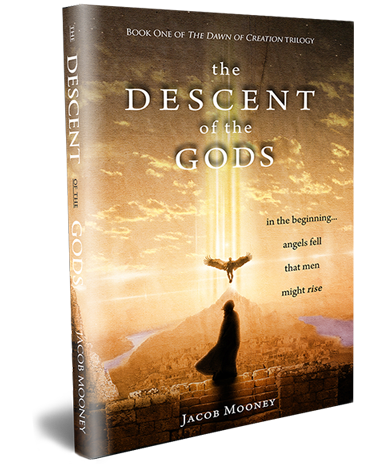
Jake Mooney is a lay researcher and the author of the novel The Descent of the Gods, with 25+ years studying Genesis 6. Chasing the Giants is where he brings Bible-first research together on the topic to help separate what we can really believe vs what is purely sensationalism.
This study worked from the biblical texts on Goliath, Rapha/Rephaim, and the Nephilim, then compared those texts with early Jewish interpretation and a modern dramatization. The method was simple: let Scripture set the boundaries, use tradition as context, and mark speculation as speculation.
If you’d like to keep following Bible-first research on giants, the Nephilim, and the unseen realm, consider subscribing to the free monthly Chasing the Giants newsletter.