Genesis 6:1–4 has been interpreted through several very different frameworks because readers disagree over the “sons of God,” the Nephilim, and the kind of corruption that makes the Flood morally necessary. The strongest overall reading appears to be the angelic or Watchers model: it fits the Old Testament’s divine-council language and the earliest Jewish and Christian reception. But the other models matter because they show the real fault line: some locate evil in an incursion from beyond ordinary humanity, while others explain the crisis through human marriage, kingship, ideology, or later speculation.
Genesis 6:1–4 is not a side curiosity. In the ESV, the passage says:
When man began to multiply on the face of the land and daughters were born to them, the sons of God saw that the daughters of man were attractive. And they took as their wives any they chose. Then the Lord said, “My Spirit shall not abide in man forever, for he is flesh: his days shall be 120 years.” The Nephilim were on the earth in those days, and also afterward, when the sons of God came in to the daughters of man and they bore children to them. These were the mighty men who were of old, the men of renown. (Genesis 6:1–4, ESV)
The most useful way to organize these approaches is to ask where each one locates the corruption: does Genesis 6 describe a breach into human history from beyond ordinary humanity, or a collapse within human society? The question matters because Genesis 6:1–4 stands between the antediluvian genealogies and God’s declaration of judgment, making it an important hinge in the Primeval History.
Three terms need to stay clear. “Sons of God” translates the Hebrew bene ha-elohim. “Nephilim” names the figures in Genesis 6:4, although interpreters disagree over their identity and relationship to the “mighty men.” “Watchers” is a Second Temple Jewish label, especially prominent in 1 Enoch and Jubilees. Those writings preserve important reception history, but their expanded story should not be silently read back into every detail of Genesis.
Seven Readings of Genesis 6:1–4

| Model | Sons of God in the model | Nephilim in the model | Main crisis |
|---|---|---|---|
| Angelic / Watchers | Heavenly beings | Hybrid or giant offspring | Cosmic boundary breach |
| Sethite–Cainite | Seth’s covenant line | Violent human apostates | Mixed marriages and moral collapse |
| Dynastic / royal | Kings and nobles claiming divine status | Royal warrior elites | Abusive power and polygamous tyranny |
| Demonic possession | Demonized human rulers or men | Humans under intense demonic influence, or abnormal progeny in some versions | Spiritual powers corrupt human structures |
| Mesopotamian Apkallu | Recast semi-divine culture heroes or divine sages | Demythologized mighty figures or tyrants | Israel subverts surrounding myths |
| Gnostic archontic | Hostile archons | Products or agents of archontic corruption | Genesis is inverted into Gnostic myth |
| Ancient astronaut | Extraterrestrials in the model’s claim | Engineered human-alien hybrids in the model’s claim | Technology replaces theology |
This comparison does not make the seven options equally grounded. It shows what each model must assume about unseen beings, human society, ancient myth, and biblical authority.
The Angelic or Watchers Reading

The angelic model reads Genesis 6 as a real crossing of the heaven-earth boundary. On this reading, bene ha-elohim refers to heavenly beings who leave their proper domain and take human women. The developed Watchers story in 1 Enoch adds names, motives, forbidden arts, and punishments, but those later details must be distinguished from the shorter account in Genesis itself.
That reading gives bene ha-elohim the same basic sense it carries in Job 1–2 and Job 38, where the phrase refers to heavenly beings appearing before God. Other passages, including Psalms 29 and 89, are also used in support of divine-council language, though interpreters debate how closely each text maps onto Genesis 6.
Within this framework, the Nephilim are commonly understood as the unusual offspring associated with the union, often described as giants or supernatural-human hybrids. Genesis itself, however, does not give a biological explanation or explicitly state in one sentence that the Nephilim are the offspring. What it does say is that they were present in the period when the sons of God went in to the daughters of humanity and that the resulting figures were remembered as “mighty men” and “men of renown.”
This reading does not rest on Genesis alone. Second Peter 2:4–5 places sinning angels beside the Flood generation. Jude 6–7 describes angels who “did not stay within their own position of authority” and then compares the surrounding pattern with sexual transgression. Those passages do not make 1 Enoch Scripture, but they help explain why early readers connected Genesis 6 with angelic rebellion.
Historically, that matters. The Genesis 6 interpretation timeline shows that supernatural readings are prominent in Second Temple Jewish literature and among several early Christian writers, including Philo, Josephus, Justin Martyr, Irenaeus, Clement of Alexandria, and Tertullian. Human-only readings became increasingly influential later. The evidence is more complicated than a single clean handoff, however, so claims about what “all” early readers believed should be avoided.
A careful Watchers reading still needs restraint. 1 Enoch, Jubilees, and related traditions can illuminate early reception, but they cannot define doctrine. Modern claims about secret bloodlines, genetic manipulation, or end-times conspiracies go far beyond Genesis 6. The strongest form of the angelic model is therefore supernatural but disciplined: it lets the text be strange without handing control to speculation.
The Human-Only Readings: Sethites and Kings

The Sethite model keeps every actor human. In this reading, the “sons of God” are men from Seth’s line, while the “daughters of men” are women associated with Cain’s line. The sin is covenant compromise through spiritually destructive marriage. This approach became highly influential in later Christianity, although the date and development of the Sethite interpretation remain important historical questions.
The attraction is understandable. Scripture elsewhere calls God’s people his sons, and the Bible repeatedly warns against marriage that pulls the covenant community into idolatry. The model also avoids the difficulty of angelic sexuality. Historically, it became influential through Julius Africanus, Chrysostom, Cyril of Alexandria, Augustine, and later medieval and Reformation interpreters.
Its weakness is textual. Genesis has not called Sethites “sons of God,” and “daughters of men” sounds like human women generally, not a clear coded reference to Cainite women. The model also has to explain why ordinary covenant compromise produces such an abrupt narrative shock immediately before the Flood.
The dynastic or royal model is also human-only, but it focuses on power. It understands the “sons of God” as kings, nobles, or rulers who claimed divine status or privilege, took women at will, and produced a violent warrior elite. The “men of renown” can then be read as royal propaganda viewed from the Bible’s more critical perspective.
This reading fits a major biblical theme: rulers who claim godlike privilege become violent oppressors. It also connects naturally with ancient Near Eastern royal ideology, where kings could be portrayed as sons of gods. The phrase “men of renown” then may sound like royal propaganda turned inside out.
Still, the dynastic model faces the same pressure as the Sethite view. It must move bene ha-elohim away from its divine-council usage, and it must make royal abuse explain the extremity of Genesis 6. It captures real biblical concerns about power, but it does not explain the passage’s otherworldly strangeness as well as the angelic reading does.
Later Reuses: Demons, Apkallu, Archons, and Aliens
Demonic Possession
The demonic-possession model tries to retain a supernatural cause while avoiding a direct union between heavenly beings and women. It treats the visible actors as human men—often rulers—whose actions are dominated or commandeered by demonic powers.
Here, the “sons of God” are human men, often rulers, who are possessed or dominated by demonic powers. Their marriages are human marriages, but spiritually commandeered. This model can draw on biblical patterns of demonic influence, such as Satan entering Judas in Luke 22:3 and John 13:27, or the powers behind worldly structures in Ephesians 6:12.
The problem is that Genesis 6 does not speak of possession. It says the “sons of God” took wives. The demonic-possession model may be theologically cautious, but it is one step removed from the wording of the passage.
Mesopotamian Apkallu Polemic
The Mesopotamian model reads Genesis 6 against the wider world of ancient Near Eastern myth, especially traditions about antediluvian sages, culture bringers, and semi-divine heroes.
The comparison is often made with the apkallu, Mesopotamian sages associated with primeval wisdom and civilization. Amar Annus argues that Jewish Watcher traditions inverted aspects of this lore, turning celebrated culture bringers into rebels whose knowledge corrupted humanity. That proposal is best treated as a comparison with the developed Watchers tradition rather than proof that Genesis 6 simply copied an apkallu story. See the fuller review, Where Did the Watchers Come From?
This is strongest as a layer of context, not as a full replacement for exegesis. Genesis may be answering cultures that celebrated semi-divine sages, giant kings, and civilization-bringers. Scripture’s counterclaim is that such figures belong inside the story of corruption, not glory. But the polemical function does not by itself settle whether the “sons of God” are heavenly beings or human rulers.
Gnostic Archontic Inversion
The Gnostic model is not an original reading of Genesis 6 but a later inversion of it. In texts such as the Apocryphon of John, hostile archons occupy the role of corrupting heavenly rulers within a larger myth in which the material creator is treated as ignorant or hostile.
In that cosmology, Genesis traditions are retold so that the archons assault spiritually significant women and the Flood is recast as an attack by the demiurge. This is a dramatic reuse of biblical material, not an interpretation controlled by Genesis in its Hebrew literary setting.
As reception history, this is useful. It shows how Genesis 6 was repurposed in later non-biblical systems. As Christian interpretation, it fails at the foundation: it overturns the Old Testament’s portrayal of the LORD as righteous Creator and Judge.
Ancient Astronaut
The ancient-astronaut model is modern speculation dressed in ancient language. It recasts Genesis 6 as a memory of extraterrestrial contact, biological intervention, and advanced technology, replacing the passage’s theological and moral categories with a modern technological story.
In this view, the “sons of God” become extraterrestrials, the Nephilim become engineered hybrids, and the Flood becomes a catastrophe or reset rather than divine judgment. The model appeals to a culture fascinated by UFOs, genetic engineering, and lost technology, but it does not arise from Genesis’s own theological categories, Second Temple Jewish interpretation, or early Christian reception. It replaces theology with science-fiction categories.
What We Can Say with Confidence

Genesis 6:1–4 leaves real questions open. A disciplined reading should distinguish what the text strongly supports from what remains debated or speculative.
| Confidence level | Claim | Reason |
|---|---|---|
| High | Genesis 6:1–4 is tied to the Flood’s moral crisis. | It immediately precedes God’s judgment declaration and the Flood narrative. |
| High | The models divide over the source of corruption. | Some locate evil beyond ordinary humanity; others keep it within human society. |
| Probable | The angelic reading is earliest and strongest overall. | It fits divine-council language and early Jewish-Christian reception. |
| Debated | The exact nature of the Nephilim. | Genesis names them but does not fully define their origin or biology. |
| Debated | The Sethite and royal readings explain real biblical themes. | They account for covenant compromise and abusive power, but strain the phrase “sons of God.” |
| Low value for original meaning | Gnostic and ancient-astronaut models are better treated as later reception than as guides to Genesis. | They impose later systems that reshape God, creation, and judgment. |
| Unsupported | Using non-canonical expansions or alien theories as doctrine. | Historical witnesses and modern speculation are not Scripture. |
The key boundary is simple: Scripture sets the terms. Second Temple Jewish writings and church history help us see how Genesis 6 was understood, but they do not become the rule of faith. Modern theories may be interesting as cultural reception, but they must not be allowed to rewrite the passage.
Conclusion
The best way forward is neither demythologizing nor sensationalism. Genesis 6:1–4 should be read as the strange, sober hinge between primeval corruption and the Flood. The angelic or Watchers model best accounts for the language, the supernatural worldview of Scripture, and the earliest reception, while human-only models preserve important biblical concerns about covenant compromise and abusive power.
The takeaways are practical: keep the canon first; let ancient Jewish and Christian reception inform but not govern doctrine; reject modern speculation that outruns the text; and remember that Genesis 6 is finally about God’s judgment on corruption, not our fascination with giants. Scripture points us to repentance, trust in the true Son of God, and confidence that the Judge of all the earth does what is just.
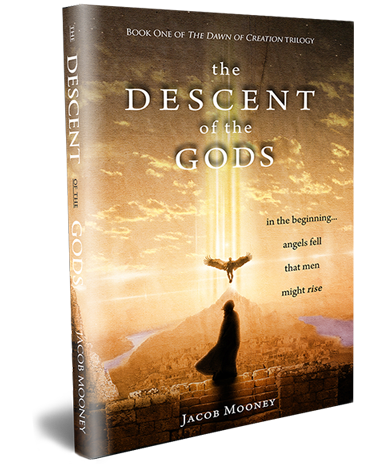
Jake Mooney is a lay researcher and the author of the novel The Descent of the Gods, with 25+ years studying Genesis 6. Chasing the Giants is where he brings Bible-first research together on the topic to help separate what we can really believe vs what is purely sensationalism.
Go deeper: Explore Genesis 6:1–4, the sons of God, the Nephilim, the history of the Genesis 6 debate, and the relationship between the Watchers and Mesopotamian apkallu traditions.
If you’d like more careful, Scripture-first studies on Genesis 6, the Nephilim, and biblical giants without the hype, subscribe to the free monthly Chasing the Giants newsletter.