
Joseph T. Antley is an alumnus of Brigham Young University’s History Department, with training in digital preservation, archival studies, and special collections. His paper, “Tartarus in Classical Greek, Apocalyptic Jewish, and Early Christian Mythologies,” is hosted on Academia.edu and reads as a solid student-level research project rather than a formal monograph. Readers interested in related BYU student research contexts can see summaries from the BYU Religious Education Student Symposium as one example of that wider environment of work: BYU Religious Education Student Symposium.
What makes this study useful is not a brand‑new theory, but its careful bringing together of three worlds in one place: classical Greek myth, Second Temple Jewish literature, and early Christian texts. Antley traces how the Greek term Tartarus—originally the deepest abyss of the underworld for Titans and extreme offenders—was gradually re-used in Jewish apocalyptic and then in the New Testament as language for the punishment and imprisonment of rebellious angels linked to Genesis 6:1–4.
For anyone who has ever wondered why 2 Peter 2:4 suddenly talks about God casting angels into “Tartarus,” Antley’s paper offers a clear map of how we get from Genesis 6 to Enoch, to Jude and Peter, without pretending Genesis itself mentions Tartarus. For a broader sense of how Latter-day Saint scholars approach the preservation and interpretation of scripture-related texts, see the bibliographic work at Pearl of Great Price Central, which illustrates similar attention to sources and historical development, even though it is on a different topic.
What Antley Argues About Tartarus and Genesis 6
Antley’s paper centers on two dominant conceptions of Tartarus. First, Tartarus as the deepest underworld of punishment. In classical Greek mythology, Tartarus is the lowest, darkest part of the cosmos, below Hades. Hesiod’s Theogony describes it as the prison of the Titans and a place of extreme divine retribution. Antley shows how this Greek idea becomes a convenient shorthand for ultimate punishment: an abyss for those who rebel against the high god.
Second, Tartarus as a prison for fallen angels. In some later Jewish and early Christian texts, Tartarus (or abyss‑language closely aligned with it) becomes the place where certain angels—especially the “Watchers” of 1 Enoch, rooted in Genesis 6—are locked up until the final judgment. In this usage, Tartarus is less about human souls and more about heavenly rebels awaiting sentence.
Antley is careful to stress that Genesis 6:1–4 itself never mentions Tartarus and never directly describes any imprisonment of the “sons of God.” Genesis simply says that “sons of God” took “daughters of men” as wives and that the Nephilim/mighty men were on the earth in those days. The text then moves straight into God’s displeasure and the lead‑in to the flood.
According to Antley, Genesis 6 functions as the “mythic seed”: a brief, enigmatic story about heavenly beings, human women, and their mighty offspring. Second Temple Jews, reading that passage, commonly understood “sons of God” as angels—supported by some Septuagint traditions and by the broader way benei elohim is used (e.g., Job 1:6; 38:7). From that seed, writers like those behind 1 Enoch developed an extended Watchers myth, locating the punishment of these angels in a dark abyss that conceptually overlaps with Tartarus.
Early Christians then step into this already-developed world. When 2 Peter 2:4 says God “cast [sinning angels] into Tartarus” (tartarōsas), Antley argues that the author is using a Greek mythological term to describe, in familiar language, the same angelic imprisonment that Jewish apocalyptic texts had described with Enoch‑style abyss imagery. This kind of historical layering is similar in spirit to how some Latter-day Saint historians compare ancient and modern interpretive traditions, as seen in studies of Joseph Smith’s environment and texts (for a sample of that kind of work, see Ensign Peak Foundation, though it is on a different historical topic).
How Antley Develops His Case: Key Evidence Streams
Classical Greek Background for Tartarus
Antley begins with Greek literary sources. In Hesiod and other early poets, Tartarus is a place-name, a specific, cosmological region beneath Hades. It is the prison of Titans and other divine rebels confined after their failed revolt. It is also a symbol of ultimate judgment: the farthest distance from the realm of the gods, a kind of cosmic maximum security.
This Greek backdrop matters because it shows what a first‑century Greek speaker would already hear in the word Tartarus: not just “hell” generically, but “the deepest, darkest pit where the worst rebels are chained.” In other words, the New Testament’s use of a Tartarus-verb in 2 Peter 2:4 would have immediately evoked a particular kind of underworld punishment, not a vague notion of the afterlife.
Jewish Apocalyptic Reworking of Genesis 6
Antley then shifts to Second Temple Judaism, where Jews were living in a Hellenistic world and sharing its vocabulary but not its theology. Here he emphasizes Genesis 6 as starting point: “The myth of the fallen watchers originating from Genesis 6:1–2, 4, plays a crucial role in shaping the concept of Tartarus in later traditions.” Second Temple Jews generally read “sons of God” as angels. Some Greek manuscripts of Genesis and other Jewish texts reflect this supernatural reading.
In 1 Enoch, the Watchers descend, take wives, teach forbidden knowledge, and father giants. God condemns them to an underworld prison of darkness and chains. Most of this is elaboration beyond Genesis, but it is elaboration anchored in Genesis 6. Strikingly, Tartarus itself appears explicitly only once in 1 Enoch: “Uriel, one of the archangels, for he is over the world and Tartarus” (1 Enoch 20:2). Antley notes how rare this word is even in Enoch. But its appearance shows that at least some Jewish writers were comfortable applying a Greek term for the abyss to their own concept of the angels’ prison.
Even when they don’t use the word Tartarus, apocalyptic Jewish texts describe a deep, dark, subterranean prison for the sinning angels that functions very much like Greek Tartarus. The terminology is Jewish; the basic spatial idea is close enough that the Greek word eventually fits. That process of conceptual translation—using familiar cultural language to describe distinct religious ideas—is a key part of Antley’s argument.
Early Christian Adaptation in Jude and 2 Peter
From there, Antley follows the theme into the New Testament. In 2 Peter 2:4 we read: “For if God did not spare angels when they sinned, but cast them into hell [literally ‘Tartarus’] and committed them to chains of gloomy darkness to be kept until the judgment…” Here the Greek verb tartarōsas (“cast into Tartarus”) is unique in the Bible. Antley argues that 2 Peter is deliberately drawing on Greek language (Tartarus) to describe the same angelic imprisonment that Jewish readers associated with Genesis 6 and 1 Enoch.
Jude 6 speaks of angels who “did not stay within their own position of authority, but left their proper dwelling” and are “kept in eternal chains under gloomy darkness.” Although Jude does not say “Tartarus,” the imagery of chained angels in darkness clearly resonates with the Enochic Watchers tradition and the same Genesis 6 background. Both epistles, in Antley’s reading, participate in the same interpretive environment, even if they employ different vocabulary.
Antley’s claim is not that Peter and Jude are quoting 1 Enoch word‑for‑word, but that they are drawing on the same interpretive tradition: Genesis 6 read as angelic rebellion, elaborated with abyss‑imprisonment language that, in a Greek-speaking Christian context, naturally finds expression with the term Tartarus. This is part of why, after two decades of my own study, I see so much value in understanding that Second Temple backdrop rather than ignoring it.
Comparative and Historical Method in Antley’s Study
Methodologically, Antley’s work is comparative and historical rather than speculative. He looks at Greek myth to see what Tartarus originally meant. He examines Second Temple Jewish literature to see how abyss imagery and the Watchers story grew from Genesis 6. He traces early Christian usage—especially 2 Peter and Jude—to show how a Greek word is used to express a Jewish idea about angelic judgment.
Crucially, he keeps the layers distinct. Genesis gives the sparse seed; apocalyptic texts expand it; Christian writers adopt both the story and some Greek vocabulary to communicate it. His argument shows development and adaptation over time, not a single, flat doctrine dropped into the Bible all at once. That kind of careful layering is also something I’ve tried to model as I work on my own Genesis 6 projects, including a long-term fiction-retelling.
How Antley’s Study Fits the Wider Genesis 6 / Watchers Conversation
Alignment with Mainstream Watchers Scholarship
Antley’s treatment of Genesis 6 and the Watchers sits comfortably within what many specialists already argue. Scholars such as Archie T. Wright, Loren Stuckenbruck, and George Nickelsburg have traced the way Genesis 6:1–4 was read in the Second Temple period as a story of angelic rebellion and its aftermath. The Book of the Watchers (1 Enoch 1–36), Jubilees, and Qumran texts (like the Book of Giants) show that this angelic reading was not fringe; it was part of mainstream apocalyptic Judaism.
New Testament scholars often see Jude and 2 Peter as endorsing this angelic interpretation, even as they remain selective about which details they use. Antley’s distinct contribution is to focus specifically on Tartarus within that broader picture, showing how a Greek term for the Titan‑prison becomes Christian language for the Watchers’ prison.
Clarifying Underworld Terms: Tartarus, Sheol, Gehenna
For modern Christians, it is easy to flatten all “hell language” into one concept. Antley’s study helps untangle Greek Tartarus, Sheol, and Gehenna. Greek Tartarus is the deepest abyss, the prison of divine rebels. Sheol is the Hebrew Bible’s term for the realm of the dead, not necessarily a place of torment. Gehenna is later Jewish and Christian language for a fiery place of judgment, especially for the wicked.
By tracking how Tartarus is used, Antley helps us see that 2 Peter 2:4 is not simply “hell” equals final judgment for humans. It is specifically about angels who sinned and were cast into a deep prison of darkness. That nuance is easy to miss in English translations, where a single word like “hell” can cover several quite different concepts.
Limits and Gaps in Antley’s Paper
There are also clear limits to what Antley’s paper does. It is not a full exegesis of Genesis 6:1–4. He takes the angelic/Watchers reading as the working background, in line with much scholarship, but does not deeply compare it with Sethite or “kings of the earth” interpretations. The work appears to be student-level synthesis, not a peer‑reviewed monograph. He is organizing and summarizing existing discussions more than offering radical new theses.
Still, as a guided tour of how Tartarus travels from Greek poetry to Jewish apocalyptic to Christian Scripture, it is clear, helpful, and well within the boundaries of responsible biblical scholarship. For readers looking at how religious ideas move and develop over time, this kind of careful synthesis is often more helpful than speculative reconstructions detached from primary texts.
Scripture, Tradition, and How to Use Antley’s Work
What Antley’s Work Clarifies About Tartarus
For readers trying to piece together Genesis 6, Jude, and 2 Peter, Antley’s paper clarifies several points. It explains why 2 Peter uses “Tartarus” language: the author is speaking Greek to Greek‑speakers. Tartarus is the natural way to describe a deep underworld prison, already familiar from myth, now repurposed to speak of God’s judgment on angels. It also shows how that connects to Genesis 6: the angels in view are best understood against the Second Temple reading of Genesis 6—heavenly “sons of God” who overstepped God’s boundaries, took human women, and brought about corruption.
Antley’s work further highlights how traditions build around sparse texts. Genesis offers only a few verses. Jewish apocalyptic writers imagine the scene in detail (Watchers, giants, abyss), and those traditions influence early Christian language without becoming new Scripture. In other words, Antley helps explain the vocabulary and background, not replace the Bible’s storyline.
Where Scripture Ends and Later Tradition Begins
It is important to mark clearly what Scripture itself says and what comes from later tradition. Scripture includes Genesis 6:1–4: “sons of God,” “daughters of men,” Nephilim/mighty men; no mention of Tartarus, no described imprisonment of angels. It includes 2 Peter 2:4: God did not spare angels when they sinned; he cast them into Tartarus and bound them in gloomy darkness until judgment. It includes Jude 6: angels who left their proper dwelling are kept in eternal chains under gloomy darkness until the great day.
Second Temple and apocalyptic background texts, by contrast, like 1 Enoch 10 and 20:2, describe the fallen Watchers confined to a dark abyss and speak of Uriel “over the world and Tartarus.” These texts expand the story and explicitly link the Genesis 6 angels to a deep underworld prison. Antley’s basic conclusion is that Tartarus starts as a Greek mythic abyss and is later adapted in Jewish apocalyptic and early Christian thought as a realm of punishment for the wicked and as a prison for fallen angels identified with the “sons of God” in Genesis 6.
Where conclusions go beyond Scripture, we should say so. Genesis never defines this prison or names Tartarus. That detail belongs to later interpretation, which can illuminate but not extend biblical authority. Recognizing those boundaries is essential for responsible work on controversial passages and is the same kind of discipline I have tried to bring to my long-term study of Genesis 6 and related traditions.
Practical Takeaways for Genesis 6 Readers
For someone like me, who has spent over two decades studying Genesis 6 and watched the topic get sensationalized or ignored, Antley’s paper is useful in a simple way: it helps us read the Bible more intelligently without turning Tartarus into the center of our theology. When you read Genesis 6, keep it primary: a brief window into heavenly‑earthly rebellion that Scripture quickly moves past to focus on the flood and God’s judgment.
When you read 2 Peter 2:4 and Jude 6, recognize that the authors assume a Jewish apocalyptic background (like Enoch), including angelic imprisonment, and that Peter chooses Tartarus language to communicate that to his audience. Use works like Antley’s as maps of historical development, not as new revelation. They show how God’s people have tried to make sense of a difficult text across time, and how the New Testament can draw on these traditions while still standing as the final inspired word.
Genesis 6, Tartarus, and the Watchers matter because they underline the Bible’s conviction that rebellion is both human and cosmic—and that God’s judgment reaches even into the unseen realm. But they are supporting scenes, not the main plot. The central figure is still Christ, who triumphs over every power, visible and invisible.
Key Texts and Sources to Keep in View
To keep categories clear, it helps to distinguish the layers. Scripture includes Genesis 6:1–4, where sons of God, daughters of men, and Nephilim appear, but Tartarus is not mentioned. It includes 2 Peter 2:4, where angels who sinned are cast into Tartarus and held in gloomy darkness. It includes Jude 6, where angels who left their proper dwelling are chained in darkness until judgment. These are the canonical anchor points.
Second Temple and apocalyptic background includes 1 Enoch 10 and 20:2, where the fallen Watchers are confined to a dark abyss and Uriel is “over the world and Tartarus.” Other Enochic and Qumran texts expand Genesis 6 into a full Watchers mythology, widely known in the time of Jesus and the apostles. Antley’s conclusion is that Tartarus moves from a Greek cosmic pit to part of a Jewish-Christian angelic-judgment framework, especially tied to how Genesis 6 was read in the Second Temple period.
The New Testament’s use of Tartarus in 2 Peter 2:4 reflects this development without turning the whole Enochic storyline into canon. For those interested in how such interpretive traditions interact with scripture in other contexts, discussions like the one on ancient Near Eastern terms such as “sheum” and barley in Mormon Dialogue & Discussion Board can be a helpful reminder of how philology, history, and theology often intersect.
Conclusion: What Antley’s Tartarus Study Really Gives Us
Antley’s paper does not solve every mystery of Genesis 6, but it does perform a valuable service: it shows, step by step, how a Greek word for the Titans’ prison became Christian language for the prison of the Genesis 6 angels. By walking us from Hesiod’s Tartarus to 1 Enoch’s abyss to Peter’s tartarōsas, Antley reminds us that biblical writers spoke into real historical contexts, using language their audiences knew—even when that language came from surrounding mythologies.
He also reminds us how much of the later detail about the Watchers and their punishment lives outside Scripture, in Jewish apocalyptic literature that the New Testament sometimes echoes but never canonizes. For readers who care about Genesis 6, the Nephilim, and the Watchers, Antley’s study is a helpful guide rather than a final authority. It can sharpen how we read 2 Peter and Jude, deepen our sense of the Bible’s supernatural worldview, and keep us honest about where we are dealing with inspired Scripture and where we are dealing with later, often imaginative, interpretation.
In the end, Genesis 6 and Tartarus are part of the Bible’s larger witness: that rebellion—human and angelic—is real, judgment is certain, and God’s answer to all of it is not a pit but a person. We study these difficult passages not to chase secret knowledge, but to better grasp the scope of the problem that Christ came to solve, and to rest more fully in the One who has already triumphed over every power in heaven and on earth.
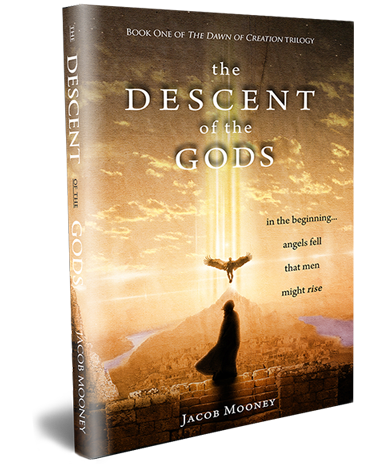
This is one of the reasons I’ve been working on a novel about the Genesis 6 story, which is coming soon. If you want to see how these themes can be explored in a carefully researched, fictional retelling, you can learn more at The Descent of the Gods, where I share how decades of study on Genesis 6, the Nephilim, and Second Temple literature have shaped that project.