Matthew Goff’s 2021 Journal of Gods and Monsters article “When Monsters Walked the Earth: Giants, Monster Theory, and the Reformulation of Textual Traditions in the Enochic Book of the Watchers” argues that 1 Enoch’s Book of the Watchers reformulates Genesis’ flood traditions into a more monstrous story. His answer is direct: Watchers turns Genesis 6’s terse “mighty men” into grotesque, cannibalistic giants in order to explain the flood and make Genesis 9’s commands about meat, blood, and murder appear urgently necessary.
That matters because it keeps three things distinct: what Genesis says as Scripture, what 1 Enoch adds as early Jewish expansion, and what Goff offers as modern analysis. The Book of the Watchers here means 1 Enoch 1–36, a Jewish work written in the third century BCE. Goff notes that 1 Enoch remains in the Old Testament canon of the Ethiopian Orthodox Church, but it is not Scripture for most Christian traditions. His article helps explain how one early Jewish text elaborated Genesis 6; it does not make those additions binding doctrine.
Goff’s answer: Watchers turns Genesis 6 into monstrous exegesis

Goff’s core claim is that the Book of the Watchers reshapes Genesis 6:1–4 and related flood material into a monster story. Near the close of his exegesis section, he states the methodological point carefully:
The transformation of the warriors of renown in Genesis 6 into cannibalistic giants of the Book of the Watchers can be reasonably understood as a form of exegesis on texts of Genesis, with “exegesis” employed here as a second-order term of analysis, an etic rather than emic characterization of the content of Watchers.
That last qualification matters. Goff is not saying 1 Enoch presents itself as a line-by-line commentary. He is saying a modern reader can analyze it as interpretation: Watchers receives older flood traditions and reworks them by making their violence more explicit, embodied, and grotesque.
He later names the result in one of the article’s key phrases:
One can reasonably understand the Enochic Book of the Watchers as engaging in a kind of monstrous exegesis. The scribal intellectuals who produced the work in the third century BCE reconfigured older textual traditions regarding the flood in a way that made the sons of the angels much more monstrous.
For Goff, the “monstrous” element is not decorative. It is the form the interpretation takes. Watchers appears to answer questions Genesis leaves compressed: What kind of violence filled the earth? Why did the flood come? Why does the post-flood covenant give such attention to meat, blood, and human lifeblood?
The categories need to stay separate. Genesis 6:1–4 gives the compact canonical account of the sons of God, daughters of humans, Nephilim, and gibbōrîm. The Book of the Watchers expands that world with named angels, a descent on Mount Hermon, giant offspring, unsanctioned instruction, cannibalism, blood-drinking, and evil spirits. Goff’s article then explains why that expansion may have taken such a monstrous shape in the early Hellenistic period.
That makes the paper useful for readers of Genesis 6, but not because it uncovers hidden doctrine inside Genesis. Its value is historical and analytical: it shows how an influential early Jewish text interpreted Genesis’ brief giant tradition by intensifying it.
What changes between Genesis 6 and 1 Enoch 7

Goff stresses that Genesis’ description is brief and partly positive. The figures are “mighty men” and “men of renown,” and the text does not describe cannibalism, blood-drinking, or giant warfare. Their connection to the wickedness of Genesis 6:5 may be suggested by the narrative placement, but Genesis itself does not narrate their crimes in detail.
1 Enoch 7–8 moves in the opposite direction. Goff opens his article with Watchers’ brutal description of the giants’ appetite:
They devoured the labors of men. And when they were unable to supply them, the giants grew bold against them and devoured the men. They began to sin against birds, animals, reptiles and fish, and to eat the flesh of each other. And they drank the blood. (1 En. 7:3–5)
That progression is central to his argument. The giants first consume human production, then humans themselves, then animals, then one another, and finally blood. Watchers does not merely say the pre-flood world was violent; it imagines violence as disordered consumption.
Goff also notes the giants’ physical abnormality:
The Book of the Watchers puts forward a shocking description of the days before the flood. The cannibalistic crimes recounted in 1 Enoch 7 are committed by giants who rampaged across the world. According to most Ethiopic manuscripts of Watchers, they are of incredible stature: 3,000 cubits tall, or well over a mile. Both their bodies and their crimes transgress norms.
The point is not simply that they are large. Their bodies cross creaturely limits; their parentage crosses divine-human limits; their diet crosses the boundary between eater and food. In Goff’s reading, that is what makes them monsters in a technical sense.
He then identifies the exegetical problem Watchers is solving:
The Enochic reconfiguration of the gibbōrîm into terrifying, cannibalistic giants can be understood as offering a solution to an exegetical problem.
Genesis leaves the gibbōrîm comparatively open. Watchers resolves that ambiguity by making them the clear agents of antediluvian devastation.
| Layer | What it contributes | Status |
|---|---|---|
| Genesis 6:1–4 | Sons of God, daughters of humans, Nephilim, and gibbōrîm | Scripture |
| Genesis 9:1–6 | Commands about meat, blood, and human lifeblood | Scripture |
| Book of the Watchers | Expanded story of angels, giants, violence, and judgment | Early Jewish literature; canonical in the Ethiopian Orthodox Church as part of 1 Enoch, but not in most Christian canons |
| Goff’s analysis | Explains Watchers as a monstrous reformulation of Genesis | Modern scholarship |
Once those layers are clear, Goff’s comparison is straightforward. Scripture gives the foundation. Watchers supplies an imaginative early Jewish expansion. Goff argues that the expansion is not random but interpretive: it turns Genesis’ compact notice into a monster narrative that explains why the flood must come.
Why blood and food are central

Goff’s most interesting move is to connect 1 Enoch’s cannibal giants with Genesis 9. In Watchers, the giants’ evil is not merely that they kill. They eat flesh and drink blood. Goff argues that this emphasis depicts them as violators of divine norms about life and blood:
Understood against this religio-cultural backdrop, the ingestion of blood does more than break a food taboo. It is affront against God. Describing the giants as consuming blood is a way to depict them as evil and opposed to God.
Genesis 9 then becomes especially relevant, because it links permission to eat meat with a prohibition against eating blood and with God’s concern for human lifeblood. Goff’s point is not that Genesis 9 secretly depends on 1 Enoch. It is that Watchers may be reading Genesis 9 backward into the flood story. If the post-flood covenant prohibits blood consumption and protects human lifeblood, Watchers imagines the pre-flood world as the nightmare opposite: no restraint, no reverence for life, no boundary on appetite.
This ban in Genesis 9 against consuming blood, its linkage between killing and the swallowing of blood, and the fact that it brings up the issue of eating meat at all, become easier to understand if the reader imagines the crisis that led to the flood as it is presented in Watchers.
That is why Goff can describe the giants as part of a discussion of food ethics:
the anthropophagous monsters of the Book of the Watchers can be profitably understood as a way to engage a topic that might be described as the ethics of food.
This is one of the paper’s strongest textual observations. Watchers does not merely add spectacle to Genesis 6. It creates a grisly “before” picture that makes the “after” commands of Genesis 9 appear ordered, merciful, and necessary. The limit is equally important: Genesis 9 does not require readers to accept 1 Enoch’s expansion. Goff is reconstructing how one Jewish tradition may have reasoned from Genesis, not adding a new rule of faith.
Monster theory and the return of chaos

Goff’s monster-theory framework explains why giants are such effective figures for this reformulation. Monsters mark boundaries by crossing them. The Watchers’ offspring are angelic and human, enormous and creaturely, intelligent and bestial, consumers and cannibals. They expose a world in which created distinctions have broken down.
Goff cites theoretical work that treats monsters as liminal figures and as externalized forms of appetite or fear. One psychoanalytic formulation he quotes is:
The monster represents the id, the classical Freudian term for the disturbing and animalistic instincts that are found deep within the human unconscious, but in an externalized form. This understanding of the issue offers a psychoanalytic way to explain the cross-cultural trope that monsters, while conquered by heroes, typically survive to fight another day.
Goff uses that kind of theory selectively. His main evidence remains textual: Watchers’ giants embody unbounded appetite, and their destruction by the flood becomes, in that text, a divine defeat of monstrous disorder.
That connects to his comparison between Genesis 1 and the Babylonian Enuma Elish. In Enuma Elish, Marduk defeats the sea-monster Tiamat and fashions the world from her body. Genesis 1 is far more restrained, even though it speaks in a world familiar with chaos-monster imagery. Goff puts the contrast memorably:
The Bible (to my chagrin) does not begin with a battle royale between God and a sea dragon. Tiamat, however, lurks beneath the surface.
Other Old Testament passages do use imagery of God subduing sea monsters and Leviathan. Goff argues that Watchers draws that wider mythic atmosphere into the flood narrative. In Genesis 6–9, the flood is a judgment on human wickedness. In Watchers, it also becomes the watery defeat of transgressive giants:
The Book of the Watchers, through its effort to portray the flood as the divine defeat of transgressive giants, writes monsters back into the story.
This is also why Goff does not reduce the giants to a simple anti-imperial allegory. Genesis 1 was likely shaped under Babylonian imperial conditions, yet it tones down monster combat. Watchers, under Hellenistic conditions, writes monsters back in. For Goff, empire alone cannot explain the difference. He prefers a broader early Hellenistic context: anxiety about deep time, rival claims to ancient wisdom, origins of civilization, primordial beings, and cultural identity after Alexander.
Greek and Near Eastern traditions in this period were also reimagining the remote past. Writers debated which peoples were oldest, where arts such as astronomy and agriculture began, and how to account for strange culture-bringers and hybrid beings. Goff reads Watchers’ giants within that wider cultural crisis rather than primarily as coded portraits of particular rulers.
Boundaries: what Goff does and does not settle
The firmest boundary is canonical. Genesis 6 and 9 are Scripture. The Book of the Watchers is not Scripture for most Christians, though 1 Enoch is canonical in the Ethiopian Orthodox Church. It can illuminate how some early Jews interpreted Genesis, but it does not complete Genesis or authorize every Enochic detail about angels, demons, or giants for readers who do not receive it as canon.
Goff argues that Watchers massively reformulates Genesis’ giant tradition. The contrast between Genesis’ “mighty men of old” and 1 Enoch’s cannibalistic giants is central to his case. His reading also explains why Watchers lingers over blood: the giants’ appetite dramatizes the opposite of Genesis 9’s post-flood order.
The more debated issue is why Watchers made that move. George W. E. Nickelsburg and Anathea Portier-Young are associated with readings that give greater weight to anti-imperial symbolism. On that approach, the giants can evoke Hellenistic violence, the Diadochi, or Jewish resistance to imperial power. Goff treats such readings as important but insufficient as the primary explanation.
One reason is 1 Enoch 15. There, the dead giants’ spirits become ongoing evil spirits that afflict human life. That tradition functions more naturally as demonology and etiology—an explanation for disease, danger, and spiritual affliction—than as a direct image of state oppression. Another reason is the setting: Watchers places the crisis in primordial time, not in a thinly veiled contemporary court.
| Reading | Main basis | Goff’s judgment | Confidence |
|---|---|---|---|
| Hellenistic cultural crisis | Deep-time myths, origins, monster theory, food ethics | Preferred framework | Strong as an account of Goff’s argument |
| Anti-imperial allegory | Parallels to Hellenistic violence and Greek gigantomachy | Useful but insufficient as the primary explanation | Debated |
| Demonological etiology | 1 Enoch 15 on spirits of dead giants | Significant function within Watchers | Probable within Goff’s reading |
| Missing biblical doctrine | Importing Enochic details directly into Genesis | Not Goff’s claim | Unsupported |
Several cautions follow for readers weighing these options. It is debated whether imperial politics or broader cultural crisis best explains the giants’ shape in Watchers. Psychoanalytic explanations of monster imagery are suggestive but necessarily speculative. Most importantly, it is unsupported to treat Enochic claims such as the origin of evil spirits from dead giants as biblical doctrine. They are influential ancient interpretations, not additions to the canon.
Conclusion: takeaways
Goff’s paper is most valuable because it sharpens the distinction between Genesis and Watchers. Genesis gives the inspired text: brief, authoritative, and restrained. Watchers gives an early Jewish expansion: vivid, violent, and theologically imaginative. Goff explains that expansion as monstrous exegesis, especially where the giants’ blood-drinking appetites make Genesis 9’s concern for blood and murder newly intelligible.
The best takeaway is not “Genesis secretly teaches everything in 1 Enoch.” It is this: some early Jews read Genesis 6 and 9 together and imagined the pre-flood world as a collapse of every boundary God later regulates. Goff’s Hellenistic cultural-crisis frame is his preferred explanation for why that imagination became so monstrous, while anti-imperial and demonological readings remain important but secondary in his account.
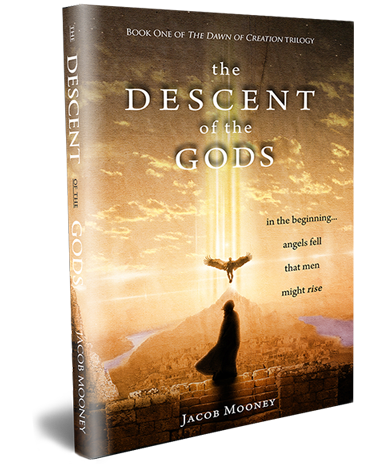
Jake Mooney is a lay researcher and the author of the novel The Descent of the Gods, with 25+ years studying Genesis 6. Chasing the Giants is where he brings Bible-first research together on the topic to help separate what we can really believe vs what is purely sensationalism.
This article reads Goff’s published argument alongside Genesis 6, Genesis 9, and the relevant Enochic passages, keeping Scripture, Second Temple expansion, and modern interpretation distinct.
If you’d like more evidence-driven studies of Genesis 6, the Watchers, and giants, you’re warmly invited to subscribe to the free monthly newsletter.