The article “Who Are the Sons of God? A Literary-Contextual Approach to Gen 6:1–4” argues that the בני־האלהים, the “sons of God,” are best understood not as fallen angels, Watchers, or sacral kings, but as once-righteous human descendants of Adam through Seth who corrupted themselves by marrying the “daughters of men.”
On this reading, Genesis 6:1–4 is a human collapse story: the Sethite line abandons its calling, ordinary marriages become spiritually disastrous, and the resulting wickedness prepares the flood. The question is whether Genesis 4–6 itself can bear that conclusion strongly enough to outweigh the older and still powerful angelic reading.
The paper’s answer: a Sethite collapse reading

The author does not present the Sethite reading as an easy victory. His restraint matters because it controls the whole argument: he is not trying to make the fallen-angel or kingship readings look foolish, but to ask which reading best fits the immediate literary setting of Genesis.
The long history of debate regarding the interpretation of Gen 6:1–4 precludes any exegete from clinging dogmatically to his view regarding the identity of the בני־האלהים. Each has its merits and weaknesses, as has been shown.
That modesty keeps the final claim from hardening into overstatement. The author’s preference is clear, but it remains a contextual judgment, not a claim that every rival view has no evidence.
Very simply, Gen 6:1–4 at once shows how the once-godly sons of Seth corrupted themselves (through the indiscriminate taking of wives, following ‘no marriage law but their own lusts’) and sets forth the patriarch Noah as the last faithful son of Seth remaining on earth.
The force of that sentence is not mainly genealogical; it is theological. The “sons of God” are sons in name and privilege, but their choices suggest that the Sethite line has ceased to function as a faithful alternative to Cain’s line. Genesis 6 then becomes the moment where the apparent contrast between the two lines collapses.
The author’s strongest move is to keep the marriages ordinary. The Hebrew verbs לקח, “took,” and בוא, “went in,” are treated in the article as normal marriage and conjugal language. If Genesis 6:1–4 is describing supernatural cohabitation, the burden must come from context, not from the verbs themselves. For the author, the sin is not that nonhuman beings marry humans, but that men who should have carried forward the faithful line choose wives by sight and desire without regard to spiritual status.
This also explains why the Nephilim do not control the article’s interpretation. They are present “in those days, and also afterward,” but the article refuses to turn them into the main biological problem. The crisis, on this reading, is the formation of what the author calls a “community of unprecedented wickedness.” That choice de-sensationalizes the passage: Genesis 6 is less interested in monster origins than in how quickly a godly line can become indistinguishable from the world around it.
I came to the paper expecting to resist its destination. What surprised me is that its best argument is not anti-angel polemic, but its insistence that Genesis 6 first be read as the next movement in Genesis 4–6.
Why Genesis 4–6 carries the argument

The article treats Genesis 6:1–4 as a hinge between Seth’s genealogy and the flood. The crucial literary connection is the movement from human “seeing” and “taking” in 6:2 to divine “seeing” in 6:5.
It seems likely, then, that the evil God ‘sees’ (v. 5) is the evil of the ‘sons of God,’ whoever they turn out to be, in their ‘seeing’ and ‘taking’ (v. 2).
That observation does real work. It ties 6:1–4 to the flood indictment instead of letting the episode float as an isolated mythic fragment. The men see beauty and take wives; God sees the resulting wickedness and judges the earth. The symmetry is not proof by itself, but it makes the Sethite reading narratively economical.
The second pillar is the two-line reading of Genesis 4–5. The author connects the Cain/Seth contrast to the promise of enmity between two seeds in Genesis 3. That connection is partly explicit and partly inferred: Genesis itself gives the seed promise, Cain’s violent line, Seth’s replacement line, and Noah’s emergence, but a label like “Sethite line” is a theological synthesis rather than a phrase printed on the page.
First, a contrast is implied in the text between the ‘sons of God’ and the ‘daughters of man.’ When God cursed the serpent, he declared a division of two seeds (זרע): that of the woman, and that of the serpent, and promised that enmity would exist between the offspring of each until the woman’s seed decisively defeats that of the serpent.
The inference is plausible because Genesis 4 and 5 are not neutral family records. Cain’s line culminates in the violent, boastful Lamech. Seth’s line leads to Noah, whose father hopes he will bring relief from the cursed ground. The author reads Genesis 6 as the failure of separation between those trajectories.
The “son” language strengthens that reading, though it should not be made to carry more than it can. The article notes that בן language becomes prominent from Seth’s birth in Genesis 4:25 through Lamech’s son in 5:29, Noah’s sons in 5:32, and then the בני־האלהים in 6:2. That pattern does not prove that “sons of God” must mean Sethites, but it gives the phrase a local literary environment before readers jump to Job or later Watcher traditions.
| Evidence pressure point | How it supports the Sethite reading | Pressure from rival readings | Best evaluation |
| Genesis 4–5 sequence | Two family lines appear to be in view before 6:1–4. | The text never explicitly says “Sethites.” | Strong contextual support, but inferential. |
| “Son” language | Local use of בן prepares a human sonship category. | Job uses “sons of God” for heavenly beings. | Helpful locally; not lexically decisive. |
| Marriage verbs | לקח and בוא fit ordinary human marriage. | Ordinary verbs could describe extraordinary actors. | Good restraint against overreading the vocabulary. |
| Seeing/taking pattern | Human desire in 6:2 is linked with God’s seeing in 6:5. | Angelic readings can still include human corruption. | One of the paper’s best literary arguments. |
| Noah’s contrast | On the paper’s reading, Noah appears as the remaining faithful Sethite. | Noah’s righteousness does not identify the offenders by itself. | Theologically coherent, especially in the flood context. |
The table shows why the article’s case is cumulative. No single strand forces the Sethite interpretation. Together, however, they make the author’s reading feel native to Genesis 4–6 rather than imported from later speculation.
Why the article prefers Sethites over angels or rulers

The fallen-angel or Watcher view
The angelic reading has real weight. In Job 1:6, 2:1, and 38:7, the same term refers to heavenly beings. Early Jewish texts such as 1 Enoch and Jubilees, Josephus, several early Christian writers, and several modern commentators read Genesis 6 through an angelic lens. The article’s answer is not that this evidence is imaginary, but that Genesis 1–6 has not prepared the reader for that category at this point in the story.
Nothing in Gen 1–6 has prepared the reader for the introduction to divine beings that Gen 6:2 purportedly provides, and nothing indicates the presence of a heavenly council.
That is the paper’s central challenge to the Watcher view. Job’s heavenly council scenes are clear because the setting is clear. Genesis 6, by contrast, begins with mankind multiplying on the face of the land. The author therefore thinks the local narrative frame should control the phrase before the reader imports a heavenly council background.
He also resists the claim that בני־האלהים is lexically locked to angels. Psalm 82:6 can use divine sonship language for human rulers: “I said, ‘You are gods, sons of the Most High, all of you.’” That does not decide Genesis 6, but it weakens any argument that the phrase can only be celestial.
The flood judgment adds another difficulty for the angelic reading. Genesis 6:3 limits “man’s” days; 6:5 says “the wickedness of man was great”; 6:7 announces judgment on man and the living creatures of the earth. Angelic interpretations can answer by distinguishing human punishment from the later imprisonment of rebellious angels, especially by appeal to Peter and Jude. The article is not persuaded that those New Testament texts explicitly identify Genesis 6:1–4 as the angelic sin in view.
Third, the immediate context (v. 1) contradicts the angelic interpretation.
That sentence may overstate the case if read as a knockdown argument. Genesis 6:1 certainly favors a human setting, but “contradicts” is stronger than “presses against.” Still, the author’s point is fair: if the passage starts with human multiplication, uses ordinary marriage language, and moves to judgment on human wickedness, then an angelic reading must explain why the main actors are introduced so indirectly.
The human-kingship view
The kingship view identifies the “sons of God” as rulers, nobles, judges, or aristocrats who abuse power by taking women. The article recognizes its advantages: Jewish and Targumic sources cited in the paper often moved in this direction, Old Testament texts can use אלהים for judges or rulers, and Meredith Kline appealed to ancient Near Eastern sacral kingship as a possible background.
The author’s objection is again literary. Genesis has not yet introduced kingship as an institution. Cain builds a city in Genesis 4, and Lamech embodies violent arrogance, but Genesis 5 then moves fully through Seth’s genealogy before the reader reaches 6:1–4. If the offenders are royal elites, the article thinks the narrative has not prepared that identity as well as it has prepared the Sethite line.
The ancient Near Eastern evidence is also less exact than it first appears. The paper, following Matthews against Kline, notes that individual kings may be called “son of” a particular god, while Genesis 6 speaks of a collective group, “sons of God.” That distinction does not destroy the kingship view, yet it makes the parallel less direct. The phrase “any they chose” is likewise ambiguous. It can suggest royal seizure or polygamous abuse, but it can also describe ordinary men choosing wives indiscriminately.
While we need not go as far as Keil, who dismissed completely this ancient Jewish interpretation, it is still not as contextually plausible as the Sethite view, to which we now turn.
That measured assessment is important. The author does not deny that kingship readings have linguistic and historical resources. He ranks them lower because they require Genesis 6 to introduce a social category that has not yet become central in the narrative.
| Interpretive option | Theological point Genesis 6 might make on that view | Main strength | Main cost |
| Fallen angels or Watchers | Cosmic rebellion intensifies human corruption. | Support from Job parallels and important ancient reception history. | Genesis 1–6 gives no clear heavenly council setting, and judgment language centers on man. |
| Human kings or nobles | Powerful rulers turn sex, status, and violence into social tyranny. | Fits Jewish and Targumic interpretations cited in the paper and ruler language in Psalm 82 and Exodus. | Kingship is not yet clearly prepared in Genesis 1–6. |
| Sethite descendants | The faithful line compromises until only Noah remains as righteous remnant. | May best integrate Cain, Seth, Noah, marriage, and flood judgment in the immediate context. | Must explain why “sons of God” sounds celestial elsewhere. |
What remains genuinely unsettled

The article is most persuasive when it makes Genesis 6:1–4 answerable to Genesis 4–6. It is less decisive when it handles the wider canonical and reception evidence. The angelic reading remains alive because Job’s usage is strong, early Jewish sources developed the angelic interpretation, and 1 Peter 3:19–20, 2 Peter 2:4–9, and Jude 6–7 can sound as though they are drawing from the same interpretive world.
The author’s decoupling of Peter and Jude from Genesis 6 is possible, but not final. Those passages do not explicitly quote Genesis 6:1–4; that helps his case. Yet their language of sinning angels, imprisonment, sexual transgression, and the days of Noah keeps the question open. A reader can grant the article’s contextual argument and still think the New Testament allusions lean toward an angelic reading.
The same is true of “any they chose.” The article fairly resists making the phrase prove polygamy or royal abuse. But it also cannot make the phrase prove Sethite intermarriage. The grammar permits more than one social setting; the larger narrative must decide which is most likely.
I find the paper most useful where it shifts the burden of proof. It asks interpreters not to begin with giant lore, Enochic expansion, or later demonology, but with the literary work Genesis is doing: Cain’s line, Seth’s line, human multiplication, boundary collapse, divine grief, and Noah’s favor. Even readers who remain unconvinced by the Sethite conclusion should feel the force of that demand.
The author’s closing theological move is also restrained. By quoting Derek Kidner, he acknowledges that the passage’s final weight does not depend entirely on solving every identity question.
More important than the detail of this episode is its indication that man is beyond self-help, whether the Sethites have betrayed their calling, or demonic powers have gained a stranglehold.
That is a useful guardrail. The identity of the “sons of God” matters, but Genesis 6 is not finally an invitation to indulge curiosity. It is a judgment text about a world beyond self-rescue.
We may also be reminded of our helplessness (Rom 5:6; Eph 2:1–2; Col 1:21), and out of gratefulness to God for our common salvation (Jude 3), live lives worthy of the gospel, and act in keeping with our spiritual status as the elect ‘sons of God’ (1 John 3:10).
That application goes beyond Genesis 6 exegesis into canonical theology, but it follows the paper’s main instinct: Scripture should discipline speculation. However one finally identifies the בני־האלהים, the passage confronts readers with human rebellion, failed calling, and the need for grace. Scripture points that need finally to the promised seed, Christ, who defeats the serpent and saves those who cannot rescue themselves.
Conclusion
The paper’s best contribution is its disciplined starting point: Genesis 6:1–4 must first be read inside Genesis 4–6. Its Sethite interpretation is contextually serious and theologically coherent, especially in the way it links the collapse of a once-faithful line to Noah’s emergence as righteous remnant.
The unresolved pressure points should remain unresolved where Scripture leaves them so. The wider use of “sons of God,” the strength of ancient angelic interpretation, and the possible New Testament allusions mean the angelic reading cannot be dismissed. Ongoing work on Genesis 6 should hold those tensions honestly while refusing to let later traditions outrun the biblical text.
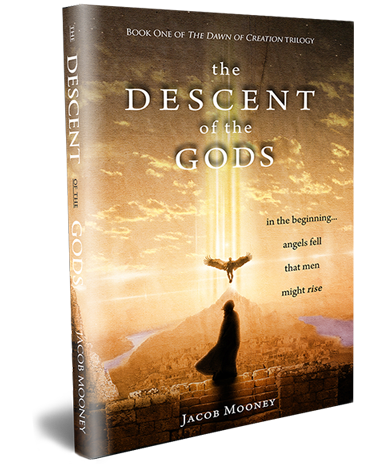
Jake Mooney is a lay researcher and the author of the novel The Descent of the Gods, with 25+ years studying Genesis 6. Chasing the Giants is where he brings Bible-first research together on the topic to help separate what we can really believe vs what is purely sensationalism.
This review is based directly on the supplied source article and its verified quotations, weighed against the flow of Genesis 4–6 and broader biblical usage without treating any disputed inference as certain.
If you’d like more careful, Bible-first studies on Genesis 6, the Nephilim, and how to navigate the speculative noise around them, you can subscribe to the free monthly Chasing the Giants newsletter.