Michael Heiser’s answer is that the “sons of God” in Genesis 6:1–4 are supernatural members of the heavenly host, not human descendants of Seth. In his conversation with Becket Cook, Heiser builds that case from Hebrew usage, the Nephilim, early interpretation, and comparative material from ancient flood traditions—while keeping Scripture ahead of speculation.
Watch the Genesis 6 discussion beginning at 25:06 in Becket Cook’s interview with Michael Heiser.
Heiser’s answer: heavenly beings, not Sethites

Cook is the interviewer; Michael Heiser supplies the main interpretive argument. The disputed phrase is the Hebrew bene elohim or bene ha-elohim, usually rendered “sons of God.” Heiser’s central claim is that this wording is used elsewhere in Scripture for supernatural beings, members of the heavenly host, and that Genesis 6 should not be made an exception unless the text requires it.
Genesis 6:4 is the key narrative pressure point. The Hebrew Bible does not define the Nephilim at length, but Heiser points to the Septuagint rendering gigantes as evidence that ancient readers understood something unusual in the passage. That Greek term does not, by itself, settle a precise claim about physical height. The narrower point is that the offspring are not presented as ordinary children of ordinary marriages, but as figures associated with unusual might and renown.
| Name or term | Function in the argument |
| Becket Cook | Host who raises the Genesis 6 question and is reported as accepting Heiser’s conclusion. |
| Michael Heiser | Main interpreter in the conversation; provides the linguistic, historical, and comparative case. |
| “sons of God” | Hebrew phrase Heiser argues refers here to heavenly beings. |
| Sethite view | Human-line interpretation that is named, considered, and rejected. |
| Nephilim / gigantes | Exceptional offspring whose description presses against a purely human reading, though the exact physical meaning remains debated. |
| Apkallu | Mesopotamian divine figures used as comparative flood-tradition background, not as direct proof. |
Why the Sethite reading is rejected

The main alternative is the Sethite view. In that interpretation, the “sons of God” are godly men from Seth’s line, the “daughters of man” are women from Cain’s line or from ungodly humanity, and the sin is intermarriage between the faithful and the faithless. Heiser argues that this is a later and weaker solution.
Many early Jewish and Christian interpreters read Genesis 6 as a story about supernatural beings, but the reception history was not monolithic. Human-line interpretations became increasingly influential among later Christian writers. In this conversation, Heiser highlights Julius Africanus as an early advocate of a Sethite reading and Augustine as the theologian who gave that approach lasting influence in the Western church. For a documented timeline with primary texts, see Early Church Fathers on Genesis 6.
That history does not make the earlier interpretation automatically correct, but it prevents the Sethite view from being treated as the only traditional Christian reading. The biblical text still has to decide the question.
Problem one: the women in the Sethite view
Heiser’s first objection concerns what the Sethite reading implies about the “daughters of man.” If the men are labeled godly because they descend from Seth, the women become the ungodly side of the contrast. He presses that logic this way: “…we don’t really want to talk about the women because it makes all the women unbelievers, I guess, if all the godly ones are the men of Seth, and everybody else must be ungodly.” Watch the Genesis 6 source segment from 25:06.
The concern is then stated directly: “The Sethite view categorizes the “sons of God” as righteous men from Seth’s lineage, indirectly labeling the “daughters of men” as unbelievers. This gender-based interpretation raises concerns about implicit misogyny.”
The objection is aimed at the structure of the interpretation, not at the motives of every person who has held it. In Heiser’s critique, the Sethite view solves one discomfort by introducing another: it assigns covenant faithfulness to the male line and casts the women as the problem without clear warrant from the wording of Genesis 6.
Problem two: the Nephilim
The second objection is narrative. If both parties in Genesis 6 are ordinary humans, the appearance of the Nephilim becomes harder to explain. Heiser points to the Septuagint’s rendering of Nephilim and to the logic of the passage: “Guess how, you know, Nephilim is translated? It’s ‘gigantes,’ it’s giants. We don’t get giants from, like, you know, two normal couplings and all this sort of stuff, like it doesn’t make any sense.” Watch the Genesis 6 source segment from 25:06.
That does not require a precise claim about height. The issue is that Genesis 6 marks the offspring as Nephilim, “mighty men,” and “men of renown,” and the ancient Greek tradition associates them with gigantes. For Heiser, the angelic view better explains why the offspring are singled out; the Sethite view leaves that feature underexplained.
Why Heiser brings in the Apkallu

After setting out the biblical and historical case, the discussion turns to comparative material from Mesopotamia. Heiser draws especially on Amar Annus’s 2010 study, “On the Origin of Watchers: A Comparative Study of the Antediluvian Wisdom in Mesopotamian and Jewish Traditions”, Journal for the Study of the Pseudepigrapha 19.4 (2010): 277–320. For a fuller CTG review of that argument, see Where Did the Watchers Come From?
Heiser describes Annus’s contribution in terms of looking at the strange material before the flood narrative proper: “What Annus did was he said, you know, nobody’s really gone back and looked at the flood stories from Mesopotamia and asked, is the weird stuff in verses, you know, the first four verses, can we find those elements in these stories? You know, before we even get to the flood, what about the first four verses, all the weird stuff? And lo and behold, we can.” Watch the Genesis 6 source segment from 25:06.
This is not presented as proof that Genesis copied Mesopotamian myth. The material is used more narrowly: divine-human boundary crossing, strange offspring, forbidden or dangerous knowledge, and flood judgment appear to belong to the same ancient world of ideas in which Genesis 6 was first heard.
The Apkallu matter because they combine several of those motifs. The pattern is summarized this way: “Before the flood, the Apkallu were fully divine and played a crucial role in human civilization. When the greater gods decided to destroy humanity, the Apkallu interbred with humans to preserve their knowledge, leading to their post-flood state as giants.”
| Apkallu element | Possible Genesis 6 connection | How the comparison is used |
| Pre-flood divine beings | Comparable to a supernatural reading of “sons of God” before the flood. | Supports the plausibility of a supernatural setting. |
| Interbreeding with humans | Resembles the motif of heavenly beings taking human women. | Shows that the motif was culturally intelligible in ancient flood traditions. |
| Post-flood giant associations | May resonate with the Nephilim being present “and also afterward.” | Links unusual offspring with flood-tradition background without proving identity. |
| Preserved knowledge | Parallels later forbidden-wisdom traditions associated with Genesis 6. | Helps explain why “civilizing” knowledge can be portrayed as corrupting. |
| Astrology, seduction, idolatry | Matches practices condemned in Jewish literature, according to Heiser’s summary. | Connects the rebellion theme to moral and religious corruption. |
The strongest link is not a one-for-one identity between the Apkallu and the “sons of God.” It is the shared pattern: divine beings, pre-flood crisis, human corruption, extraordinary descendants, and judgment. In Heiser’s argument, that pattern makes the angelic reading of Genesis 6 less isolated and more at home in its ancient setting.
Forbidden knowledge and destruction
Heiser also highlights the kind of knowledge associated with the Apkallu: astrology, seduction, idolatry, and related practices condemned in Jewish literature. That comparison overlaps with later Jewish traditions that expand Genesis 6 by portraying rebellious heavenly beings as teachers of forbidden arts. Those texts are useful as historical background, not as Scripture. Their value is explanatory: they show how ancient Jewish interpreters connected Genesis 6 with angelic rebellion, illicit instruction, sexual corruption, idolatry, and the violence that leads into the flood.
That comparative material also clarifies what kind of “wisdom” is in view. It is not neutral craftsmanship in the abstract, but knowledge severed from obedience to God. Astrology redirects trust to omens; seduction and related arts serve disordered desire; idolatry redirects worship. Heiser’s use of the Apkallu material therefore supports the larger claim that Genesis 6 is about more than mixed marriage. It appears to involve heavenly rebellion that accelerates human ruin.
The guardrails: Scripture first, comparisons second

The authority boundary matters. Genesis 6:1–4, the Hebrew phrase “sons of God,” the Nephilim, and the flood context carry the interpretive weight. Apkallu traditions, cuneiform parallels, and later Jewish expansions may illuminate the ancient context, but they do not establish doctrine.
The clearest warning comes in the note about sign-seeking and hidden knowledge. The caution is rooted in Jesus’ rebuke of those demanding signs and in apostolic warnings about deceptive philosophy and false knowledge. It then states: “This topic—Genesis 6, the Nephilim, the Book of Enoch—has unfortunately been hijacked in exactly those two ways. Chasing the Giants exists to keep the discussion grounded in what Scripture actually says.”
That warning matters because the same subjects that support Heiser’s reading—Nephilim, Enochic traditions, ancient flood stories, divine beings, and giants—are also the subjects most easily pulled into speculation. The guardrail is not to avoid ancient context, but to keep ancient context subordinate to Scripture.
Several boundaries remain in place. Reception history is informative, not infallible. Mesopotamian parallels are comparative, not revelatory. The Book of Enoch and related Jewish traditions are historically important, not canonical. The Sethite view is acknowledged as a real Christian interpretation, but it is not treated as the best reading of Genesis 6.
What Heiser argues—and what remains debated
| Heiser’s argument | What remains debated |
| “Sons of God” refers to heavenly beings in Genesis 6. | Some Christian interpreters still favor Sethite or royal-ruler readings. |
| The Nephilim make a purely human marriage account harder to explain. | Gigantes does not by itself settle the Nephilim’s precise nature or height. |
| Apkallu traditions show that divine-human boundary crossing and dangerous knowledge belonged to the passage’s ancient world. | Comparative parallels provide context; they do not prove direct dependence or establish doctrine. |
Heiser’s answer to Cook is clear: the heavenly-being interpretation best explains the language and narrative pressure points of Genesis 6. Readers should still distinguish that conclusion from the questions the passage leaves unresolved. Compare the broader evidence in CTG’s Sons of God guide and Genesis 6 guide.
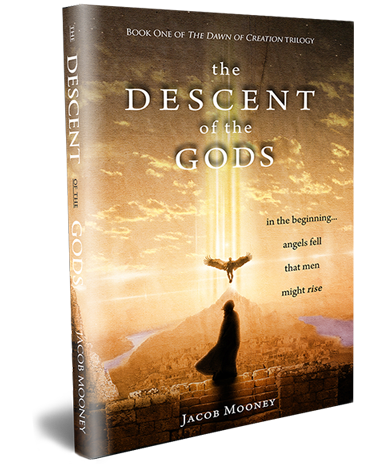
Jake Mooney is a lay researcher and the author of the novel The Descent of the Gods, with 25+ years studying Genesis 6. Chasing the Giants is where he brings Bible-first research together on the topic to help separate what we can really believe vs what is purely sensationalism.
Next step: Explore the free Genesis 6 guide for the full biblical case and use its signup form to receive careful, Scripture-first research updates by email.