In The Nephilim: The Shocking Truth | Angels And Demons 4 | Allen Nolan, Allen Nolan argues that the “sons of God” in Genesis 6:1–4 are fallen angels, and that the Nephilim are their hybrid offspring with human women. He does not treat the Nephilim themselves as fallen angels.
Nolan, founder of Cornerstone Fellowship, holds a degree in Biblical Languages and New Testament Greek from John Brown University and a master’s degree in Theology from Southwestern Baptist Theological Seminary. In his reading, the Nephilim were physically superior, giant-like “mighty men” of the pre-Flood world, all of whom died in the Flood. He interprets Genesis 6:3’s “120 years” as a limited window of divine patience before the Flood, not as a cap on human lifespan. Later biblical references to “Nephilim,” in his view, use a legendary or figurative label for unusually large or capable people.
Nolan’s answer: fallen angels fathered the Nephilim

The starting point for Nolan’s Genesis 6 interpretation is the identity of the “sons of God.” Nolan states plainly that the “sons of God” in Genesis 6:1–4 are fallen angels. That identification controls how he reads the rest of the passage.
The Nephilim are a second category. Nolan connects the word “Nephilim” with the Hebrew root n-p-l, “to fall,” and identifies them as the offspring of heavenly beings and human women. That etymological connection is debated, so “fallen ones” should be treated as Nolan’s interpretation rather than a settled lexical conclusion.
That distinction matters because Nolan’s view is often blurred into the claim that the Nephilim were fallen angels. In his argument, the fallen angels are the fathers; the Nephilim are the offspring. He describes their unusual nature this way: “So they were the heroes of the old world, men of renown. Now, what this is implying is that these Nephilim were superior creatures physically. They truly were giants… because they were half angel and half man, they were bigger, stronger, quicker, faster, and more agile than mortal men.”
Nolan’s teaching here is popular-level rather than a technical commentary, but it rests on a connected set of claims about terms, sequence, and category. The following grid keeps those categories separate.
| Term or phrase | Nolan’s use | Why it matters |
| “sons of God” | Fallen angels who took human women as wives | Places the sin, in Nolan’s view, in an angelic-human transgression |
| “Nephilim” | Hybrid offspring of fallen angels and human women | Prevents identifying the Nephilim with the angels themselves |
| “mighty men / men of renown” | Physically superior “heroes” produced by these unions | Connects their fame and power, in Nolan’s reading, to their hybrid origin |
| “120 years” in Genesis 6:3 | A grace period before the Flood | Reads the verse as a countdown, not a lifespan limit |
| “and also afterward” in Genesis 6:4 | A clause he thinks is often positioned misleadingly | Removes, in his view, a common argument for surviving Nephilim |
Why Nolan thinks “sons of God” settles the question

Nolan’s main evidence for the angelic reading is Old Testament usage of the phrase “sons of God.” He argues that Scripture should interpret its own terms, and that this phrase points to heavenly beings rather than a godly human line.
Nolan argues that the phrase “sons of God” consistently refers to angels in the Old Testament. He applies that pattern to Genesis 6: if the same phrase elsewhere refers to angels, then, for Nolan, an interpretation that changes its meaning here needs strong textual support. His presentation makes the repeated phrase central, but it does not work through every underlying Hebrew expression, textual variant, or counterexample in detail.
This leads to Nolan’s sharper hermeneutical claim. He does not frame the angelic reading as one harmless option among several. Nolan asserts, “To me, it’s a no-brainer. You either apply true hermeneutical principles and allow God’s Word to interpret itself, or you ignore hermeneutical principles and come up with your own theory, which has no biblical basis,” contrasting Scripture’s own usage with later explanations he considers imposed on the text.
That is why he rejects the Sethite-Cainite interpretation. In that view, the “sons of God” are the descendants of Seth and the “daughters of men” are the descendants of Cain. Nolan traces this proposal to Julius Africanus in the third century AD and treats it as a departure from the wording of Genesis itself: “He totally disregarded hermeneutical principles and proposed the theory that the sons of God were the descendants of Seth, and the daughters of men were the descendants of Cain.”
Nolan is not mainly offering a history of interpretation. He uses Africanus as an example of what he thinks happens when interpreters grow uncomfortable with the supernatural reading: the phrase “sons of God” is redefined away from its Old Testament pattern. Other Christian interpreters have defended human-lineage readings, but Nolan’s own argument turns on the consistency of biblical vocabulary.
Genesis 6:3 becomes a 120-year warning before the Flood

Nolan reads Genesis 6:3 not as a statement about the maximum human lifespan, but as a countdown to the Flood. He focuses on the Hebrew term translated “strive” and on the narrative movement from Genesis 6:1–4 into the Flood account.
Nolan understands God’s words to mean that the divine Spirit will not continue pleading with humanity indefinitely. On this reading, the 120 years are a final period of patience before judgment rather than a universal limit on human lifespan.
He states the same basic conclusion more directly when drawing the Flood connection: “…there was a 120-year grace period for men to repent, and, of course, they didn’t repent, so the flood came and it wiped them all out.” The verse therefore functions, in Nolan’s reading, as a timed warning within the Noah narrative.
This reading keeps Genesis 6:3 tied to the specific crisis of Genesis 6:1–4. The angelic unions, the rise of the Nephilim, human corruption, and the coming Flood form one sequence in Nolan’s presentation. The 120 years mark how long God will continue pleading before judgment arrives. Other readers understand the number as a limit on human lifespan, so Nolan’s countdown reading should be recognized as an interpretation of a disputed verse.
After the Flood, Nolan says the original Nephilim were gone

Nolan’s next major claim is that none of the original Nephilim survived the Flood. This controls how he reads Numbers 13 and later giant language.
He appeals to the comprehensive language of the Flood judgment, especially Genesis 6:7, where God declares, “I will wipe this human race I have created from the face of the earth.” In Nolan’s view, the judgment includes all human beings outside the ark and all angel-human hybrids as well.
That conclusion makes Genesis 6:4 important. Many readers see the phrase “and also afterward” as evidence that Nephilim existed both before and after the Flood. Nolan does not argue that the words are absent from the Hebrew text. Rather, he reads the clause with the statement about the “men of renown,” so it describes their reputation continuing after the Flood instead of their physical survival. That is Nolan’s syntactical proposal; other readers connect the clause differently.
On that reading, Genesis 6:4 is not saying that pre-Flood Nephilim physically continued after the Flood. Instead, Nolan understands their reputation as continuing afterward. The “men of renown” remained famous in human memory even though the beings themselves were destroyed.
That leads to his explanation of later references. Nolan says the original Nephilim “became legends” and that the name became a figure of speech after the Flood for unusually large or capable people.
Nolan gives the logic in one compressed statement: “…they became legends. So that word, Nephilim, became a figure of speech after the flood referring to anyone that was bigger, faster, quicker. We know that because the flood destroyed every man, woman, and child including the offspring of the Fallen Angels and mortal women.”
So when the Israelite spies in Numbers 13 say, “We saw the Nephilim there,” Nolan does not take that as proof of a surviving pre-Flood bloodline. He reads it as fear-shaped language: the spies use an old legendary name for people who seemed impossibly large or intimidating. Within Nolan’s framework, “Nephilim” is biological before the Flood and figurative after it. Genesis 6:4’s “and also afterward” is important to this discussion, but Nolan’s proposed syntactical reading does not by itself settle every question about how later giant traditions relate to the Flood.
Boundaries and disputed points
Several questions remain contested outside Nolan’s own presentation. This table distinguishes Nolan’s answer from issues his teaching does not attempt to settle in detail.
| Question | Nolan’s view | Other views or unresolved issue | Boundary here |
| Who are the “sons of God”? | Fallen angels; Old Testament usage makes this decisive for him | Alternative readings include Sethite and ruler/royal interpretations | This article documents Nolan’s angelic reading without treating ancient interpretation as doctrinal authority |
| What are the Nephilim? | Hybrid offspring of fallen angels and human women | Other readings identify them more generally as giants, warriors, or tyrants | The key distinction in Nolan’s argument is fathers versus offspring |
| What are the 120 years? | A one-time grace period before the Flood | Others read the number as a lifespan limit or symbolic judgment marker | Nolan’s view depends on the Flood countdown |
| Did Nephilim survive the Flood? | No; all original Nephilim were destroyed | Other proposals include survival, repeat incursion, or later biological continuity | Nolan rejects survival and repeat lineage arguments |
| How should Numbers 13 be read? | As legendary or figurative “Nephilim” language | Others read the spies as reporting actual post-Flood Nephilim | Nolan treats the term as a post-Flood byword |
| What role do later Jewish traditions play? | His stated argument rests on Genesis and Old Testament usage | Second Temple traditions are important in broader discussion | They are not the basis of Nolan’s case as summarized; Watcher-story details should not be imported into Genesis without being labeled as later expansion |
A final clarification is necessary. Nolan distinguishes the “sons of God” from the Nephilim: the former are fallen angels; the latter are their offspring. That category distinction is essential to representing his view accurately.
Conclusion: takeaways
Nolan’s central claim is specific: Genesis 6:1–4 describes fallen angels fathering hybrid Nephilim through human women, not Nephilim who are themselves fallen angels. He reads the 120 years as a pre-Flood grace period, holds that all original Nephilim died in the Flood, reads “and also afterward” as referring to their continuing reputation rather than physical survival, and explains post-Flood “Nephilim” language as legendary or figurative.
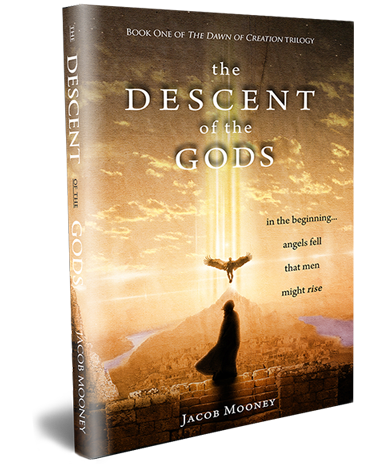
Jake Mooney is a lay researcher and the author of the novel The Descent of the Gods, with 25+ years studying Genesis 6. Chasing the Giants is where he brings Bible-first research together on the topic to help separate what we can really believe vs what is purely sensationalism.
This article draws on Allen Nolan’s public video teaching and the biblical passages it discusses. I have separated Nolan’s stated claims from my own clarifying analysis where category distinctions or disputed readings are easy to blur.
For broader context, continue with CTG’s guides to Genesis 6, the sons of God, and the Nephilim, or subscribe to the free monthly newsletter.