Direct answer: Yes— Genesis 6, the Nephilim, ancient myth, and 1 Enoch can be held in one coherent model, but only if Genesis leads and 1 Enoch remains later Jewish interpretation, not Scripture. The reason to keep reading is that this distinction changes how much weight each source should carry.
Originally, Genesis 6 most likely describes an event involving angels and earthly women that resulted in offspring whose deeds were widely remembered and retold by almost all early cultures, forming a portion of the basis of popular mythology that lasts to today.
That is the controlling proposal being tested here: Genesis 6 most likely reports a real angelic-human transgression; later myths may preserve distorted memories of it; some Second Temple Jewish writers may have reworked those themes within Israel’s theological world; the New Testament and several early Christian witnesses reflect an angelic reading; and later Christian interpretation increasingly moves in other directions.
Why I needed a working model
After more than 25 years of reading about Genesis 6, I have seen many theories that answer one question while creating two more. A proposal may sound convincing at a high level, then begin to break down when it must account for the Hebrew text, the date and genre of Second Temple writings, the New Testament’s use of those traditions, ancient myths, early Christian interpretation, and the places where Scripture simply stays silent.
That is why I built this model. I needed a working reference for testing claims consistently, separating what the Bible says from what later sources propose, and keeping the discussion from disappearing down a new rabbit hole every time another theory appears. This is not a creed or a claim that every detail has been settled. It is a provisional framework: defensible enough to use, but flexible enough to be revised, improved, or discarded if better evidence requires it.
The model in five steps
- Genesis 6 most likely describes a real transgression involving rebellious heavenly beings and human women, with the Nephilim connected to that event.
- Later cultures may preserve distorted memories of it. If the event was real and early, myths about divine rebellion and extraordinary offspring become relevant—but this is plausible reconstruction, not an explicit biblical claim.
- Second Temple texts develop the story. Works such as 1 Enoch interpret Genesis 6 within a Jewish theological setting and may answer themes circulating in the surrounding world. They reveal how some Jews read the passage; they do not supply new inspired facts.
- The angelic reading has substantial historical support. Jude, 2 Peter, and several early Christian writers show that this reading was important. Their use of related traditions does not validate every detail in 1 Enoch or later retellings.
- Scripture remains the controlling authority. Every later source must be weighed by its date, genre, purpose, and relationship to the biblical text, and every part of this reconstruction remains open to correction where the evidence is weak.
These steps do not carry equal certainty. The angelic reading is my preferred interpretation of the biblical text; the proposed relationship to particular myths and the aims of Enochic writers are more tentative. The rest of this article tests each link rather than assuming the whole chain is proven.
A few terms matter. The “sons of God” in Genesis 6:2,4 are the disputed figures; I prefer the angelic reading, while others argue for Sethites, rulers, or another human group. “Nephilim” are the mysterious beings named in Genesis 6:4; Genesis does not define the word or trace a full bloodline. “Watchers” is Second Temple language, especially from 1 Enoch, for a group of angels; Genesis itself never uses that term. And 1 Enoch is treated here as Jewish literature that can illuminate Jewish thought, not as a book that adds binding facts to the Bible.
Genesis leads; Enoch and myth follow

I take Genesis 6:1–4 at face value as a real event in early history, not as pure symbol or parable. The “sons of God” are real beings; the “daughters of man” are real women; the Nephilim were on the earth “in those days.” The passage is brief, but in light of other Old Testament uses of “sons of God,” especially in Job 1:6, Job 2:1, and Job 38:7, the angelic reading is the most natural starting point unless the immediate context forces another meaning.
This model then connects Genesis 6 to the widespread ancient pattern of rebellious divine beings, semi-divine heroes, and violent primeval ages. That connection is not Scripture’s explicit claim about any one pagan text. It is an interpretive judgment about family resemblance: if Genesis preserves the true account of an early supernatural rebellion, then post-Babel cultures could plausibly preserve distorted versions of the same memory.
In my reading, the Book of Enoch is not the origin of the story but a later Jewish attempt to retell and correct it. Enoch is valuable because it shows how some Jews near the New Testament period thought about Genesis 6, angels, judgment, and evil powers. But that value has a boundary.
Not all sources related to this topic should be taken with the same weight. We need to remember when and why some of these things were written. This perspective allows us to appreciate the Book of Enoch and other such sources for what they are, and not ascribe to them what they are not.
That hierarchy is the difference between careful reconstruction and sensationalism. Genesis and the New Testament define doctrine; Enoch, other Second Temple texts, pagan myths, and early Christian writers help us understand reception, interpretation, and cultural memory.
| Source stream | What it contributes | Authority level here | Main caution |
|---|---|---|---|
| Genesis 6:1–4 | Core biblical description of sons of God, daughters of men, and Nephilim | Controlling biblical authority | Brief; many details are unstated |
| New Testament references | Sinning angels and judgment; 2 Peter links the sequence to Noah and the Flood | Inspired Scripture | Warnings and applications, not full retellings |
| 1 Enoch and Second Temple works | Jewish expansions around Watchers, giants, and judgment | Informative, not binding | Later interpretation cannot govern Genesis |
| Ancient pagan myths | Possible distorted memories of divine rebellion and giant-like heroes | Illustrative only | Reworked through idolatry, politics, and local storytelling |
| Early Church Fathers | Evidence for how many early Christians read Genesis 6 | Historical witness | Important but not infallible |
Why I favor the angelic reading of Genesis 6
The first live question is the identity of the “sons of God.” My conclusion is not that every alternative is absurd, but that the supernatural reading best explains the whole pattern of evidence.
Although other interpretations may have some validity, the weight of evidence behind the supernatural theory for the identity of the sons of God seems to be the strongest way to interpret Genesis 6:1–4.
Three points carry most of the weight. First, the phrase “sons of God” in Job 1–2 and Job 38:7 refers to heavenly beings. Second, Genesis 6:2 contrasts “sons of God” with “daughters of man” in a way that reads more naturally as a heavenly-earthly pairing than as two human lines. Third, later Jewish and Christian interpretation, as seen in Second Temple literature and early patristic sources, often moves in the same direction.
When I first went back through the evidence, the early interpretive pattern mattered more than I expected. The Sethite and ruler views exist because Genesis 6 is terse. They try to solve real problems: how spiritual beings could take wives, whether angels can be sexual, and why the passage is so compressed. But those views must also explain why so much early Jewish and Christian interpretation saw angelic rebellion here. They must also account for why 2 Peter 2:4–5 places sinning angels in a judgment sequence that moves to Noah and the Flood, while Jude 6–7 places rebellious angels beside Sodom and Gomorrah as examples of judgment.
The conclusion remains a preference, not an infallible proof. Jude and 2 Peter are allusive. Genesis does not pause to define ontology. The historical evidence outside Scripture is useful but not authoritative. So the right wording is “most likely,” not “the only possible Christian reading.”
Myth as distorted memory, not a second Bible

If Genesis 6 records a real angelic-human transgression, similar stories in other cultures become worth examining. The model does not need every myth to be a direct retelling of Genesis 6. It only asks whether recurring themes of rebellious divine beings, earthborn younger gods, violent semi-divine heroes, and primeval disorder make sense as possible distortions of a shared early memory.
It seems that this story was remembered and retold widely during the time between Babel and Abraham. The fact that many cultures share a story of a rebellion against the ‘old gods’ by the ‘earthborn young gods’ would support this claim.
This proposal connects that pattern to major mythic corpora:
Over time, the divine sons of the Creator and their semi-divine offspring became the subject of worship or veneration through epic tales, forming the basis of very early myths such as The Epic of Gilgamesh (c. 2100–1200 BC), the Enuma Elish (pre-1000 BC), and Hesiod’s Theogony (c. 700 BC).
This is one of the more speculative steps, and it should be labeled that way. Genesis does not say Gilgamesh, the Enuma Elish, or Hesiod’s Theogony are corrupt versions of Genesis 6. The argument is comparative: the biblical account supplies a real event; later nations, detached from true worship, may have reshaped memory into myth, genealogy, hero cult, and idolatry. That is plausible, but it is not the same kind of claim as “Genesis 6 says the sons of God took wives.”
This distinction also protects the Bible from being made dependent on pagan material. The model does not say Genesis borrowed its theology from surrounding myths. It says pagan myths may preserve corrupted memories of the real history Genesis states more soberly.
What 1 Enoch contributes, and what it cannot supply

Second Temple Jewish texts such as 1 Enoch take Genesis 6 in an unmistakably angelic direction. They name Watchers, expand the story of forbidden knowledge, describe judgment, and link the pre-Flood transgression to later evil. The model I prefer explains this as a possible Jewish counter-myth: not mere curiosity, but a theological effort to reclaim a story that pagan cultures had turned toward idolatry.
During the Second Temple period, some Jewish writers may have sought to reclaim these themes within Israel’s theological world and answer stories about gods, heroes, giants, and primeval rebellion that circulated around them.
That proposal treats Jewish authors as active interpreters working in a world full of rival stories about gods, heroes, giants, and ancient rebellion. It helps explain why 1 Enoch sounds both biblical and mythic: it is operating inside Israel’s theological universe while answering themes the wider ancient world also knew. Still, 1 Enoch does not state this whole program directly, so the reconstruction should remain a theory rather than an established fact.
But Enoch is not a hidden archive of missing Genesis data. Its importance is historical and interpretive, not canonical.
These books most likely contain little (if any) original facts about the event that the Bible does not share. Their value lies in providing a window into Jewish religious thought and concerns during the time when they were most likely written.
That sentence fences off many popular excesses. 1 Enoch can help us understand Watchers language, the imaginative world behind Jude, and the way some Jews connected Genesis 6 with angelic judgment. It cannot safely establish precise angelic names, numbers, technologies, rituals, or timelines as facts about the pre-Flood world. Some details may preserve older lore, but we have no reliable way to separate memory from embellishment where Scripture is silent.
The New Testament and early Church witness
The model does not rest only on Genesis and later Jewish imagination. Jude 6 and 2 Peter 2:4 speak of angels who sinned and were held for judgment. Second Peter places that judgment in a sequence that moves directly to Noah and the Flood; Jude places the angels beside Sodom and Gomorrah as examples of rebellion and punishment. Jude also quotes an Enochic prophecy in Jude 14–15, which shows that an inspired writer could use Enochic material without making 1 Enoch the controlling source for doctrine.
Thus, when we come to the New Testament writers and early church fathers, who referenced this event using the same terminology that the Book of Enoch (and others) use, this tells us that they considered the event to have been an illicit incursion by angels.
The New Testament writers use the tradition pastorally. They are not trying to satisfy our curiosity about giants. They warn that rebellion against God, whether angelic or human, ends in judgment. That is why the angelic reading matters: not because it licenses speculation, but because the apostles can appeal to sinning angels as part of a serious moral warning.
Early Christian writers often move the same way. Some speak of angels falling through lust, producing giants or demonic corruption, and teaching forbidden arts. Some also connect pagan gods and myths with demonic deception. I would not treat every patristic detail as correct, but the broad pattern is hard to miss: many early Christians found the angelic reading natural, not embarrassing.
Several surviving early Christian writers accepted the angelic reading and echoed some Enochic themes, though that agreement was neither universal nor a canonization of 1 Enoch.
That does not mean the early Church Fathers canonized 1 Enoch. It means they often shared the broad interpretation behind it: angels sinned, the pre-Flood world was corrupted, and God judged the rebellion severely.
A major later turning point is associated with Augustine.
By Augustine’s time, the angelic interpretation was losing ground in parts of the church, while books such as 1 Enoch were increasingly treated as pseudepigraphal and non-canonical.
The concerns behind that move were not trivial. Questions about angelic embodiment, sexual unions, and the authority of popular Second Temple literature made the angelic reading less attractive to later interpreters. That shift does not prove the angelic reading correct; it simply shows that the Sethite reading was not the only major Christian interpretation and should not be projected backward as a universal early consensus.
Where the model stops

The strongest claims are closest to Scripture: Genesis 6 names sons of God, daughters of man, and Nephilim; Jude and 2 Peter speak of sinning angels under judgment; early Jewish and Christian interpretation often reads these together. The thinner claims concern the precise path from Genesis 6 to particular myths, the compositional aims of 1 Enoch, and the details Enoch adds beyond Scripture.
This view of the topic does not answer every question that we have, and just about everyone will have a different opinion on some aspect.
For clarity, I would separate the model’s claims this way:
| Model step | Support type | Confidence label | Boundary |
|---|---|---|---|
| Genesis 6 involves sons of God and Nephilim | Direct biblical text: Genesis 6:1–4 | Certain | The text is terse and leaves many mechanics unexplained |
| Sons of God are angelic beings | Old Testament usage, Jude, 2 Peter, early interpretation | Preferred / high | Human-line readings remain possible |
| Ancient myths preserve echoes of the event | Thematic similarity and cultural patterning | Plausible | No biblical text identifies a specific myth as a retelling |
| 1 Enoch may correct paganised stories | Historical fit and possible polemical use of mythic motifs | Speculative but reasonable | Enoch does not state this program directly |
| 1 Enoch supplies new facts | Later pseudepigraphal elaboration | Rejected / very low | Details cannot be verified where Scripture is silent |
| Many early church witnesses accepted the angelic reading | Surviving patristic and Jewish witnesses | Historically significant | Not every writer comments; later shifts matter |
The most important boundary is simple: Scripture’s silence is real. Genesis 6 does not explain how angelic-human unions were possible, exactly how the Nephilim relate to the phrase “also afterward” in Genesis 6:4, or how every rebel-spirit tradition fits together. 1 Enoch is useful for Second Temple context, but it is not a source of new inspired data. Mythic parallels are suggestive, not conclusive. Early Christian reception is historically important, but not revelation.
Conclusion: takeaways
Takeaways: Genesis should lead the discussion; Enoch should inform it without governing it. The angelic reading of Genesis 6 is, in my judgment, the most coherent reading of the biblical language, New Testament allusions, and early interpretive history. Ancient myths may preserve distorted echoes of the same primeval rebellion, but they should never be treated as a second Bible. Second Temple works such as 1 Enoch help us understand the world of Jude and 2 Peter, not recover secret doctrines. The value of this model is not that it closes every question, but that it keeps different kinds of evidence in their proper places and can change when better evidence demands it.
For readers who want to keep Christ central, the practical point is not fascination with Watchers or Nephilim. Scripture teaches that rebellious powers are subject to Christ, and the New Testament’s emphasis is judgment, repentance, and confidence in God’s victory, not speculation. Genesis, Jude, and Peter press us toward sober trust that God judges evil and that Christ reigns over every ruler and authority.
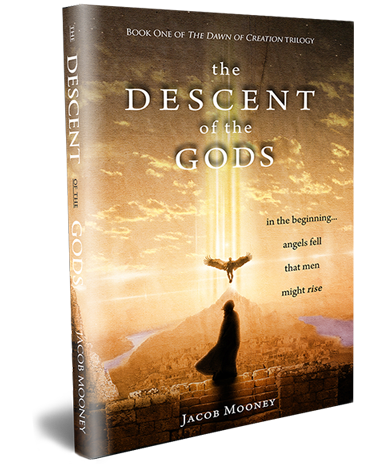
Jake Mooney is a lay researcher and the author of the novel The Descent of the Gods, with 25+ years studying Genesis 6. Chasing the Giants is where he brings Bible-first research together on the topic to help separate what we can really believe vs what is purely sensationalism.
This piece weighs Genesis 6:1–4, Jude 6–7, 2 Peter 2:4–5, 1 Enoch 6–16, selected ancient myths, and early Christian witnesses by source type, authority, and date. The aim is to distinguish direct biblical claims from plausible reconstruction and from speculation.
If you would like to keep following careful, Bible-first work on Genesis 6, the Nephilim, and related themes, you are warmly invited to subscribe to the free monthly Chasing the Giants newsletter.