Gavin Ortlund thinks the “sons of God” in Genesis 6:1–4 were probably fallen angels and that the Nephilim were their offspring with human women. He gives seven reasons for the supernatural reading, then asks how it fits with Jesus’ teaching about angels and marriage. The case is strongest on the identity of the sons of God. The parentage of the Nephilim is a second question, and Genesis 6:4 gives us less to go on.
Watch Gavin Ortlund’s “7 Reasons the Nephilim Were Angelic” (Truth Unites, February 24, 2026).
The seven reasons for an angelic reading
- How Scripture uses “sons of God.” In Job 1:6 and 2:1, the sons of God appear before the Lord. In Job 38:7, they rejoice at creation alongside the morning stars. Ortlund also points to related language in Psalms 29 and 89. Israel and the Davidic king can be called God’s son in other settings, but Job offers the closest parallels for the group named in Genesis 6. That makes the contrast between the sons of God and the daughters of humankind especially significant. Watch from 4:33.
- Where the episode falls in Genesis. The sons of God see and take, recalling Eve’s seeing and taking in Genesis 3. Ortlund reads the episode as a further breach of God’s boundaries in the run-up to the Flood. The placement supports his reading, though a ruler taking wives at will would also fit a story about escalating evil. And the spies’ comparison to grasshoppers in Numbers 13:33 is part of their report, so it bears little weight on the question of ancestry. Watch from 6:38.
- Stories an ancient audience would recognize. The Epic of Gilgamesh gives Ortlund an example of an ancient story about a renowned figure with divine and human ancestry. He suggests Genesis could be turning a familiar pattern on its head by placing the unions next to God’s judgment. That is a plausible way to read the comparison. A parallel alone cannot tell us whether Genesis drew directly on a particular story. Watch from 12:27.
- The Greek translation preserves an angelic reading. Greek witnesses differ between “sons of God” and “angels of God.” The Greek word used for the Nephilim, gigantes, also helps explain the history of the translation “giants.” The angelic variant shows how some ancient readers understood the sons. It does not settle what the Hebrew author intended or what physical stature the Hebrew term implies. Watch from 16:11.
- Jewish writers take the heavenly beings seriously. Ortlund draws on Josephus, Philo, Jubilees, and especially 1 Enoch. In 1 Enoch 6–11, the Watchers swear an oath, take wives, and father giants. The fuller story shows how early Jewish readers made sense of Genesis 6. Its oath, named angels, and forbidden teachings are details of that retelling. Watch from 16:46.
- Jude and 2 Peter recall angelic sin. Jude 6 describes angels who leave their proper dwelling, and Jude goes on to speak of Sodom and Gomorrah. In 2 Peter 2:4–5, the judgment of sinning angels precedes the example of Noah’s Flood. The sequence and imagery make an echo of the Watchers tradition plausible, especially since Jude 14–15 quotes a prophecy also found in 1 Enoch 1:9. Neither letter identifies the Nephilim or describes how they were born. Watch from 20:15.
- Early Christians read Genesis this way. In the Second Apology, chapter 5, Justin Martyr describes angels transgressing their appointed order and having children with women. Ortlund uses him as a representative witness without making him speak for the whole early church. Augustine’s influential Sethite reading illustrates how differently Christians could read the same text. Watch from 21:45.
What about Jesus’ teaching that angels do not marry?
In Matthew 22:23–33, Jesus answers the Sadducees’ question about marriage at the resurrection. Ortlund argues that the comparison with angels in heaven describes their ordinary state and leaves open the possibility of an exceptional act of rebellion. The angels who visit Lot in Genesis 19 eat and pull him to safety, so the biblical story can picture angels interacting bodily with people. That answers part of the objection. Eating and touching establish physical interaction in the story, while the reproductive claim remains an inference from Genesis 6. Watch from 24:23.
Does Genesis call the Nephilim the angels’ children?
Genesis 6:4 places the Nephilim on earth in those days and afterward, mentions the children born from the unions, and speaks of the mighty men of old. Ortlund takes those references together. That is a natural reading, and it is how 1 Enoch develops the story. The wording still leaves room for another reading: Genesis could mention the Nephilim as people already present when these unions took place. Mitchell Chase’s reading, which identifies the sons of God as rebel angels and the Nephilim as human mighty men, shows why a reader can accept the heavenly identity without sharing Ortlund’s conclusion about their children.
The evidence here does different jobs. Job helps identify the sons of God. The movement toward the Flood makes the unions part of a larger story about evil and judgment. Ancient translations and retellings show how readers connected the sons, the unions, and the Nephilim. The case for the parents can be strong while the case for who their children were remains open.
Where Ortlund lands
Ortlund closes by asking what Christians gain from taking the passage seriously. He wants readers to recover a sense of the supernatural in Scripture, see judgment as God’s answer to a creation disfigured by evil, and find their hope in Christ. His contrast is between heavenly beings who take for themselves and the Son who comes to serve and save. The pastoral argument also explains his restraint. He introduces the idea that demons are the spirits of dead giants as an ancient interpretation and leaves it unendorsed. Watch from 28:33.
Ortlund makes a persuasive case for taking the sons of God as heavenly beings. On the Nephilim themselves, his conclusion is possible and has an ancient pedigree, but the biblical details are sparse. Those two judgments can stand together.
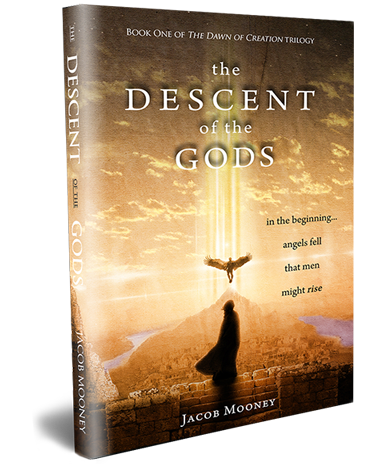
Jake Mooney is a lay researcher and the author of the novel The Descent of the Gods, with 25+ years studying Genesis 6. Chasing the Giants is where he brings Bible-first research together on the topic to help separate what we can really believe vs what is purely sensationalism.