Greg Lanier’s series on 1 Enoch starts with a question that often gets lost in talk about the Nephilim: what kind of book are we reading? His introduction treats 1 Enoch as a collection of Jewish writings about evil, judgment, and hope.
In the Watchers episode, he shows how one part of that collection expands four verses in Genesis into a story about rebellious angels and a world overcome by violence. He sees good reason to take the fallen-angels reading of Genesis seriously and leaves his final judgment open.
This review follows the ongoing series. It covers the introductory episode and the episode on the Watchers.
What is 1 Enoch?
Watch “What Is 1 Enoch? A Clear and Complete Introduction.”
The Enoch of Genesis 5:21–24 walks with God and is taken by him. In 1 Enoch, that brief biblical figure becomes a recipient of visions about heaven, the origins of evil, Israel’s history, and God’s future judgment. In his tour of the collection, Lanier maps out five parts readers will encounter in R. H. Charles’s English translation:
- Book of the Watchers (1–36). Enoch learns about the heavenly world, the rebellion of the Watchers, and God’s response. The core Watchers story occupies chapters 6–11.
- Parables or Similitudes (37–71). A figure called the Son of Man appears as an agent of judgment. Lanier points readers back to Daniel 7 and flags the dating and direction of influence as questions for a later episode.
- Astronomical Book or Book of Luminaries (72–82). The movements of the sun, moon, and stars matter here because of a dispute about the calendar.
- Dream Visions (83–90). Two dreams look back toward the Flood and then retell history using animals as symbols. The second is often called the Animal Apocalypse.
- Epistle and concluding materials (91–108). Exhortations to remain righteous sit alongside other material, including the account of Noah’s birth in chapters 106–107.
Lanier’s genre discussion gives readers a way to make sense of that variety. An apocalypse can use a vision of heaven or a symbolic retelling of the past to answer a present question: will God intervene while his people are suffering?
The animals in the Dream Visions, for instance, stand for people and powers. Having that kind of writing in view makes it easier to ask what the Watchers story is trying to explain. Watch the discussion of apocalypse from 4:39.
The manuscript evidence gives that reading historical footing. Aramaic fragments from Qumran show that portions of the collection circulated well before the surviving complete Ethiopic copies. Greek witnesses preserve portions as well, while the Ge’ez tradition preserves the fullest form.
The Parables are absent from the known Qumran fragments, and Lanier treats their date as a separate question. An early manuscript of one portion can establish that portion’s antiquity, while the date of the whole collection calls for other evidence. The Ethiopian Orthodox Tewahedo Church receives 1 Enoch as Scripture, a point worth keeping in view when talking about its place in different Christian canons. Watch the manuscript overview from 10:34.
Who are the Watchers?

Lanier starts with Genesis 6:1–4. The sons of God take human wives, children are born, and the passage mentions the Nephilim and the mighty men of old. Ancient translators already show how readers could connect the details.
In Lanier’s example, the Greek translation uses gigantes for both the Nephilim and the mighty men. That is evidence for how the translator read the passage, which leaves the Hebrew wording itself to be weighed. Watch the Genesis discussion from 1:27.
The word “watcher” can describe a heavenly figure before any rebellion enters the story. In Daniel 4, a watcher announces judgment on Nebuchadnezzar. Lanier connects that Aramaic terminology with the holy ones and watchers at the opening of 1 Enoch.
In chapters 6–11, a group of these heavenly beings swears an oath, takes human wives, and fathers giants. The giants spread violence, and the Watchers disclose practices such as sorcery and the making of weapons. The faithful angels appeal to God, Noah is warned, and the rebels are bound for judgment.
Chapter 15 connects the giants with the origin of evil spirits. Those details belong to 1 Enoch’s expansion of the biblical narrative. Watch the account from 4:20.
One of Lanier’s most useful observations concerns where the two stories put the blame. Genesis 6:5 and 11–13 emphasize human wickedness and a world filled with violence.
The Book of the Watchers gives the heavenly rebellion and its offspring a much larger share of the explanation. Reading them side by side lets us see what the retelling adds to Genesis, even if we think its first readers recognized a genuine connection.
What the story may have meant to its first readers
Lanier finds it plausible that the Watchers story spoke to Jewish readers facing war and domination in the age of Alexander and his successors. Rulers associated with divine parentage and armies spreading bloodshed offer a possible context for imagery about heavenly rebels and violent giants. On this reading, an ancient story about judgment gave readers a way to understand the violence around them and hope that God would intervene.
The scenario is a historical proposal about the purpose of the retelling. The episode gives no basis for naming particular rulers behind individual Watchers or giants. Watch the historical proposal from 19:49.
Does Lanier think Genesis 6 describes fallen angels?
Lanier surveys three readings: heavenly Watchers, human rulers or nobles, and the line of Seth. The first has ample early Jewish and Christian support, including Jubilees and writers such as Justin Martyr. Lanier doubts that the nobles reading explains much of the context.
He traces the Sethite alternative through Julius Africanus and Augustine, whose account identifies the sons of God with a human line. His discussion of the three readings develops themes from his earlier short video on Genesis 6, which is separate from this series. Watch the three readings from 24:59.
Lanier’s last question is what to do with Jude and 2 Peter 2. Jude describes angels kept for judgment and uses a prophecy found in 1 Enoch. Second Peter places sinning angels next to Noah in a sequence of examples.
For Lanier, the resemblance is reason to keep the fallen-angels possibility open. The letters themselves give us angelic rebellion and judgment.
They leave the parentage of the Nephilim and the origin of demons unstated. Lanier says he will return to the New Testament’s use of 1 Enoch. Watch his closing assessment from 34:22.
Lanier’s first two videos work best together. The introduction shows how much of 1 Enoch lies beyond the Watchers, and the second episode lets readers watch an early Jewish writer develop the questions Genesis leaves open. That makes the series a useful guide to how Genesis 6 was read and why its interpretation still matters.
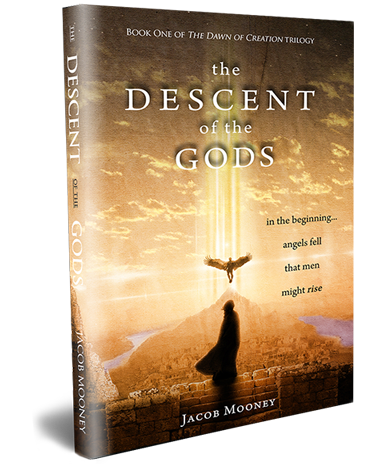
Jake Mooney is a lay researcher and the author of the novel The Descent of the Gods, with 25+ years studying Genesis 6. Chasing the Giants is where he brings Bible-first research together on the topic to help separate what we can really believe vs what is purely sensationalism.