In Joe Rogan Experience #2530 – Timothy Alberino, Timothy Alberino argues that biblical-style giants were real, that their remains still surface in places such as Afghanistan, Sardinia, North America, and Peru, and that some evidence is being hidden for occult reasons tied to Baal and the Rephaim. My judgment is equally direct: Scripture does describe supernatural rebellion, but Alberino’s larger system rests heavily on unverifiable testimony, later interpretive traditions, and conspiracy inference rather than on publicly testable evidence or explicit biblical teaching.
Who is Timothy Alberino?
Timothy Alberino is an author, researcher, and filmmaker whose work focuses on biblical giants, ancient civilizations, UFOs, and what he describes as a coming posthuman age. He previously worked with Steve Quayle investigating alleged giant remains and produced documentaries through Gen6 Productions. His appearance on Joe Rogan Experience #2530 brought many of these ideas to a much larger audience.
That distinction matters because Alberino’s framework feels complete. It joins Genesis 6, 1 Enoch, giant folklore, megalithic ruins, demonology, and transhumanism into one explanatory map. The question is not whether Christians may take giants or rebellious heavenly beings seriously. We should. The question is whether this particular map deserves biblical weight.
What Timothy Alberino Told Joe Rogan About Giants and the Nephilim

On Rogan’s show, Alberino is the one advancing the claims. Rogan mostly asks questions, reacts, and presses for details. Alberino’s central picture is consistent: giants were not merely tall people with medical gigantism, but massive beings, often around 8–12 feet tall, connected in his argument to the Nephilim and Rephaim, whose traces he believes are still being suppressed.
Key terms come early. The Nephilim are the enigmatic figures of Genesis 6:4. The Rephaim are associated in the Old Testament with giant clans and, in some passages, with the dead. The Watchers are the rebel angels in 1 Enoch who descend, take human wives, and father giants. For Alberino, 1 Enoch is not just background to Genesis 6; it is the master narrative behind the world’s giant and flood traditions.
“So, the Book of Enoch is a compilation of texts ranging from the 4th century BC to probably the 1st century AD. The tradition of Enoch, I think, is very old. I think that tradition of Enoch, the story I just outlined, is the oldest story we have, the one upon which all the other stories are based.”
That claim controls his method. Genesis 6 becomes the doorway into a thicker story supplied by the Enochic tradition: Watchers, hybrid giants, demonic spirits, forbidden knowledge, and judgment. That tradition is historically important and early, but it is still an interpretation and expansion of Genesis rather than a simple restatement of the four biblical verses. Once that framework is treated as original history, global myths and modern anecdotes are no longer isolated curiosities. They become fragments of one lost world.
He applies that template to Afghanistan, where the alleged Kandahar giant becomes a still-extant biblical-style giant; to Sardinia, where Nuragic sites and “tombs of the giants” become signs of a literal giant culture; to North American mound reports and Smithsonian rumors; and to Peruvian chronicles. He also argues that human beings are biologically degenerating while technology accelerates toward a transhumanist future that departs from God’s design.
| Interview theme | Alberino’s claim | Main support appealed to | My caution |
|---|---|---|---|
| Kandahar giant | He argues that a giant was killed by U.S. troops and removed under secrecy. | Anonymous military testimony and an alleged official denial. | Oral testimony cannot carry a global theology. |
| Sardinia | He argues that the island preserves evidence of real giant remains and cultic memory. | Local reports, tomb traditions, Nuragic sites, and folklore. | Suggestive places still need testable finds. |
| North American mounds | He treats old reports as possible evidence of removed or suppressed giant bones. | Newspaper accounts, institutional rumors, and Lincoln’s language. | Lost or sensational reports are not proof of suppression. |
| Enoch and Watchers | He argues that 1 Enoch preserves the oldest explanation of giants, demons, and flood myths. | Genesis 6, 1 Enoch, and related Second Temple material. | Background literature cannot outrank Scripture. |
| Rephaim and Baal | He argues that dead giants became spirits contacted in ancient rites. | Enochic demonology and Ugaritic ritual material as he presents it. | The Bible gives less detail than the system requires. |
| Lost technology | He argues that megalithic architecture hints at a superior pre-Flood or very ancient elite. | Engineering puzzles and comparative stonework. | Difficulty explaining construction is not evidence of Watchers. |
| Transhumanism | He argues that modern humanity is weakening while technology pushes post-human redesign. | Mutation concerns, fertility decline, and artificial wombs. | Real trends should not be forced into Genesis 6. |
By the end, Alberino has moved far beyond arguing for the possibility of ancient giants. His larger framework treats Enoch as a key to primordial history, missing giant remains as potentially spiritually significant, and modern occult practices as possible continuations of ancient traditions.
Why the story persuades

Alberino is effective because he combines dramatic testimony, ancient scenery, and recognizable biblical categories. I went to the interview expecting the familiar giant claims; what stood out was how the argument builds cumulatively.
The Kandahar story is the clearest example. Alberino frames it as a military episode: a C-130 pilot, Bagram in 2005, intelligence “babysitters,” secrecy, and an enormous corpse on a pallet. The descriptive details are meant to separate this being from medical gigantism.
“Now the giant had red hair. He had six fingers on each hand, six toes on each foot. His feet were wrapped in a crude canvas foot wrapping, and he was solid as a rock.”
The description makes the story feel like a field report. But evidentially, the weight still rests on unnamed testimony and unproduced photographs. Vividness is not verification. A story can be internally concrete and still remain inaccessible to public testing.
Sardinia works differently. Instead of a single military anecdote, Alberino builds atmosphere through geography, ruins, and local memory.
“As I was traveling around the world studying giants and researching this topic and investigating different stories and legends, I went to Malta, which is very interesting, obviously with lots of legends of giants associated with the megaliths. And then I kind of hit ground zero for giants, which is the island of Sardinia.”
Here the persuasive force comes from accumulation: Nuraghe towers, giant-tomb traditions, alleged oversized objects, local workers claiming skeletons were removed, and stories of rites involving giant bones. The listener is not given one reproducible discovery so much as a dense environment in which the conclusion feels natural.
Alberino also borrows authority from older voices. Peruvian chronicles, Native American giant traditions, Andean flood stories, and Lincoln’s reference to an “extinct species of giants” all help create the sense that many cultures are remembering the same kind of event. That is the strongest part of his case as comparative mythology: giants, floods, gods, demigods, and primordial ages really do recur across cultures.
The weakness is the jump from recurring motifs to a specific historical mechanism. Shared themes may reflect common human memory, theological corruption, literary borrowing, encounters with large bones, symbolic storytelling, or combinations of these. They do not, by themselves, establish a continuing population of Nephilim-descended beings or a modern cover-up.
To his credit, Alberino does not accept every sensational claim. He tells Rogan that he once considered the Nazca three-fingered mummies possible but now thinks they are “more likely than not…a hoax,” citing their murky origin, early obvious fakes, and anatomical objections. That shows he can reverse course. The problem is that this skepticism is applied less forcefully to accounts that fit his preferred Watcher-and-giant framework.
The core leap: from giant traditions to occult cover-up

The most consequential move is not Alberino’s belief that giants existed. It is his inference that missing remains point to an ongoing occult program. He rejects common explanations that giant discoveries would be hidden merely to protect secularism or evolution. He argues that such finds would validate many ancient cultures, not Christianity alone, and that evolutionists could absorb giants as another humanoid branch.
Having dismissed those motives, he turns to a darker explanation.
“So, the only thing left on the table for me is that there’s something very sinister going on in regard to the remains of giants. And if you study the mythology of giants all over the world, especially in the ancient Near East, you will discover that there was in fact a cult of giants, that there were cultures that venerated giants and that there was a very particular belief about giants.”
This is where the evidential standard changes. A vanished skeleton is no longer only a problem of provenance, newspaper reliability, museum practice, or excavation control. It becomes potential evidence of spiritual concealment. That interpretive move can absorb almost any absence: if bones appear, they support the case; if they disappear, their disappearance may support the case even more.
The demonology behind that move comes largely through the Enochic tradition, an influential Second Temple Jewish expansion of Genesis 6 rather than an explicit teaching of Genesis itself.
“And the idea is that this race of beings who are not entirely human, they’re hybrids, that when they die, you can still make contact with their spirits, with their souls. They can be summoned. They, in fact, these are the demons that, in the New Testament of the Bible, possess people. This is the origin of demons, by the way, in Hebrew cosmology.”
Scripture does teach real demonic powers. It also speaks of Rephaim in ways that overlap giant clans and the realm of the dead. But the Bible never explicitly says demons are the disembodied spirits of dead giant hybrids. That explanation is known from 1 Enoch and related Jewish tradition. It may be important background for Second Temple thought, but it is not stated as doctrine in Genesis, the Gospels, or the apostles.
Alberino then connects that demonology to ancient Near Eastern ritual.
“So, it’s these heroes of old, these descendants of the Nephilim, that the Amorites and the ancient Near Easterners are attempting to make contact with because they have knowledge and these are possessing spirits. And so, in the rite of Kispum the kings would summon the Rephaim by name, and you can find this in the Ugaritic texts.”
The ancient material is relevant as evidence for what some ancient people believed and practiced, but the categories need to stay distinct. Kispum is normally discussed in Mesopotamian and Akkadian contexts as a funerary or ancestral rite, while Ugaritic texts refer to the rpum or Rephaim in ways connected with deceased or royal figures. Scholars continue to debate exactly how those Ugaritic figures relate to the biblical Rephaim. Alberino combines these strands into a picture of rulers summoning dead giant spirits for power, but the ancient texts do not by themselves establish that full reconstruction.
The issue becomes even larger when Alberino connects the ancient material to a modern occult cover-up. To move from ancient funerary rites and Rephaim traditions to present-day elites hiding or using giant bones would require specific evidence of identifiable actors, practices, objects, and continuity. Interestingly, Rogan pushes back at precisely this point. When Alberino cites a supposed Baal reference in material connected with Jeffrey Epstein, Rogan notes that the reference may have been misinterpreted and says he cannot tell whether it has anything to do with the occult. Alberino nevertheless continues by presenting the broader connection as his theory.
That is why the pastoral risk is real. Once a believer accepts an occult Baal-driven cover-up of giant remains, ordinary gaps in evidence become spiritually charged. Missing artifacts, closed archives, bad journalism, and institutional incompetence can all be folded into the same hidden program. Curiosity then begins to function like suspicion.
None of this denies spiritual warfare. Ephesians 6:12 says believers do not wrestle merely against flesh and blood. But the New Testament’s answer is not decoding secret supply lines of bones. It is truth, righteousness, the gospel of peace, faith, salvation, the word of God, prayer, and the public triumph of Christ.
Where a sober biblical reading draws the line

Genesis 6 should not be flattened into mere human politics. The “sons of God” language provides substantial support for a heavenly-being interpretation, and 2 Peter and Jude refer to sinning angels who were kept for judgment. A supernatural reading is not fringe by default.
But Scripture is concise where Alberino is expansive. It does not give biographies of Watchers, explain the mechanics of demon origins, teach that giant bones can empower spirits, or identify modern Baal-venerating elites as custodians of hidden remains. Those claims come from combining biblical hints, 1 Enoch, ancient ritual texts, folklore, and modern conspiracy interpretation.
| Source layer | Responsible use | Limit | Christian posture |
|---|---|---|---|
| Canonical Scripture | Final authority on rebellion, judgment, demons, and Christ’s victory. | Does not map a modern giant-bone conspiracy. | Submit every claim to the text. |
| 1 Enoch and Second Temple texts | Show how some ancient Jews expanded Genesis 6. | Cannot create binding doctrine. | Use as background, not canon. |
| Global myths and legends | Reveal recurring memories and motifs. | Do not prove exact biblical history in detail. | Compare carefully and humbly. |
| Anonymous testimony | Shows what witnesses claim or communities believe. | Cannot replace physical corroboration. | Listen without surrendering verification. |
| Archaeology and remains | Can measure bones, context, DNA, and stratigraphy. | Cannot supply theology by itself. | Welcome genuine finds and peer review. |
| Modern occult-cover-up claims | May identify real wrongdoing where evidence exists. | Cannot become the default explanation for missing evidence. | Investigate soberly; refuse fear. |
A careful Christian approach can affirm a supernatural Genesis 6, appreciate 1 Enoch as historically important context, and still refuse to treat Enoch as the missing completion of the Bible. Portions of the Enochic tradition are centuries older than the New Testament and clearly influenced Second Temple interpretation, which makes them important evidence for reception history even where they go beyond what Genesis itself states. It can also welcome real evidence for unusual human remains if properly excavated, measured, published, and open to critique.
Most importantly, the subject should bend back toward Christ. First Peter 3:19–22 mentions the spirits from Noah’s day in the context of Jesus’ victory. Colossians 2:15 says Christ disarmed the rulers and authorities by the cross. Healthy curiosity asks how these strange passages deepen our grasp of Scripture and Christ’s triumph. Hidden-knowledge theology asks what secret system we now know that ordinary Christians do not.
Frequently Asked Questions
Did Timothy Alberino say the Kandahar Giant was real?
Yes. Alberino tells Rogan that he believes the account he received from a C-130 pilot and says other military and government contacts have reacted to the subject in ways he finds significant. The central problem is verification: the interview does not provide photographs, records, physical remains, or named witnesses that can be independently tested.
Does the Bible say the Nephilim were giants?
Genesis 6:4 names the Nephilim without defining their height. Numbers 13:33 associates the name with the unusually formidable Anakim, and the ancient Greek Septuagint translates Nephilim with gigantes. That gives the giant interpretation substantial ancient support, but Scripture does not give a height range or a physical profile.
Does the Bible say demons are the spirits of dead Nephilim?
No biblical passage explicitly says this. The explanation appears prominently in the Enochic Watchers tradition, where the spirits of the dead giant offspring become evil spirits. That tradition is important for understanding some Second Temple Jewish thought, but it should not be presented as a direct statement from Genesis or the New Testament.
Is there evidence that giant skeletons are being covered up?
There are historical reports, modern anecdotes, and allegations of removed or missing remains. Alberino treats their accumulation as significant. But the Rogan interview does not present publicly testable physical evidence demonstrating a coordinated institutional or occult cover-up.
Conclusion
Takeaways: Take Genesis 6 seriously. Treat 1 Enoch as valuable background, not governing revelation. Require public evidence for claims about giant remains and cover-ups. Do not let fear of hidden elites become a substitute for biblical spiritual warfare. Alberino’s interview is compelling, but its largest claims reach beyond what Scripture and verifiable evidence can carry.
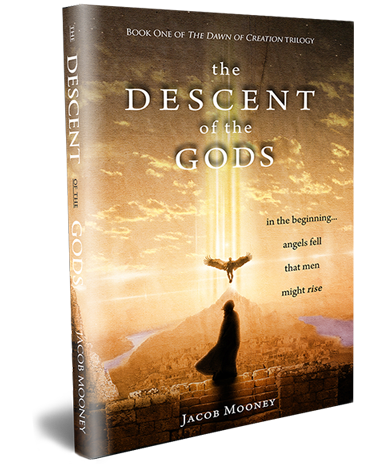
Jake Mooney is a lay researcher and the author of the novel The Descent of the Gods, with 25+ years studying Genesis 6. Chasing the Giants is where he brings Bible-first research together on the topic to help separate what we can really believe vs what is purely sensationalism.
This article is based on careful listening to the Rogan episode, the supplied source notes, and verified quotations, read alongside Scripture and standard work on Second Temple literature and ancient myth.
If you want more Scripture-first work on giants, Genesis 6 and the Nephilim without the fear and sensationalism, you’re warmly invited to subscribe to the free monthly Chasing the Giants newsletter.