At the center of Tucker Carlson’s viral Nephilim interview with Fr. Stephen De Young is a sweeping interpretation of Genesis 6. In this reconstruction, rebellious heavenly beings joined themselves to human women and produced powerful offspring who ruled an advanced pre-Flood civilization. These figures were remembered by later cultures as heroic kings and giants, while Genesis exposes them as violent and spiritually corrupt. After their deaths, their spirits supposedly became demons, and post-Flood rulers attempted to reproduce this hybrid kingship through possession, sexual ritual, sacrifice, and forbidden knowledge.
As the conversation develops, this ancient framework is extended, often through Carlson’s questions, into discussions of modern elites, occult practices, artificial intelligence, political ideology, and the possibility that the patterns of the “days of Noah” are returning.
This article affirms some important parts of that picture, especially a robust supernatural worldview and the legitimacy of the angelic reading of Genesis 6. I hold that interpretation myself. But the interview regularly combines several different layers of evidence without clearly distinguishing them:
- What Genesis 6 actually says
- How Jude and 2 Peter may interpret or echo Genesis 6
- What later Jewish writings such as 1 Enoch and Jubilees add
- What comparative mythology and ritual studies might suggest
- What modern interpreters infer about technology, politics, and the occult
The problem is not that everything Fr. Stephen says is wrong. Much of it is historically interesting, theologically suggestive, or at least possible. The problem is that a short and difficult biblical passage becomes the foundation for a highly detailed system of hybrid rulers, dead giant spirits, ritual reproduction, and modern demonic continuity. The complete system is presented with much more confidence than Scripture itself allows.
What the Carlson and De Young Interview Claims
In broad strokes, the interview presents the following storyline about Genesis 6, the Nephilim, and the ancient world.
1. The Sons of God Were Heavenly Beings
Fr. Stephen begins from the use of “sons of God” in Job, where the expression clearly refers to heavenly beings. He therefore interprets the sons of God in Genesis 6 as angelic or divine beings rather than Sethites or ordinary human rulers.
He then understands their “taking” of the daughters of men as a real sexual union. These women bore children who became the mighty figures associated with the Nephilim.
This is an ancient and serious interpretation of Genesis 6. Many early Jewish and Christian interpreters read the passage in this way, and the same view remains prominent in modern scholarship. It should not be dismissed as inherently sensational or unchristian.
2. The Nephilim Were Hybrid or Fully Demonized Rulers
The interview describes the Nephilim in more than one way. At one point, “giant” is explained as a term that can signify a tyrant, bully, warrior, or powerful ruler rather than simply an extremely tall person. Later, however, the Nephilim are described as offspring produced through angelic-human unions and as humans whose nature has become profoundly joined to demonic powers.
Fr. Stephen says that a person called a giant or Nephilim can be understood as “a fully demonized human” (around 24:25). He also argues that Genesis 6 describes heavenly beings having intimate relations with human women and participating in “the production of…the giants” (around 28:45).
Those two descriptions are not necessarily identical. One describes unusual offspring produced through a supernatural union. The other describes a human being transformed through participation in an evil spiritual power. The interview moves between these categories without fully explaining their relationship.
3. Pagan Heroes Were Genesis 6 Tyrants
The interview argues that ancient cultures remembered the pre-Flood world as a golden age ruled by heroic kings who possessed extraordinary knowledge. Genesis supposedly takes the same basic memory and reverses its moral evaluation.
What pagan cultures celebrated as divine kings, culture-bringers, and heroes, Genesis exposes as corrupt rulers and “men of renown” whose civilization was filled with wickedness.
This is one of the more interesting ideas in the discussion. Genesis frequently challenges the religious claims of surrounding cultures. It is therefore possible that Genesis 6 presents a deliberately deflated or polemical account of beings whom pagan tradition glorified.
Possibility, however, is not proof. A general comparison between biblical mighty men and pagan heroic kings does not establish every later claim made about their biology, rituals, technology, or spirits.
4. Forbidden Knowledge Produced an Advanced Civilization
Fr. Stephen argues that ancient peoples believed important technologies and cultural discoveries came from the spiritual realm. Metallurgy, divination, calendars, weapons, magic, and other forms of knowledge were attributed to gods or spirits.
He connects this with the Enochic account in which the Watchers teach humanity forbidden arts. The pre-Flood world is therefore portrayed not as primitive, but as technologically and culturally advanced while spiritually ruled by evil powers.
Near the end of the interview, this idea is summarized starkly: the pre-Flood world had “given itself over to rule by demons,” and “technology itself was a gift from demons” (around 1:10:53).
That picture is much more explicit in 1 Enoch than in Genesis. Genesis 6 never says the sons of God taught metallurgy, sorcery, cosmetics, astrology, or weapon-making. Those details belong to later interpretations of the passage.
5. Demons Are the Spirits of Dead Nephilim
The interview identifies many later demons as the surviving spirits of dead giants. Fr. Stephen says that “a lot of the demonic spirits…after the Flood are understood to be the spirits of those…dead Nephilim” (around 49:54).
He then draws on Jubilees, where Mastema asks that a portion of the evil spirits remain active. According to that story, God permits one-tenth of them to continue their work. This is the source of the interview’s statement that God allowed “ten percent of them to remain to torment wicked people” (around 51:24).
This demon-origin tradition was important in parts of Second Temple Judaism. It may also illuminate the world of the New Testament. But Genesis never says that demons are the spirits of dead Nephilim, and neither Jesus nor the apostles explicitly teaches this origin story.
6. Hybrid Kingship Continued After the Flood
The interview reads Genesis 6:4, “The Nephilim were on the earth in those days, and also afterward,” as evidence that the same kind of activity continued or happened again after the Flood.
Fr. Stephen then connects Og of Bashan, the Rephaim, ancient royal beds, sexual rituals, spirit possession, Mesopotamian kingship, and enthronement ceremonies in distant cultures. These practices are presented as attempts to produce or embody a supernatural king.
The discussion eventually suggests that this spiritual system did not disappear in antiquity. Similar powers and rituals may still operate through modern political, technological, sexual, and occult structures.
7. The Interview Also Includes Important Qualifications
Fr. Stephen does not endorse the popular giant-skeleton photographs that circulate online. He acknowledges that many famous examples are hoaxes or cannot be verified. He also says there is no reliable fossil or skeletal evidence for gigantic human beings of the kind sometimes claimed by Nephilim enthusiasts.
This is important. The interview should not be represented as a simple defense of nine-foot skeleton stories or internet photographs. Its argument is more sophisticated. The “giant” category is built primarily from ancient texts, kingship traditions, spiritual anthropology, and ritual parallels rather than physical remains.
Jake’s Note: Why I Care About This Topic
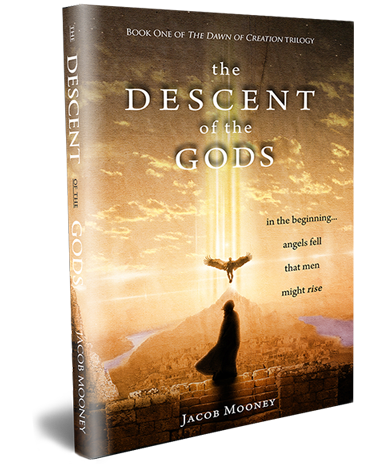
I have spent more than 25 years studying Genesis 6, the Nephilim, and Second Temple literature. I am not approaching this as a skeptic who wants to remove the supernatural from the Bible. I hold the angelic interpretation myself, and I have spent years imaginatively exploring the story in a novel and screenplay.
That novel, The Descent of the Gods, is built around many of these ancient ideas.
Working with this material creatively has also taught me how easily scattered clues can become a complete world. Storytelling wants to connect every dot, explain every mystery, and make every ancient tradition part of one coherent system.
Responsible Bible teaching has to work differently. It must distinguish what the biblical text states, what later interpreters added, what historical evidence may support, and what remains an imaginative possibility.
I have also watched people move from healthy curiosity into fear, conspiracy culture, and a kind of insider-knowledge spirituality that slowly eclipses the gospel. My goal is not to shut down questions. It is to help Christians explore these subjects without turning fascinating possibilities into settled doctrine.
What Genesis 6 Actually Says
Walking Through Genesis 6:1–4
When man began to multiply on the face of the land and daughters were born to them, the sons of God saw that the daughters of man were attractive. And they took as their wives any they chose. Then the Lord said, “My Spirit shall not abide in man forever, for he is flesh: his days shall be 120 years.” The Nephilim were on the earth in those days, and also afterward, when the sons of God came in to the daughters of man and they bore children to them. These were the mighty men who were of old, the men of renown. (Genesis 6:1–4, ESV)
The passage clearly tells us that humanity multiplied and daughters were born. The sons of God saw the women, took wives from whomever they chose, and had children through them. God responded with a declaration concerning human flesh and 120 years. The Nephilim were present “in those days, and also afterward,” and the passage refers to mighty men of old who possessed great renown.
The language of taking “any they chose” may suggest abuse, uncontrolled desire, royal seizure, or the violation of a God-given boundary. God’s immediate response indicates that something has gone wrong.
Beyond that, nearly every major question is debated:
- Who exactly were the sons of God?
- Were the Nephilim the offspring of these unions, their contemporaries, or another related group?
- Are the Nephilim and the mighty men identical?
- Does “and also afterward” refer to a period after the Flood?
- Does the 120-year declaration limit human lifespan or announce the remaining time before judgment?
- How directly does this episode contribute to the violence and corruption described in Genesis 6:5–13?
The placement of Genesis 6:1–4 immediately before the Flood naturally invites readers to connect the episode with the corruption that follows. But Genesis never directly states, “The Nephilim caused the Flood,” nor does it explain precisely how the sons of God, their children, and the later violence relate.
The text also does not explain:
- The biological mechanics of angelic-human reproduction
- The genetic nature or height of the offspring
- The origin of demons
- The level of pre-Flood technology
- A system of ritual kingship
- The teaching of forbidden arts
- The continued production of hybrids throughout history
Those ideas come from interpretations of Genesis, not from explicit statements in Genesis itself.
Who Are the Sons of God?
The Hebrew expression commonly translated “sons of God” appears in Job 1:6, 2:1, and 38:7, where it refers to heavenly beings. Similar language can also describe members of God’s heavenly council. This is one of the strongest arguments for interpreting Genesis 6 supernaturally.
Many Jewish interpreters during the Second Temple period understood Genesis 6 as an angelic rebellion. Many early Christian writers did as well. The angelic interpretation is therefore ancient, textually serious, and compatible with belief in biblical inspiration.
It is not, however, the only interpretation found in responsible Jewish and Christian exegesis.
The three best-known approaches are:
- The angelic or divine-being interpretation: Heavenly beings transgressed their proper boundary by taking human women.
- The Sethite interpretation: Men from the godly line of Seth intermarried with women from the corrupt human line, traditionally associated with Cain.
- The royal or ruler interpretation: Powerful kings or nobles claimed divine status and seized women according to their own desires.
The Sethite interpretation became especially influential in Western Christianity after the fourth century. Human-ruler interpretations also appear in ancient Jewish translations and later scholarship.
I believe the heavenly-being interpretation fits the wording most naturally. But holding that view does not require accepting every detail of the Enochic Watchers story, a biological theory of hybrid genetics, or the complete demonology presented in the interview.
Who or What Were the Nephilim?
The Hebrew word nephilim appears only in Genesis 6:4 and Numbers 13:33. Its precise meaning remains disputed.
Some connect it with a Hebrew root associated with falling, leading to proposed meanings such as “fallen ones” or “those who cause others to fall.” Others compare it with related Aramaic terms associated with giants. The ancient Greek translation uses gigantes, a word that became enormously influential in later interpretation.
“Giant” may refer to exceptional physical size, but ancient giant terminology can also carry associations of violence, power, fame, rebellion, or heroic status. Genesis itself emphasizes that these figures were “mighty men” and “men of renown.” It does not give their height.
A natural reading of Genesis 6:4 connects the children born from the unions with the mighty men and possibly with the Nephilim. Other scholars distinguish the groups or argue that the Nephilim were already present when the unions took place. The compressed syntax does not resolve every relationship as clearly as modern readers might wish.
Numbers 13:33 identifies the Anakites with the Nephilim in the report of the spies. The statement could preserve a real tradition about formidable inhabitants of Canaan, but it also occurs in a fearful report intended to discourage Israel from entering the land. Whether every detail should be read as objective measurement or frightened exaggeration remains debated.
What Does “And Also Afterward” Mean?
The phrase “and also afterward” plays a major role in the interview. It is treated as evidence that angelic-human unions recurred after the Flood and produced the later giant clans of Canaan.
That is one possible reading, but it is not the only one.
The phrase may mean:
- The Nephilim existed before and after the Flood.
- The Nephilim were present before and after the divine declaration of Genesis 6:3, while all events still occurred before the Flood.
- The Nephilim were present before and after the sons of God began taking women, meaning they were not necessarily produced by those unions.
- Comparable figures appeared again later, without the text explaining how.
The Hebrew expression does not automatically mean “after the Flood.” The Flood has not yet occurred in the narrative. Some grammatical analyses understand “afterward” in relation to the action immediately described in verses 2 and 3 rather than the later catastrophe.
A post-Flood recurrence is possible, but it should be argued rather than assumed.
How the New Testament Relates to Genesis 6
Jude 6 describes angels who did not keep their own position but abandoned their proper dwelling and are now held in chains for judgment. Jude then refers to Sodom and Gomorrah pursuing “strange flesh” or flesh of another kind.
Second Peter 2:4–5 similarly refers to angels who sinned, their confinement for judgment, and the destruction of the ancient world by the Flood.
Many interpreters understand these passages as references to the Genesis 6 rebellion through traditions also preserved in the Book of the Watchers. That reading is especially plausible in Jude because Jude clearly knew Enochic tradition and quotes a form of 1 Enoch 1:9 later in the letter.
At the same time, the exact relationship remains debated. Some scholars argue that Jude depends directly on the Book of the Watchers. Others argue that Jude and 1 Enoch draw upon a shared Jewish tradition, or that Jude uses familiar Enochic language without endorsing the larger system built around it.
Second Peter mentions sinning angels and the Flood but does not repeat all of Jude’s Enochic details. First Peter 3:19–20, concerning Christ and the “spirits in prison,” is even more difficult and has produced several major interpretations throughout Christian history.
On the angelic reading, Jude and 2 Peter strongly support the conclusion that heavenly beings sinned in connection with the world of Noah and now await judgment. They do not explicitly state:
- That the Nephilim possessed nonhuman genetics
- That the Nephilim were enormous in physical size
- That dead Nephilim became demons
- That some spirits were released under a ten-percent agreement
- That royal rituals recreated angelic-human reproduction
- That end-time technology will produce new Nephilim
Jude’s use of Enochic material does not automatically canonize the full Enochic tradition. Biblical writers sometimes use familiar extra-biblical names, stories, poetic lines, and cultural traditions without granting equal authority to every work from which those traditions are known.
Four Layers That Must Be Kept Distinct
Layer One: The Biblical Core
Genesis says that the sons of God took human women, children were born, the Nephilim were present, mighty men gained renown, and God responded in judgment.
Numbers refers to Nephilim and Anakites in Canaan.
Jude and 2 Peter refer to sinning angels held for judgment, probably in connection with a well-known interpretation of the days of Noah.
This is the strongest evidential layer because it comes from the canonical text.
Layer Two: Ancient Jewish Interpretation
Second Temple writings greatly expand Genesis 6.
The Book of the Watchers, now preserved within 1 Enoch, describes heavenly Watchers descending, taking wives, fathering giants, teaching forbidden knowledge, corrupting the earth, and receiving judgment. The dead giants’ spirits remain on earth as evil spirits.
Jubilees retells the story and adds the episode in which Mastema requests that some spirits be permitted to remain. The Book of Giants develops the characters, dreams, crimes, and coming judgment of the giant offspring.
These traditions are invaluable for understanding how some ancient Jews read Genesis and how New Testament readers may have understood references to imprisoned angels. But they are expansions of Genesis, not merely restatements of it.
It is also important not to speak of “1 Enoch” as though it were originally one uniform book written at one time. The collection contains several works composed and transmitted over a long period. The Book of Giants is closely related to Enochic tradition but is not part of the complete Ethiopic collection now called 1 Enoch.
These writings are outside the Jewish, Protestant, Roman Catholic, and most Orthodox biblical canons, although 1 Enoch is canonical in the Ethiopian Orthodox Tewahedo Church. Their historical importance is not the same thing as canonical authority.
Layer Three: Historical and Comparative Reconstruction
The interview then compares Genesis and Enochic literature with Mesopotamian kings, Ugaritic Rephaim, Greek heroes, ritual beds, royal sexuality, possession, sacrifice, and enthronement ceremonies.
Some of these comparisons may illuminate the cultural world in which biblical and Enochic traditions developed. Similarities between ancient sources are worthy of study.
But a parallel does not automatically establish identity. Two cultures can share symbols, rituals, or political structures for many reasons:
- Direct cultural contact
- Transmission through neighboring societies
- Common human psychology
- Similar political needs
- Independent development
- A shared spiritual reality
The last explanation may be theologically possible, but it cannot simply be assumed whenever two distant cultures practice unusual rituals.
Layer Four: Modern Application
The final layer applies the reconstructed ancient system to modern elites, technological power, artificial intelligence, sexual corruption, sacrifice, war, and political ideology.
Some of these applications arise from Carlson’s questions, while De Young often accepts or develops the broader spiritual framework. The result is a conversation in which ancient hybrid kingship becomes a model for understanding modern systems of power.
Christians can certainly believe that demonic powers influence governments, cultures, technologies, and human institutions. Scripture says enough about principalities and powers to make that a serious possibility.
What Scripture does not permit us to do is label a particular modern person, bloodline, political group, technology, or ritual “Nephilim” without evidence. A theological analogy is not the same as a historical or biological identification.
Historical and Archaeological Claims That Need More Caution
The Flood and the End of the Ice Age
The interview suggests that the historical Flood may be connected with sea-level rise at the end of the last Ice Age, roughly 10,000 years ago. Submerged settlements and major changes in coastlines are mentioned as possible evidence.
Even granting that ancient settlements were submerged as ice melted and sea levels rose, that fact alone does not establish that Genesis describes the same event. Nor does it prove that ancient cultures from Egypt to Mesopotamia and Greece all preserved a single historical memory of one advanced civilization destroyed in that event.
Flood traditions are widespread and deserve comparison. But the claims “many cultures tell flood stories,” “large floods happened,” and “all cultures remembered the same advanced pre-Flood civilization” are three different propositions. The interview moves between them too quickly.
An Advanced Pre-Flood Civilization
The conversation points to early monumental sites and long-distance Bronze Age trade as evidence that ancient societies were more sophisticated than modern people sometimes imagine.
That point is fair. Ancient people were not unintelligent, culturally simple, or incapable of large-scale organization.
But impressive architecture and trade networks do not prove a technologically superior civilization before the Flood. The interview sometimes moves from “ancient societies were sophisticated” to “a lost advanced civilization existed” and then to “its technology came from demons.” Each step requires its own evidence.
Encoded Ages and Enoch’s 365 Years
The interview suggests that the ages in Genesis and the Sumerian King List may encode calendrical or symbolic information. Enoch is seventh from Adam and lives 365 years, matching the approximate number of days in a solar year. A comparable seventh king in Mesopotamian tradition is associated with calendrical knowledge.
The numerical connection is interesting and may be intentional. But recognizing possible symbolism does not provide a complete code for the genealogies or prove direct dependence on a particular Mesopotamian list. The interview itself acknowledges that the proposed code has not been fully deciphered.
Gilgamesh in the Book of Giants
The interview says that Gilgamesh appears among the named giants in the Book of Giants.
This claim has real scholarly support. Fragmentary Aramaic material from Qumran has been reconstructed as containing names connected with Gilgamesh and Humbaba. Scholars such as Loren Stuckenbruck have discussed these names as evidence that the Book of Giants interacted with Babylonian heroic tradition.
That does not mean the historical Gilgamesh, if there was one, has been proven to be a literal Nephilim. It means a Jewish author or tradition incorporated a famous Mesopotamian heroic name into a story about condemned giants. That may be polemical, literary, interpretive, or some combination of the three.
Og’s Bed and Ritual Kingship
Deuteronomy 3:11 describes Og’s unusually large iron eres, traditionally translated as a bed or bedstead, although other interpreters have proposed a sarcophagus or funerary couch.
The interview argues that this was not merely evidence of Og’s size, but a ritual bed used in the production of a sacred king.
That interpretation may draw upon real ancient associations among beds, sexuality, kingship, fertility, death, and ritual. But Deuteronomy itself does not say that Og’s bed was used to produce a hybrid ruler. Reaching that conclusion requires a chain of comparative arguments that the interview asserts more than it demonstrates.
Cross-Cultural Royal Rituals
The interview compares royal ceremonies from Mesopotamia, Canaan, Japan, Cambodia, and elsewhere. Their similarities are interpreted as evidence that the same spiritual beings and goals operated across multiple civilizations.
That is possible within a Christian supernatural worldview. It is not the only historical explanation.
Royal cultures regularly develop rituals involving fertility, ancestry, divine approval, sacred space, special clothing, ritual beds, and symbolic union because rulers need to present themselves as more than ordinary people. Similar political problems can produce similar religious solutions.
Before concluding that separate ceremonies were attempts to produce literal supernatural offspring, we need evidence that goes beyond general resemblance.
Where the Interview Overreaches
“Giant” Shifts Between Status, Size, Biology, and Spiritual Condition
Early in the interview, “giant” is helpfully explained as a category that can include tyrants, warriors, thugs, and dominant rulers. This guards against imagining every ancient giant as a fairy-tale figure of impossible height.
Later, however, giants become biologically unusual offspring, genetically different beings, dead spirits, demonized humans, and possibly enormous physical creatures.
Those possibilities are not necessarily mutually exclusive, but the interview does not establish when “giant” means:
- A tall human
- A violent ruler
- A supernatural hybrid
- A person possessed by a spirit
- A heroic figure in ancient memory
- A dead Rephaim spirit
Without those distinctions, evidence for one meaning can easily be used to support another.
Genesis, Enoch, and Jubilees Are Allowed to Blend Together
The interview often introduces a later tradition and then continues speaking as though the resulting picture were the content of Genesis itself.
For example:
- Genesis mentions sons of God, women, offspring, Nephilim, and mighty men.
- 1 Enoch adds named Watchers, forbidden arts, enormous giants, angelic punishments, and evil spirits from dead giants.
- Jubilees adds Mastema’s request and the continued activity of a fraction of the spirits.
- Comparative reconstruction adds ritual beds, possessed women, and sacred royal reproduction.
- Modern application adds elites, artificial intelligence, and continuing occult systems.
Each layer may be worth discussing. The problem comes when the complete package is described as “the ancient worldview” or “what Genesis is saying” without marking the transitions.
The Origin of Demons Is Treated as Settled
The dead-Nephilim explanation has several attractions. It explains why demons seek embodiment, why they fear confinement, and why some ancient Jewish texts distinguish rebellious angels from roaming evil spirits.
But the canonical Bible never directly identifies demons as the spirits of dead giants. Other explanations have been offered in Jewish and Christian tradition, including demons as fallen angels or as another category of evil spirit.
The Enochic view may provide useful historical background. It should not be preached as a doctrine Scripture plainly reveals.
Jesus as a New Joshua Is a Theological Synthesis
One memorable claim in the interview is that Joshua fought the physical descendants of the giants, while Jesus confronted the surviving spirits of those giants. Jesus’ exorcisms are therefore interpreted as a spiritual continuation of the conquest of Canaan.
This is an imaginative biblical-theological connection. It may illuminate why the Gospels present Christ’s authority over territorial and demonic powers.
But the Gospels never say that the demons Jesus expelled were dead Anakim, Rephaim, or Nephilim. The connection depends on accepting the Enochic origin of demons and then applying it to the Gospel narratives.
It should be presented as a theological proposal, not as an explicit teaching of the evangelists.
The Argument Moves Too Easily from Ancient Ritual to Present Reality
The existence of ancient stories about divine-human unions does not prove that such unions occurred biologically. The existence of rituals intended to produce divine kings does not prove that those rituals succeeded. The existence of similar modern evil does not prove that hybrid bloodlines or Nephilim reproduction continue today.
Ancient people performed many rituals because they believed those rituals were effective. Their belief is historically important, but it is not proof of the ritual’s claimed result.
Modern Evil Does Not Require a Hybrid Explanation
Child abuse, trafficking, war, sacrifice, pornography, political oppression, and technological domination are real evils. Demonic powers may exploit and intensify them.
But Scripture already gives us sufficient categories to explain horrifying evil:
- Human sin
- Idolatry
- Deception
- Disordered desire
- Corporate injustice
- Demonic influence
- The desire for power
We do not need to establish Nephilim ancestry, hybrid rulers, or secret bloodlines before taking evil seriously.
Jake’s Note: Story-Building and Biblical Teaching
As someone who has spent years turning Genesis 6 traditions into a novel, I understand why the complete reconstruction is compelling.
A story needs to decide what the Nephilim looked like, how their world functioned, what technology they possessed, how spirits interacted with matter, and what happened to their souls after death. A novelist cannot leave every question unanswered.
A Bible teacher often must.
The difference is not that imagination is bad. Imagination helps us explore possibilities, understand ancient fears, and see familiar texts from new angles. The difference is whether those possibilities are labeled honestly.
Fiction can say, “Here is one way the scattered pieces might fit together.” Doctrine must say, “Here is what God has revealed.”
A Supernatural Worldview Without Nephilim Sensationalism
What We Can Say with Reasonable Confidence
Scripture presents a real unseen realm populated by heavenly beings. Some spiritual beings rebel against God. Human sin can become entangled with spiritual powers, idolatry, and systems of domination.
The expression “sons of God” most naturally refers to heavenly beings in several Old Testament passages. It is therefore reasonable, and in my judgment likely, that Genesis 6 describes a transgression involving heavenly beings and human women.
Genesis places this event immediately before its description of overwhelming human wickedness and the Flood. The episode is therefore part of the Bible’s picture of creation falling into disorder, even though the precise relationship among the sons of God, the Nephilim, the mighty men, and the violence is not fully explained.
Jude and 2 Peter probably draw upon an angelic interpretation of the days of Noah, expressed through traditions familiar to their original audiences. They emphasize that rebellious spiritual beings did not escape God’s judgment.
Christ has complete authority over every spiritual power. The Gospels present Him commanding demons without ritual struggle, and the New Testament proclaims His triumph over rulers and authorities.
What Should Remain Open
Scripture does not clearly settle:
- The physical height of the Nephilim
- The precise biology of their birth
- Whether “hybrid” is the best category
- Whether the Nephilim and mighty men are exactly identical
- Whether Numbers 13 describes literal descendants of the Genesis 6 Nephilim
- Whether angelic-human unions occurred again after the Flood
- Whether demons are the spirits of dead Nephilim
- Whether ancient royal rituals successfully produced supernatural offspring
- Whether similar events can occur today
- Whether Jesus’ “days of Noah” language refers to hybridization rather than ordinary wickedness and unpreparedness
Christians can hold informed opinions on these questions. They should not make them tests of orthodoxy or speak as though Scripture provides details it does not provide.
Cautions for Christians Studying the Nephilim
One danger is spiritual imbalance. It is possible to spend more time studying giant bloodlines, occult ceremonies, and elite conspiracies than studying the teachings of Jesus and the apostles.
Another danger is reading every disturbing event through a Nephilim lens. When war, trafficking, political corruption, artificial intelligence, or sexual evil automatically becomes proof of a hidden hybrid system, the theory becomes impossible to test. Every evil confirms it, and no absence of evidence can challenge it.
A third danger is allowing extra-biblical traditions to function as Scripture. First Enoch, Jubilees, the Book of Giants, archaeology, and comparative mythology are valuable sources. They help us understand how ancient people interpreted Genesis and imagined the spiritual world.
They should remain background and conversation partners, not the foundation of Christian doctrine.
A fourth danger is fear. The New Testament’s teaching about spiritual powers is not intended to make Christians obsessed with demons. It calls us to faithfulness, holiness, prayer, resistance to temptation, and confidence in Christ.
Finally, we should examine the fruit of a teaching. Does it produce humility, repentance, love for the church, and greater confidence in Jesus? Or does it produce fear, fascination with evil, suspicion of everyone in power, and a belief that we possess secret knowledge unavailable to ordinary Christians?
The unseen realm is real. That does not mean every dramatic explanation of it is reliable.
Conclusion: Real Rebellion, Real Powers, and the True Son of God
Genesis 6 is not a trivial or embarrassing passage. It gives us a brief and difficult glimpse of a world in which human rebellion and heavenly rebellion intersect. The angelic interpretation is ancient, plausible, and worthy of serious consideration.
Jude and 2 Peter appear to confirm that some heavenly beings transgressed and now await judgment. Second Temple traditions preserve important evidence for how ancient Jews understood that event.
But the complete system presented in the Tucker Carlson and Fr. Stephen De Young interview goes far beyond those conclusions.
An advanced pre-Flood civilization ruled by hybrid kings, forbidden technology delivered by demons, dead giants becoming roaming spirits, ritual beds producing later rulers, one supernatural kingship system operating across all major cultures, and the same pattern continuing through modern elites and artificial intelligence is not what Genesis 6 plainly teaches.
It is a synthesis composed of:
- A strong but debated reading of Genesis 6
- Enochic and Jubilees expansions
- Fragmentary Second Temple texts
- Ancient Near Eastern comparisons
- Reconstructed royal rituals
- Theological reflections on spiritual participation
- Modern speculation about politics and technology
Some parts of that synthesis may be correct. Others may contain partial truth. Still others may be imaginative attempts to connect evidence that does not establish the conclusions being placed upon it.
Christians do not need to choose between dismissing the supernatural and accepting every Nephilim reconstruction. We can believe that heavenly beings rebelled, that spiritual powers are real, that ancient people encountered genuine darkness, and that Christ defeated the powers, while still admitting how much we do not know.
Where the sons of God grasped, took, and violated God-given boundaries, the true Son of God humbled Himself and gave His life for others. Where the mighty men sought renown for themselves, Jesus accepted shame and received the name above every name from His Father. Where ancient rulers used power to dominate, Christ used His authority to heal, deliver, and save.
The central story of Scripture is not about secret bloodlines, occult elites, or decoding every ancient ritual. It is about Jesus Christ, who has disarmed the rulers and authorities and will finally remove every rebellious power.
Our security does not come from solving every mystery of Genesis 6. It comes from belonging to Him.
Editorial research for this revision included the complete interview transcript, Jaap Doedens’s study of Genesis 6 and its interpretive history, Loren Stuckenbruck’s analysis of early Jewish angels and giants traditions, and Peter Gentry and Andrew Fountain’s reassessment of Jude’s use of Enochic material.