
Pirkei de‑Rabbi Eliezer (often abbreviated PRE) is one of the most vivid post‑biblical Jewish retellings of Genesis. In chapter 23, it gives a striking interpretation of Genesis 6:1–4: the “sons of God” are angels who fall from heaven, lust after the daughters of Cain, and father violent giants whose corruption helps bring on the Flood.
Traditionally, this work is associated with Rabbi Eliezer ben Hyrcanus, a leading early rabbinic sage of the late first and early second century AD. Rabbi Eliezer was a disciple of Yohanan ben Zakkai and a major voice behind the Mishnah. But most scholars today think Pirkei de‑Rabbi Eliezer was compiled and edited several centuries later, probably in the 8th–9th century, drawing on earlier traditions that may go back toward his circle. For a concise scholarly overview of the work’s authorship and redaction history, see the entry in the Jewish Encyclopedia and the detailed analysis in Spurling’s study of PRE as a late midrashic compilation.
PRE is a long, narrative midrash: it retells biblical history from Creation through the patriarchs, weaving Scripture, rabbinic sayings, and legendary expansions into a single story. When it reaches Genesis 6, it does not invent a new idea so much as preserve and “rabbinize” an older stream of Jewish thought—the fallen‑angel or “Watchers” tradition you see elaborated in 1 Enoch and related Second Temple writings. Comparative work tracing these links between PRE 22–23 and 1 Enoch 6–8 can be found in resources like the Intertextual Bible.
For Christians trying to understand Genesis 6, this makes PRE important as a historical witness. It shows that, well after the New Testament, some strands of Judaism still read Genesis 6 in strongly supernatural terms. But it also forces us to ask: where does Scripture stop and later imagination begin, and how do we keep Christ and the biblical text at the center?
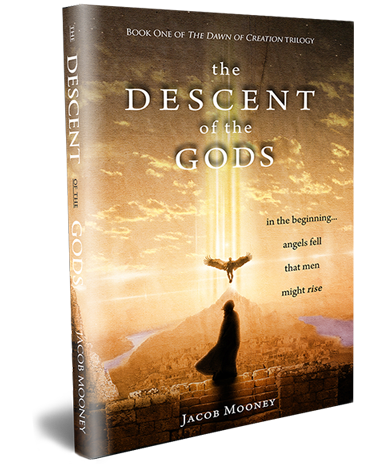
For anyone who wants to read PRE 23 in full, with Hebrew and English side by side, the text is available on Sefaria. This primary source has been one of the anchors of my own work on Genesis 6 and the Nephilim, and this is one of the reasons I’ve been working on a novel about the Genesis 6 story, which is coming soon at The Descent of the Gods.
Rabbi Eliezer ben Hyrcanus and the World of Pirkei de‑Rabbi Eliezer
Authoritative rabbinic sources from the early centuries of Christianity often treat difficult biblical texts through midrash—creative, interpretive storytelling that both explains and expands Scripture. PRE belongs squarely in this world. It is attributed to Rabbi Eliezer ben Hyrcanus, but internal evidence, language, and historical allusions strongly suggest a later redaction in the early Islamic period.
This later context is important. By the time PRE is redacted, rabbinic Judaism has already debated and, in many circles, moved away from highly mythic or supernatural readings of Genesis 6. Yet PRE still preserves a robust angelic interpretation, even as it weaves that older material into a more characteristically rabbinic framework.
Modern scholarship has traced how PRE engages earlier Jewish traditions and how it sits within the wider development of midrashic literature. For readers wanting a closer look at PRE’s dating, structure, and sources, Spurling’s monograph (available in draft form here) offers a careful survey, and other recent work, such as chapters in open‑access volumes on late antique midrash, provide updated bibliographies and methodological reflections.
What matters for our purposes is that PRE 23 stands as a significant, though late, witness to a way of reading Genesis 6 that sees real angelic beings, real transgression, and real hybrid offspring. It is not an isolated curiosity, but part of a web of interpretations stretching from Second Temple literature through rabbinic aggadah and into medieval Jewish thought.
How Pirkei de‑Rabbi Eliezer Reads Genesis 6
Chapter 23 of PRE strings together several rabbinic voices to build one continuous narrative around Genesis 6:1–4. The Sefaria edition is especially helpful, because it gives the Hebrew and an English translation side by side. In this section, PRE lays out a moral and spiritual backdrop, identifies the “sons of God” as angels, and then develops the story of their fall and the birth of the giants.
Two family lines: Seth and Cain
PRE begins by sharply contrasting two human lineages:
“Rabbi Simeon said: From Seth arose and were descended all the generations of the righteous. From Cain arose and were descended all the generations of the wicked, who rebel and sin, who rebelled against their Rock, and they said: We do not need the drops of Thy rain, neither to walk in Thy ways, as it is said, ‘Yet they said unto God, Depart from us’ (Job 21:14).”
Here Genesis 6 is set against a moral backdrop: Seth’s line (often seen as the “good” line in later Jewish and Christian explanations) vs. Cain’s line as a seedbed of rebellion. Job 21:14 is recruited to show Cain’s descendants literally telling God to go away.
Rabbi Meir then paints Cain’s descendants in graphic, ethical terms:
“The generations of Cain went about stark naked, men and women, just like the beasts, and they defiled themselves with all kinds of immorality, a man with his mother or his daughter, or the wife of his brother, or the wife of his neighbour, in public and in the streets… as it is said, ‘And the Lord saw that the wickedness of man was great in the earth’ (Gen. 6:5).”
The point is not anthropology, but moral indictment. Genesis 6:5 (“great wickedness”) is interpreted as public, shameless sexual sin—especially incest and adultery—rooted in Cain’s line. PRE thus sets the stage for Genesis 6:1–4 as the climax of a long‑running pattern of rebellion and sexual chaos.
The “sons of God” as fallen angels
Into that world, another figure enters. PRE 23 continues:
“Rabbi said: The angels who fell from their holy place in heaven saw the daughters of the generations of Cain walking about naked, with their eyes painted like harlots, and they went astray after them, and took wives from amongst them, as it is said, ‘And the sons of Elohim saw the daughters of men that they were fair; and they took them wives of all that they chose’ (Gen. 6:2).”
Several key moves are made here. “Sons of God” (benei ha‑Elohim) are identified explicitly as angels. Those angels fall from their holy place in heaven, so there is a real heavenly rebellion. Their fall is linked to the visible, sexualized immodesty of Cain’s daughters: naked bodies, “eyes painted like harlots.” The language of Genesis 6:2 (“saw,” “took wives of all that they chose”) is applied directly to this angelic lust.
This is a Jewish, midrashic form of the same basic idea we see in 1 Enoch: heavenly beings cross a boundary and enter into illicit unions with human women. Later Jewish discussions of “sons of God” in Genesis 6 often push in other directions—seeing them as human nobles or judges—but PRE stands firmly in the angelic camp, similar to some traditional and contemporary treatments you can see in essays at Aish or Chabad.org, even when those authors ultimately reach different conclusions.
How can fiery angels mate with humans?
PRE feels the need to explain something that still troubles many readers today: if angels are spiritual beings, how can they physically unite with flesh and blood? Rabbi Joshua ben Korha answers:
“Rabbi Joshua said: The angels are flaming fire, as it is said, ‘His servants are a flaming fire’ (Ps. 104:4)… but when they fell from heaven, from their holy place, their strength and stature (became) like that of the sons of men, and their frame was (made of) clods of dust, as it is said, ‘My flesh is clothed with worms and clods of dust’ (Job 7:5).”
So PRE reasons like this. In heaven, angels are “flaming fire” (Psalm 104:4). Fire cannot normally engage in sexual relations with flesh without consuming it. Therefore, when they “fell,” they underwent a change: their strength and height became humanlike; their “frame” became “clods of dust,” using Job 7:5 as support.
It is a creative exegesis: Job’s lament about his own decaying body is used to describe angels taking on earthen, mortal form. The text does not spell out how this transformation works; it simply asserts that God allowed these beings to become embodied enough to commit their sin.
Linking this to the Nephilim and “mighty men”
PRE then connects these unions directly to the giants of Genesis 6 and Numbers 13. Rabbi Zadok says:
“From them were born the giants (Anakim), who walked with pride in their heart, and who stretched forth their hand to all (kinds of) robbery and violence, and shedding of blood, as it is said, ‘And there we saw the Nephilim, the sons of Anak’ (Num. 13:33); and it says, ‘The Nephilim were on the earth in those days’ (Gen. 6:4).”
Several important pieces are pulled together. The offspring of angel–human unions are giants, the Anakim. These giants are defined by pride, robbery, violence, and bloodshed. Numbers 13:33 (“we saw the Nephilim, the sons of Anak”) is read together with Genesis 6:4 (“The Nephilim were on the earth in those days”), creating a continuous “giant tradition” from before the Flood to the conquest of Canaan.
Rabbi Joshua ben Korha then clarifies the term “sons of God” more broadly:
“The Israelites are called ‘Sons of God’… The angels are called ‘Sons of God,’ as it is said, ‘When the morning stars sang together, and all the sons of God shouted for joy’ (Job 38:7); and whilst they were still in their holy place in heaven, these were called ‘Sons of God,’ as it is said, ‘And also after that, when the sons of God came in unto the daughters of men…’ (Gen. 6:4).”
So “sons of God” can mean Israel in some contexts (Deut. 14:1), and angels in others (Job 38:7). In Genesis 6, PRE insists, the phrase refers to angels who were “still in their holy place in heaven” at the moment they decided to come to earth.
In sum, PRE 23 reads Genesis 6 as a real angelic rebellion, rooted in lust for the immodest daughters of Cain, producing giants whose violence becomes a key reason for the Flood. This reading is part of a wider Jewish and Christian discussion of bene elohim that you can see sampled in modern overviews, including accessible pieces like “The Many Languages of Religion” at ReformJudaism.org, which touches on how ancient terms shift meaning across time.
Giants, Violence, and the Flood in Pirkei de‑Rabbi Eliezer
PRE does not stop with the birth of giants. It presses forward: what were these beings like, and how did they help fill the earth with corruption? Here the midrash leans heavily on imaginative details drawn from Job and other poetic texts, turning sparse biblical hints into a richly embroidered story.
The giants’ excess and precocious power
Rabbi Levi describes the giants’ reproduction and early growth almost grotesquely:
“They bare their sons and increased and multiplied like a great reptile, six children at each birth. In that very hour they stood on their feet, and spoke the holy language, and danced before them like sheep, as it is said, ‘They cast their young like sheep, and their children danced’ (Job 21:11).”
Notice the features. There are six children at every birth, “like a great reptile.” Immediately after birth, the children stand upright, speak Hebrew (“the holy language”), and dance. Job 21:11, in its original context a poetic description of the carefree lives of the wicked, is mined midrashically to describe abnormal birth and early development. The point is excess and unnatural power, not biology. The giants embody a kind of anti‑creation—fruitful and multiplying in a monstrous way.
Moral character: pride, robbery, and bloodshed
As Rabbi Zadok already stressed, these giants are marked by prideful walk, robbery and violence, and shedding of blood. They embody, in concentrated form, the description of the pre‑Flood world in Genesis 6:11–13: “the earth was filled with violence.” PRE makes them the main human face of that violence, magnifying the moral stakes of the story rather than focusing on neutral spectacle.
The connection between Nephilim, Anakim, and the broader biblical narrative of giants continues to be explored in both Jewish and Christian scholarship. Popular‑level summaries debating whether the Nephilim were “fallen angels, giants, or men” reflect just how alive these questions still are in contemporary interpretation.
Noah’s call to repentance and their twisted response
PRE then shows Noah as a preacher of righteousness, echoing 2 Peter 2:5’s description:
“Noah said to them: Turn from your ways and evil deeds, so that He bring not upon you the waters of the Flood, and destroy all the seed of the children of men.”
Their answer is chilling and strange:
“They said to him: Behold, we will restrain ourselves from multiplying and increasing, so as not to produce the offspring of the children of men.”
How? PRE answers:
“When they came to their wives they spilled the issue of their seed upon the earth so as not to produce offspring… as it is said, ‘And God saw the earth, and behold it was spilled’ (Gen. 6:12).”
Here Genesis 6:12 (“the earth… was corrupt”) is cleverly read as “spilled,” and applied to deliberate waste of seed—an act PRE sees as both sexual sin and perverse “solution” to the threatened judgment. Instead of repentance, they try to game the system. The giants accept the premise that judgment is coming, but rather than turning back to God, they look for a loophole.
Arrogant defiance of the Flood and God’s response
PRE then has the giants boast about their ability to withstand God’s judgment:
“They said: If He bring from heaven the waters of the Flood upon us, behold, we are of high stature, and the waters will not reach up to our necks; and if He bring the waters of the depths against us, behold, the soles of our feet can close up all the depths.”
So they:
“put forth the soles of their feet, and closed up all the depths.”
It is a picture of ultimate hubris—creatures so confident in their size and strength that they think they can literally plug up the subterranean sources of the Flood. PRE answers this defiance with a vivid image of divine judgment:
“What did the Holy One, blessed be He, do? He heated the waters of the deep, and they arose and burnt their flesh, and peeled off their skin from them, as it is said, ‘What time they wax warm, they vanish; when it is hot, they are consumed out of their place’ (Job 6:17). Do not read thus (‘When it is hot,’ בחֻמו), but (read) ‘in his hot waters’ (בחמימיו).”
Again Job is repurposed, this time Job 6:17, originally about snow and drought, now read as a cryptic reference to “hot waters” of the subterranean deep. God defeats the giants not by ordinary drowning but by boiling the waters so intensely that their immense bodies are scalded and stripped.
Altogether, PRE 23 gives a coherent moral arc. Angelic lust leads to hybrid giants. Hybrid giants live in sexual chaos, pride, violence, and defiant unbelief. Noah’s preaching is refused. Divine judgment is tailored to destroy even these “invincible” creatures. The Flood, in this telling, is as much about purging unnatural, rebellious hybrid beings as it is about judging ordinary human sin.
Why This Midrashic Tradition Takes the Shape It Does
Why does Pirkei de‑Rabbi Eliezer tell the story like this? Several layers of influence and intention are at work. PRE is not simply spinning a new legend; it is inheriting earlier traditions, reshaping them through rabbinic methods, and using them to press home ethical and theological points.
Inheriting and “rabbinizing” Watchers traditions
PRE sits at the far end of a long trajectory. Already in the Second Temple period, texts like 1 Enoch and Jubilees elaborated Genesis 6 into a full‑blown myth of “Watchers” descending, taking wives, fathering giants, and teaching forbidden knowledge. By the time PRE is redacted, official rabbinic Judaism has generally turned away from that supernatural reading in its public teaching, favoring human explanations (sons of nobles, judges, etc.).
Yet PRE clearly preserves that older angelic reading. It does so in a very rabbinic way—by attributing the ideas to named sages (Rabbi Simeon, Rabbi Meir, Rabbi Joshua, Rabbi Zadok, Rabbi Levi), weaving prooftexts from Job, Psalms, and Deuteronomy, and focusing on moral lessons rather than speculative cosmology. In other words, PRE is a late witness that the “angelic sons of God” reading never completely disappeared in Jewish thought. It survived in aggadic (non‑legal) storytelling, even as more cautious views dominated legal and theological works.
Modern historical‑critical work on PRE has suggested that its openness to mythic material may reflect its late antique or early Islamic context, when Jewish authors were negotiating both internal rabbinic norms and external religious narratives. Comparative essays, such as the study of parallels between PRE and early Islamic traditions at Islamic‑Awareness.org, illustrate how this midrash occupied a complex space between communities.
Moral teaching: sexual chaos, pride, and violence
PRE is not interested in satisfying curiosity about angels and giants for its own sake. Its emphasis throughout chapter 23 is ethical. Cain’s line is sexually lawless: incest, public indecency, animal‑like behavior. The daughters of Cain deliberately adorn themselves like prostitutes. The angels fall because they follow lust instead of holiness. The giants exploit strength for robbery, violence, and bloodshed. Even when warned, they respond with distorted “solutions” and arrogant denial.
Every detail—the painted eyes, the overflowing fertility, the giants’ boasting, the spilling of seed—is pressed into service as a warning about what happens when desire, power, and pride go unchecked. The story is designed less to map out a cosmology of spirits and more to embody a theology of sin and judgment in vivid, unforgettable images.
Explaining the depth of pre‑Flood wickedness
Genesis 6:5–7 speaks of human wickedness as “great,” “every intention… only evil continually,” and the earth “filled with violence.” PRE uses Cain’s line and the giants to explain that intensity. Wickedness is not just individual sin, but systemic—rooted in a particular family tradition of rebellion. The giants amplify that wickedness with their abnormal strength and influence.
PRE’s focus on Cain’s line also allows it to preserve a sense of a righteous remnant (Seth’s descendants) and to frame human responsibility alongside angelic rebellion. In this way, the midrash remains anchored in the biblical tension between divine sovereignty, human agency, and the mysterious presence of spiritual powers.
Creating a continuous giant storyline
By tying Genesis 6:4 (Nephilim) directly to Numbers 13:33 (“Nephilim, the sons of Anak”), PRE forges a seamless line from the pre‑Flood giants to the Anakim who terrified Israel’s spies in Canaan. This does several things. It makes the conquest of Canaan part of a larger war against the ancient offspring of rebellion. It explains why the Anakim are so fearsome: they are not just tall Canaanites but connected to primordial hybrids.
It also heightens the moral seriousness of Israel’s mission: in opposing the Anakim, Israel stands on the side of God’s long‑term judgment on the corruption that led to the Flood. Later Jewish and Christian interpreters have continued to wrestle with these giant traditions, sometimes in historical terms, sometimes in symbolic or spiritualized ways, but PRE shows how early aggadah could hold all these strands together narratively.
Pulling Scripture together through prooftexts
Finally, PRE reflects a characteristic rabbinic method: drawing widely from Scripture to illuminate a single story. Psalm 104:4 and Job 38:7 clarify the nature of angels as “sons of God” and “flaming fire.” Deuteronomy 14:1 shows that “sons of God” can also refer to Israel, sharpening the need to choose the right meaning in Genesis 6. Several Job passages (6:17; 7:5; 21:11, 14) are re‑read as cryptic allusions to pre‑Flood events.
To modern readers, this might look strained. But in PRE’s world, Scripture is a tightly woven fabric; any thread can be pulled into the tapestry of Genesis 6 if it resonates thematically or linguistically. That’s how the tradition gains its theological richness—and also where it most clearly goes beyond what Genesis itself says.
Weighing Pirkei de‑Rabbi Eliezer as Christians
For Christians who take Scripture as the final authority, PRE raises two questions: what in this tradition lines up with, or helps illuminate, the Bible’s own witness? Where does it go further than Scripture allows, and how do we respond? PRE is invaluable as a historical and interpretive resource, but it must be handled carefully when brought into doctrinal or pastoral discussions.
What Scripture clearly gives us
Genesis 6:1–4 itself is brief but weighty. It tells us that “sons of God” saw the “daughters of man” were attractive and took wives “of all that they chose.” God responded by limiting human days and announcing coming judgment. The Nephilim were on the earth “in those days, and also afterward,” and are linked to “mighty men… men of renown.”
The text does not spell out how exactly “sons of God” should be defined, the mechanics of any union, detailed physical or behavioral traits of the Nephilim, or the inner workings of the Flood. Yet the New Testament strongly suggests a real, serious angelic rebellion tied to “the days of Noah.”
Second Peter 2:4–5 speaks of “angels who sinned” being cast into gloomy darkness, immediately connected with “the ancient world” and the flood of Noah. Jude 6–7 describes angels who “did not stay within their own position of authority, but left their proper dwelling,” followed by Sodom and Gomorrah’s sexual immorality “in a similar way.” This suggests boundary‑crossing, including sexual sin, in an antediluvian angelic rebellion. First Peter 3:19–20 likely alludes to “spirits in prison… disobedient when God’s patience waited in the days of Noah.”
Taken together, this strongly supports the basic framework PRE assumes: that some angels truly did rebel in connection with Noah’s generation and are now under judgment. On that broad point, PRE, 1 Enoch, and the New Testament are pulling in the same direction.
Where Pirkei de‑Rabbi Eliezer is midrash, not doctrine
At the same time, most of the vivid details in PRE 23 are best seen as midrashic elaboration—imaginative retellings meant to teach moral truths, not deliver new revelation. The daughters of Cain walking naked with painted eyes, angels changing from flaming fire into dusty human bodies, giants multiplying six at a time, speaking fluent Hebrew at birth, and dancing, Noah’s dialogue with the giants about spilling seed and blocking the depths with their feet, God boiling the waters of the deep to scald their flesh and peel off their skin.
None of this appears in Genesis. Some of it echoes Second Temple traditions (especially the idea of giants’ great size and arrogance), but much of it is PRE’s own creative exegesis of Job and other passages. For Christians, that means we can learn from PRE as a window into how later Jewish teachers wrestled with Genesis 6, sin, and judgment, but we must not treat PRE’s imagery and story‑lines as on par with Scripture, or build doctrines on them.
Pirkei de‑Rabbi Eliezer as evidence of the enduring angelic view
One particularly valuable aspect of PRE is historical: it shows that the angelic interpretation of Genesis 6 did not vanish quickly from Jewish thought. Even after many rabbis preferred to see “sons of God” as nobles, judges, or human elites, a substantial tradition still saw them as angels.
That matters because it lines up with the linguistic evidence (benei ha‑Elohim elsewhere in Scripture usually refers to heavenly beings). It fits the testimony of Second Temple texts (1 Enoch, Jubilees, Qumran) and early Christian writers. It shows that when Peter and Jude spoke of angelic sin in Noah’s day, they were not introducing a novel reading but interacting with a widely recognized one.
In other words, PRE is another data point confirming that the “fallen angels” reading of Genesis 6 is ancient, widespread in the early centuries, and deeply embedded in Jewish and Christian tradition. It helps explain why later debates about Nephilim and giants have such deep roots and why seemingly obscure verses continue to spark so much study and controversy.
Staying anchored in Christ and Scripture
For someone like me, who has been fascinated by Genesis 6 for decades, texts like PRE are both exciting and dangerous. They open up a world of connections, but they can also tempt us to chase details Scripture never gives. So as Christians, we let Genesis 6, 2 Peter, and Jude set the boundaries of what we affirm. We use works like PRE for historical and interpretive background, not as new sources of doctrine.
We remember that the Bible’s purpose in mentioning this rebellion is not to satisfy curiosity about angels or giants, but to highlight the seriousness of sin, both human and angelic, God’s just judgment on rebellion, and the need for salvation that only the true Son of God can bring. Colossians 2:15 tells us that Christ “disarmed the rulers and authorities and put them to open shame, by triumphing over them in him.”
However we fill in the details of Genesis 6, the central storyline is not the Watchers’ fall or the giants’ arrogance, but Christ’s victory over all spiritual powers. However dark and strange the pre‑Flood world may have been, Christ shines brighter. It is His story, not the Nephilim’s, that ultimately explains our world and offers us hope.
Conclusion: What Pirkei de‑Rabbi Eliezer Illuminates—and What It Cannot Replace
Pirkei de‑Rabbi Eliezer 23 preserves one of the fullest traditional Jewish retellings of Genesis 6: the “sons of God” are fallen angels, seduced by the brazen daughters of Cain, transformed into humanlike bodies, and fathering giants whose violence, pride, and defiance help bring on the Flood. Noah warns them, they respond with twisted schemes and arrogance, and God answers with a judgment that reaches even them.
This tradition helps us see how strongly many Jews—well into the early medieval period—linked Genesis 6, angelic rebellion, giants, and the moral logic of the Flood. It shows how the Nephilim of Genesis 6 and the Anakim of Numbers 13 were often seen as part of a single storyline of hybrid, oppressive powers. It also illustrates how midrashic imagination worked: drawing Scripture together, filling narrative gaps, and using vivid story to press home ethical truth.
At the same time, PRE also shows us the limits of later tradition. It goes beyond Scripture in its physical descriptions, reproductive details, Flood mechanics, and backstory. Its creative readings of Job and other texts are instructive, but not authoritative. Its purpose is to exhort and warn, not to supply the kind of precise, historical information many modern readers might crave.
For Christians, then, PRE is best treated as a historical window, not a rule of faith. It can deepen our sense of how ancient readers grappled with Genesis 6, but it must be weighed against—and always subordinated to—the clearer, calmer voice of canonical Scripture. The Bible’s own storyline remains our anchor: human and heavenly beings rebel; God responds with just judgment; yet in the fullness of time, God sends His only Son—not to grasp forbidden power, but to humble Himself, bear our sin, and triumph over every ruler and authority.
If Genesis 6 has left you with more questions than answers, you are not alone. My own journey into these texts began with confusion and grew into a lifelong study that now includes both research and storytelling. That is why I wrote The Descent of the Gods, a novel and screenplay retelling the Genesis 6 narrative, after more than 15 years of study, and why I launched projects like Chasing the Giants—to offer a biblically grounded, level‑headed look at one of the strangest, most profound moments in the Bible.
I am still searching and still learning. And if you are here wrestling with PRE, Genesis 6, or the Nephilim, maybe you are too.