
Who Michael Heiser Is and Why His Genesis 6 View Matters
Michael S. Heiser (1963–2023) was an evangelical biblical scholar specializing in the Hebrew Bible, Semitic languages, and ancient Near Eastern (ANE) studies. He earned his PhD from the University of Wisconsin–Madison in Hebrew Bible and Semitic Languages, and later worked with Logos / Faithlife, where he helped develop biblical studies tools and taught widely.
Heiser became best known to lay audiences through his books The Unseen Realm, Reversing Hermon, and Demons, and through his Naked Bible Podcast. Across these platforms he argued that modern Christians often “flatten” the Bible’s supernatural worldview. His signature line, “If it’s weird, it’s important,” captured his conviction that difficult passages like Genesis 6 are deliberate parts of Scripture’s theology, not embarrassing relics to be ignored.
Genesis 6:1–4, the Nephilim, and the “sons of God” stood near the center of his project. Heiser read these verses as describing a real rebellion of supernatural beings—members of Yahweh’s heavenly council—who crossed a divinely imposed boundary, took human women, and fathered giant warrior figures. He treated this event as one of the Bible’s foundational “cosmic rebellions,” shaping later Old Testament history and echoed in the New Testament.
Heiser’s work matters for the Genesis 6 debate because he reintroduced a carefully argued supernatural reading into mainstream conservative and evangelical circles. He integrated ANE background, Second Temple Jewish literature, and early Christian interpretation with close exegesis of the Hebrew text. He also offered an alternative to the long-dominant Sethite view and “human rulers” view that many evangelicals inherited without realizing they were relatively late developments.
Many contemporary commentators have either adopted, adapted, or critically engaged Heiser’s model, making his approach a key reference point for any serious survey of Genesis 6 interpretations today.
Heiser’s Supernatural Reading of Genesis 6:1–4
“Sons of God” as Divine Council Beings
Heiser holds that the Hebrew bene elohim (“sons of God”) in Genesis 6 does not refer to human beings—whether Sethites, rulers, or nobles—but to created supernatural beings who serve in Yahweh’s heavenly council. He emphasizes that in the Old Testament, the same or closely related expressions consistently denote heavenly, not human, beings (e.g., Job 1–2; Job 38:7; Psalm 82; cf. “sons of God” / “sons of the Most High” in Ps 82:6).
On this reading, Genesis 6:1–2 describes divine council members who “left their proper domain” (Jude 6) by taking human women as wives. The language of “saw,” “good/attractive,” and “took” echoes Genesis 3 and emphasizes boundary‑breaking desire.
A Real Angelic Rebellion and Its Offspring
Heiser affirms that these “sons of God” are real heavenly beings whose rebellion involves literal, though deeply perverse, unions with human women. The result is the Nephilim of Genesis 6:4, whom he understands as giant, warrior‑like hybrid figures—“mighty men… men of renown”—standing at the intersection of human and divine realms.
Heiser links these Nephilim to the later “giant clans” in the conquest narratives: the Anakim, Rephaim, and related groups in passages such as Numbers 13:33 and Deuteronomy 2–3. In his view, these peoples are not random ethnic groups but later remnants or analogues of the pre‑flood Nephilim, explaining why certain Canaanite populations are singled out for destruction.
Genesis 6 in a Threefold Rebellion Arc
A hallmark of Heiser’s work is placing Genesis 6 within a broader storyline of cosmic rebellion. He sees a threefold pattern:
- Eden (Genesis 3): The “serpent” (a supernatural rebel) leads humanity into sin.
- Sons of God (Genesis 6:1–4): Divine beings corrupt humanity through illicit unions and illicit knowledge.
- Babel (Genesis 11 / Deuteronomy 32:8–9): The nations are divided and allotted to other divine beings (“sons of God”), resulting in a world under hostile spiritual powers.
This triad, he argues, frames the problem Christ comes to resolve: human sin, spiritual corruption, and the hostile governance of the nations.
New Testament Echoes of the Watchers Tradition
Heiser sees Jude 6–7 and 2 Peter 2:4–5 as presupposing a “Watchers”‑style interpretation of Genesis 6: angels who sinned in the days of Noah, are now imprisoned in gloomy darkness (Tartarus), and serve as a warning example. He also reads 1 Peter 3:19–20 (“spirits in prison… disobedient in the days of Noah”) as another allusion to these same beings.
These texts, together with the widespread Second Temple tradition (especially in 1 Enoch and Jubilees), form part of the exegetical foundation for his Genesis 6 reading and help explain why New Testament authors can refer briefly to “angels who sinned” in Noah’s day and expect readers to understand the allusion.
Why Heiser Interprets Genesis 6 This Way
Heiser’s interpretation rests on several interlocking arguments: linguistic, contextual, historical, and theological. He wants readers to see Genesis 6 as grounded in the Bible’s own supernatural worldview and its ancient environment, not in later systematic concerns.
ANE Polemic and the Apkallu Traditions
Heiser frequently stresses that Genesis 6 is not an isolated oddity but a deliberate engagement with ANE myth. In Mesopotamian literature, the apkallu are semi‑divine sages—part divine, part human—who bring arts, wisdom, and sometimes destructive knowledge to humanity, and in some traditions cross forbidden boundaries.
He argues that Genesis 6:1–4, followed immediately by the evaluation that “every intention of the thoughts of [man’s] heart was only evil continually” (Gen 6:5), functions as a polemic: the biblical writers reinterpret stories of great sages and giant heroes as the fruit of rebellion, not benefactors of humanity. Where pagan accounts may glorify such beings, Genesis portrays their origin in cosmic treachery and their legacy in violence.
Divine Council Worldview in the Old Testament
Central to Heiser’s work is what he calls the “divine council worldview”: Psalm 82, Deuteronomy 32:8–9, and related texts depict Yahweh as the unique, uncreated God presiding over a council of created elohim—spiritual beings associated with the nations and elements of the unseen realm. He defines elohim not as “gods” in a metaphysical sense equal to Yahweh, but as “inhabitants of the spiritual realm.”
Within this framework, the bene elohim in Genesis 6 belong to this council. Deuteronomy 32:8–9 (“he fixed the borders of the peoples according to the number of the sons of God”) shows a post‑Babel allotment of the nations to these beings. Psalm 82 then portrays some of these elohim as corrupt and under judgment, echoing the theme of rebellious heavenly rulers.
Genesis 6 is therefore one early moment in a larger pattern of divine council corruption, a pattern that modern readers can explore further in discussions like this overview of the divine council.
Second Temple Literature as Cultural Background
Heiser uses Second Temple texts such as 1 Enoch (especially the Book of the Watchers), Jubilees, and the Book of Giants as historical and literary background, not as Scripture. These writings elaborate in detail on Genesis 6: angels called Watchers descend, take women, beget giants, teach sorcery, warfare, and cosmetics, and are then imprisoned until the judgment.
He notes that New Testament writers (especially Jude and 2 Peter) clearly know and draw on this interpretive tradition. The Dead Sea Scrolls confirm that such traditions predate Christianity and were significant in some Jewish communities.
For Heiser, this background helps explain why the New Testament can refer briefly to “angels who sinned” in the days of Noah and why early Christian interpreters so often assumed an angelic reading of Genesis 6.
Linguistic and Etymological Considerations
Heiser also advances linguistic arguments. On “sons of God” usage, the phrase bene elohim elsewhere in the Hebrew Bible consistently points to heavenly beings, not human lines or kings. He regards attempts to make Genesis 6 an exception as driven by later theological discomfort rather than textual evidence.
On “Nephilim” etymology, he engages both Hebrew and Aramaic proposals, critiquing simplistic “fallen ones” derivations and emphasizing that in the wider tradition, the Nephilim are understood as giants or warrior figures. He notes that the Septuagint’s translation gigantes and later Jewish and Christian usage support this reading.
Rejection of the Sethite and Human‑Kings Views
Heiser is explicit that he rejects the Sethite interpretation, which sees “sons of God” as Seth’s line and “daughters of men” as Cain’s descendants. He considers this a later Christian solution (articulated clearly by Julius Africanus and then championed by Augustine) that does not fit the language of Genesis or the way “sons of God” is used elsewhere.
He likewise rejects the royal or human‑rulers view, which interprets “sons of God” as kings or nobles. He regards this as anachronistic, dependent on later Near Eastern royal ideology, and insufficient to explain the Nephilim and the severity of God’s response.
In The Unseen Realm, he consistently treats these alternatives as interpretive retreats from the text’s own supernatural claims and its ancient reception.
Representative Cautions and Critiques
Appreciative but cautious reviewers—ranging from conservative blogs to ministries like Servants of Grace and The Gospel Coalition—have raised several concerns about Heiser’s approach. Some argue that his model leans too heavily on ANE and Second Temple materials (apkallu traditions, 1 Enoch, Jubilees), potentially giving them functional doctrinal weight beyond what sola scriptura would allow.
Others focus on his identification of demons as the disembodied spirits of dead Nephilim. Heiser presents, especially in Demons and Reversing Hermon, the idea (common in Enochic literature) that demons are the disembodied spirits of dead Nephilim. Critics note that this specific identification comes almost entirely from non‑canonical sources and is only indirectly supported in the Bible, if at all.
His frank use of elohim language and talk of a “divine council” has also worried some pastors and theologians, who fear it could sound polytheistic or blur the Creator–creature distinction, even though Heiser repeatedly insists on Yahweh’s uniqueness. And some reviewers appreciate his contextual work but caution that links between specific giant clans and Genesis 6, or between apkallu and Nephilim, sometimes move beyond what the biblical text strictly requires.
Heiser himself repeatedly urged readers to distinguish what is textually explicit from what is model or inference, and to test everything against Scripture. For a sampling of both appreciation and critique, see, for instance, Joel Edmund Anderson’s discussion of The Unseen Realm on rebellious angels and giants, or evaluations of divine council theology at the Theopolis Institute.
How Heiser’s View Shapes the Modern Genesis 6 Debate
Heiser’s reading now functions as a major reference point alongside the classic options. In many evangelical circles, his work has forced a fresh look at Genesis 6:1–4 and related texts and has made supernatural readings part of mainstream conversation again.
In Contrast to the Sethite and Human‑Kings Views
Compared with the Sethite view, Heiser returns to what he argues is the oldest Jewish and early Christian consensus: “sons of God” as supernatural beings. He takes seriously the term’s Old Testament usage and the New Testament’s references to sinning angels in Noah’s day and offers a concrete explanation for the Nephilim as more than simply “notable humans.”
Compared with the human‑kings interpretation, his model emphasizes the wider biblical language of a divine council and rebellious heavenly rulers. It frames Genesis 6 not primarily as social injustice by kings (though that may be involved), but as a deeper cross‑realm transgression.
In many evangelical settings, Heiser’s work has re‑opened the supernatural interpretation as a serious, text‑driven option rather than a fringe idea, while still inviting readers to weigh the evidence themselves with Scripture as the final authority.
Recovery of an Older Jewish and Christian Consensus
Historically, Second Temple Jewish texts (1 Enoch, Jubilees, Qumran material), Philo, Josephus, and the early church fathers largely assumed an angelic reading of Genesis 6. Heiser’s work has helped many readers see that the later dominance of the Sethite view—especially in the Latin West after Augustine—represents a shift rather than the Bible’s only orthodox reading.
This historical awareness has contributed to renewed attention to Jude and 2 Peter’s allusions and fresh engagement with early Jewish interpretive traditions as part of the Bible’s own reception history. Biola University’s overview of Heiser’s teaching and legacy offers one accessible entry point for readers new to this conversation.
A Framework for Giant‑Clan Passages and the Conquest
Heiser also uses Genesis 6 to frame Israel’s later encounters with giant clans. In his telling, the Anakim, Rephaim, and related groups are seen as geographical and genealogical “echoes” of the Nephilim. The conquest and herem (devoted‑to‑destruction) commands thus focus particularly on regions and peoples tied to this older supernatural rebellion.
Many readers have found that this framework helps them think about difficult conquest texts as more targeted and theologically driven, though others remain cautious about how tightly the biblical text itself links specific peoples back to Genesis 6. Heiser’s article on the ancient Near Eastern context for Genesis 6:1–4 and Logos’ overview of the Nephilim are representative of how he connects these themes.
Influence in Evangelical and Popular Settings
Heiser’s impact has been unusually broad for a specialized ANE scholar. Through The Unseen Realm and its popular version Supernatural, Reversing Hermon, and Demons, he introduced divine council and Genesis 6 themes to pastors and lay readers. His Naked Bible Podcast, conference talks, and video series (many still available online, including interviews on YouTube) have become standard entry points for those exploring Genesis 6, the Nephilim, and related topics.
Many pastors and Bible teachers now reference his work when presenting the angelic interpretation, sometimes adopting his model, sometimes presenting it alongside others. At the same time, Heiser strongly opposed sensationalized Nephilim speculation (ancient aliens, conspiratorial archaeology). He aimed to re‑center the discussion on Scripture in its ancient context rather than on modern fantasy.
Continuing Legacy and Author Perspective
After Heiser’s death, the Michael S. Heiser Foundation and successor projects continue to promote his “unseen realm” approach. For Genesis 6 studies, this means his articulation of the divine council, supernatural “sons of God,” and Nephilim remains an influential and widely consulted model—both for those who embrace it and for those who define their own positions in conversation with it.
This profile is written “in conversation with commentators,” deeply aware of Michael Heiser’s role as a catalyst for renewed interest in Genesis 6. Many of the research threads on Chasing the Giants would likely not exist in their present form without his work making the divine council and Nephilim discussions accessible and serious again in evangelical circles.
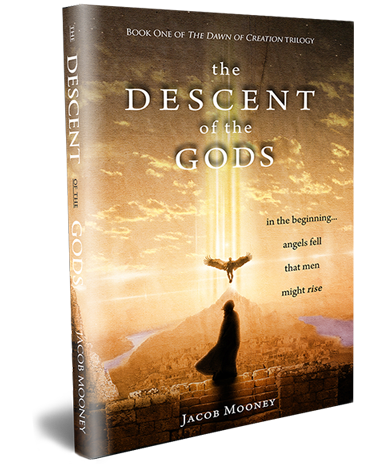
At the same time, this project does not treat his conclusions as final; instead, it places his model alongside other interpretive paths, inviting readers to weigh the evidence themselves with Scripture as the final authority. That conviction also lies behind related creative work: this is one of the reasons I’ve been working on a novel about the Genesis 6 story, The Descent of the Gods, which is coming soon and previewed at thedescentofthegods.com.
Key Scripture and Resources for Studying Heiser on Genesis 6
Biblical Texts Central to Heiser’s View
Several passages are especially important for understanding Heiser’s reading of Genesis 6. Genesis 6:1–4 presents the sons of God, daughters of men, and the Nephilim. Genesis 10–11 and Deuteronomy 32:8–9 connect Babel and the division of the nations under “sons of God.”
Deuteronomy 2–3 and Numbers 13:33 describe the Anakim, Rephaim, and giant‑clan language. Job 1–2, Job 38:7, and Psalm 82 depict sons of God and divine council scenes. In the New Testament, 1 Peter 3:19–20, 2 Peter 2:4–5, and Jude 6–7 refer to angels who sinned, spirits in prison, and Noah‑era judgment.
Heiser’s Primary Works
Heiser’s own works are the best place to see his full model. These include The Unseen Realm (and its 10th‑anniversary Expanded Edition), Supernatural, Reversing Hermon: Enoch, the Watchers, and the Forgotten Mission of Jesus Christ, and Demons: What the Bible Really Says About the Powers of Darkness. His Naked Bible Podcast episodes on Genesis 6, the divine council, and the Nephilim, along with articles and videos produced for Logos / Faithlife on the sons of God, Nephilim, and the divine council, round out the picture.
Representative Evaluations and Interactions
There is now a growing body of interaction with Heiser’s work. Conservative and evangelical reviews (for example, Servants of Grace, The Gospel Coalition, and independent reviewers) offer both appreciation and critique of The Unseen Realm. Articles from scholars and pastors at places like the Theopolis Institute and Biola University similarly assess his strengths and weaknesses.
Heiser’s Genesis 6 Legacy
Michael S. Heiser’s core claim is that Genesis 6:1–4 records a real supernatural transgression: members of Yahweh’s divine council—bene elohim—abandoned their assigned domain, took human women, and fathered the Nephilim. This event, in his reading, intensified human corruption, shaped Israel’s later encounters with giant clans, and forms one strand in a larger biblical story of cosmic rebellion that culminates in Christ’s victory over hostile powers.
His model powerfully integrates linguistic data, ANE context, Second Temple Jewish interpretation, and New Testament allusions. It has helped many Christians take seriously the Bible’s own supernatural worldview and reconsider long‑assumed non‑supernatural readings of Genesis 6. At the same time, aspects of his approach—especially dependence on extra‑biblical traditions to fill in details, and strong claims about demons as Nephilim spirits or specific giant‑clan lineages—are debated even among those who share his basic supernatural reading.
Within the wider church, disagreement about Genesis 6 remains. The Sethite view, human‑kings readings, and more modest angelic interpretations continue to be taught alongside Heiser’s fuller divine‑council framework. This diversity underscores a central point: Genesis 6 is Scripture, brief and enigmatic by design, and all models are attempts to interpret it faithfully.
For readers wrestling with these questions, Heiser’s work offers a robust and influential example of one such attempt. The ultimate task, however, is not to align with any single interpreter, but to return repeatedly to the biblical text itself—allowing Genesis, the rest of the Old Testament, and the New Testament witness to shape our understanding of rebellion, judgment, redemption, and the triumph of Christ over every power, seen and unseen.