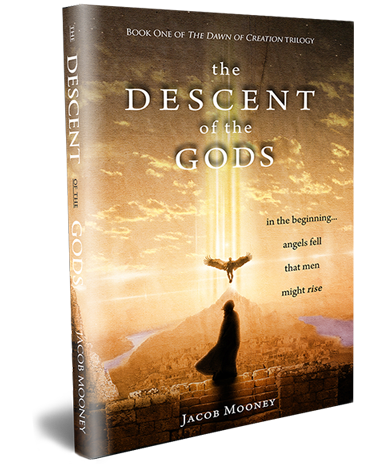

When people first hear about the “sons of God” in Genesis 6, a common question follows:
If angels and even humans can be called “sons of God,” how is Jesus any different?
That is the right question to ask. If we blur that line, we can quietly turn Jesus into just one more powerful spiritual being in a crowded supernatural world. Scripture will not let us do that.
The Bible uses “son of God” language in more than one way, so we need to sort those out before we try to connect Genesis 6 to Jesus. If you want a concise overview of the main interpretations of Genesis 6, see resources like Ligonier Ministries’ article on the sons of God in Genesis 6 or The Gospel Coalition’s summary of the three major views.
Different Kinds of “Sons of God” in Scripture
A quick survey:
Angels as “sons of God”
“Now there was a day when the sons of God came to present themselves before the LORD, and Satan also came among them.” (Job 1:6; cf. 2:1)
In Job 38:7, when God speaks of creation, He says the “morning stars sang together and all the sons of God shouted for joy.” In Job, bene elohim clearly refers to heavenly beings in God’s council, not humans.
Adam as “son of God”
In Luke’s genealogy, Adam is called “the son of God” (Luke 3:38). Adam is God’s son because he was directly created by God.
Israel as God’s son
“Israel is my firstborn son” (Exod 4:22).
“Out of Egypt I called my son” (Hos 11:1).
Here “son” is covenant language for the nation chosen and redeemed by God.
Believers as God’s children
“But to all who did receive him, who believed in his name, he gave the right to become children of God.” (John 1:12)
Christians are sons/children by adoption, not by nature.
Genesis 6 “sons of God”
The phrase in Hebrew is bene elohim (Gen 6:2, 4). Everywhere else in the Old Testament that phrase appears, it points to heavenly beings (Job 1:6; 2:1; 38:7). That is a major reason Chasing the Giants (and many scholars) understand the Genesis 6 “sons of God” as heavenly beings who rebelled, not human lineages. Historic overviews of this “angelic” view and alternative Sethite or royal views can be found through ministries like Southern Seminary’s Equip site or The Gospel Coalition.
So Scripture can call angels, Adam, Israel, and believers “sons of God” in different senses. That sets the stage for asking: how is Jesus’ sonship different?
Jesus as the Unique, Eternal Son of God
The New Testament sets Jesus in a completely different category.
“In the beginning was the Word, and the Word was with God, and the Word was God.” (John 1:1)
“No one has ever seen God; the only God, who is at the Father’s side, he has made him known.” (John 1:18, ESV)
“For God so loved the world, that he gave his only Son…” (John 3:16)
“He is the true God and eternal life.” (1 John 5:20)
Don Stewart summarizes this well. He writes that Jesus “was the unique ‘Son of God’ in that He possesses the same nature as God.” Adam was a son by direct creation. Angels are sons by creation. Israel was a son symbolically. Believers become sons by faith and adoption. But, Stewart says, “Jesus, however, is ‘the’ Son of God… He has always existed as God.”
The word son in Scripture can mean “possessing the nature of” or “belonging to the order of,” not just literal offspring. Stewart points to phrases like “sons of disobedience” (Eph 2:2) and “sons of the prophets” (1 Kgs 20:35). These people are not literally born from “disobedience” or from “prophets.” They share the character or order.
In that sense, to call Jesus “the Son of God” is to say He shares the very nature of God. That is why Colossians 2:9 can say, “In him the whole fullness of deity dwells bodily.”
The Core Difference Between Jesus and Genesis 6’s “Sons of God”
Jesus the Son of God
Eternal, uncreated.
Shares the Father’s divine nature.
Becomes human to save and restore.
Genesis 6 “sons of God”
Created heavenly beings.
Rebel and “leave their proper dwelling” (Jude 6).
Their descent brings corruption and judgment, not salvation.
In other words, the similarity in language actually highlights the contrast. Jesus shows us what a faithful Son looks like; Genesis 6 shows us what happens when created “sons” rebel.
Who Are the “Sons of God” in Genesis 6—and What Did They Do?
To see the contrast clearly, we need to understand Genesis 6 on its own terms.
Here is the key text (ESV):
“When man began to multiply on the face of the land and daughters were born to them, the sons of God saw that the daughters of man were attractive. And they took as their wives any they chose. Then the LORD said, ‘My Spirit shall not abide in man forever, for he is flesh: his days shall be 120 years.’ The Nephilim were on the earth in those days, and also afterward, when the sons of God came in to the daughters of man and they bore children to them. These were the mighty men who were of old, the men of renown.” (Gen 6:1–4)
The passage is short, but it opens a window into a strange and dark episode just before the flood.
Why Identify the Genesis 6 “Sons of God” as Heavenly Beings?
The Hebrew phrase bene elohim (“sons of God”) appears in the Old Testament with a consistent meaning:
- Job 1:6; 2:1 – “sons of God” present themselves before the LORD in heaven.
- Job 38:7 – the “sons of God” shout for joy at creation.
In these contexts, the phrase clearly refers to heavenly beings in God’s council, not humans. Genesis 6 uses the same phrase, then immediately contrasts them with “daughters of man.” The most natural reading is “divine/heavenly beings” versus human women.
Historically, this is how ancient Jewish and early Christian readers took it. Second Temple literature like 1 Enoch and Jubilees (non-canonical, but very old) elaborate the story of heavenly “Watchers” who descended, took wives, and produced giant offspring. Jewish writers like Philo and Josephus both say Genesis 6 is about angels who cohabited with women. Early church fathers—Justin Martyr, Irenaeus, Tertullian, and others—assumed the same.
Later Jewish and Christian traditions shifted toward human-only interpretations, but that is a historical shift, not the original pattern. For accessible walkthroughs of these interpretive options, see articles by David Schrock or Ligonier’s survey of the three main views.
Their Transgression and Its Judgment
Whatever the exact mechanics, Scripture is clear on this: the Genesis 6 “sons of God” crossed a boundary God had set.
The New Testament comments directly on this event:
Jude 6–7
“And the angels who did not stay within their own position of authority, but left their proper dwelling, he has kept in eternal chains under gloomy darkness until the judgment of the great day—just as Sodom and Gomorrah… indulged in sexual immorality and pursued unnatural desire…”
Jude lines up three judgments: (1) angels who sinned, (2) the flood, (3) Sodom. His description of angels leaving their “proper dwelling” matches the Genesis 6 pattern: heavenly beings step outside God’s appointed realm, in a way that includes sexual sin.
2 Peter 2:4–5
“For if God did not spare angels when they sinned, but cast them into hell [Tartarus]… if he did not spare the ancient world, but preserved Noah…”
Peter also places sinning angels right before Noah and the flood.
Taken together, Genesis 6, Jude, and Peter give us this picture: certain heavenly beings (“sons of God”) rebelled. They “left their proper dwelling” to take human women. Their presence and offspring were part of the corruption that filled the earth with violence (Gen 6:11–13). God responded with severe judgment: the flood on earth; chains of gloomy darkness for those angels.
The Nephilim (“mighty men… men of renown,” Gen 6:4) are tied to this moment. However we parse every detail, Scripture aligns them with corruption, violence, and arrogance, not with heroism. For a careful, non-sensational treatment of this topic, see the Chasing the Giants project or David Gooding’s Q&A on Genesis 6.
The Genesis 6 “sons of God” are real participants in the cosmic rebellion, created beings who grasp at forbidden relationships, and examples of how heavenly privilege can be twisted into ruin. Their story sets up a sharp contrast with Jesus, the true Son, whose descent into our world looks nothing like theirs.
Jesus’ Incarnation vs. the Genesis 6 Descent
Both Genesis 6 and the Gospels tell us about someone from the heavenly realm coming into the human realm. That surface similarity has led some to speak loosely of “two incarnations”—one dark, one holy.
That language can be confusing, but the underlying contrast is powerful and biblical when we keep the categories clear.
The Genesis 6 Descent: Taking, Corrupting, Provoking Judgment
From the biblical texts we just surveyed, the pattern for the rebel sons of God is:
They left their God-given place. Jude 6: they “did not stay within their own position of authority” and “left their proper dwelling.”
They took what was not theirs to take. Genesis 6:2 uses the same “saw… and took” pattern we see in Eve’s sin (Gen 3:6) and later in oppressive kings: “they took as their wives any they chose.” This is language of power and desire, not covenant faithfulness.
Their presence accelerated corruption. Genesis moves from this episode directly into a description of the earth as “filled with violence” and “corrupt” (Gen 6:11–13).
Their end is judgment, not redemption: flood on the human side (Gen 6–9), chains and gloom for the angels (2 Pet 2:4; Jude 6). Their “descent” is unlawful and destructive from start to finish.
Jesus’ Descent: Sent in Love, Taking on Flesh to Save
Now hold that up against how Scripture describes Jesus’ coming.
He is sent by the Father in love and obedience
“For God so loved the world, that he gave his only Son…” (John 3:16).
“For God did not send his Son into the world to condemn the world, but in order that the world might be saved through him.” (John 3:17).
Jesus does not crash the human realm. He is sent in perfect unity with the Father’s will.
He takes true humanity without ceasing to be God
Gabriel’s announcement: “He will be great and will be called the Son of the Most High… The Holy Spirit will come upon you, and the power of the Most High will overshadow you; therefore the child to be born will be called holy—the Son of God.” (Luke 1:32–35).
“Though he was in the form of God… [he] emptied himself, by taking the form of a servant, being born in the likeness of men.” (Phil 2:6–8).
“For in him the whole fullness of deity dwells bodily.” (Col 2:9).
Don Stewart reminds us: Jesus is not called Son of God because He was created or because God “had a child” in a literal sense. He has always existed as God; His birth is God the Son taking on a human nature. The word Son points to His shared nature with the Father, not to a beginning.
He came to serve and to give His life
“For even the Son of Man came not to be served but to serve, and to give his life as a ransom for many.” (Mark 10:45).
The rebel sons came to take. The true Son came to give—His time, His body, His blood.
Put side by side:
| Category | Genesis 6 “sons of God” | Jesus |
|---|---|---|
| Origin | created heavenly beings, members of God’s council. | eternal Creator, the Word who “was God” (John 1:1). |
| Motive | driven by lust, power, and rebellion. | driven by love, obedience, and mercy. |
| Action | cross boundaries God forbade; take women “any they chose.” | accepts human nature through the Holy Spirit’s work in Mary; fully respects God’s design, including marriage and sexuality. |
| Result | corruption, violence, flood, chains of darkness. | forgiveness, new life, defeat of the powers, resurrection. |
The rebel sons become a foil that throws the glory of Christ into sharper relief. Where they leave their proper domain in revolt, He leaves the glories of heaven in obedience. Where they bring the flood, He walks on the waters and calms the storm. Where they end in chains, He breaks chains and sets captives free.
Many “Sons of God,” One Unique Son
If angels, Israel, Adam, and we ourselves can be called “sons of God,” and if Genesis 6 speaks about heavenly “sons of God,” why insist so strongly that Jesus is different?
Because the gospel depends on it.
If Jesus is just one more “son of God” among many—one powerful spiritual being in a supernatural crowd—then His cross, His resurrection, and His role as Mediator all begin to blur. So we need to be very clear about how “sonship” works in Scripture.
Four Main Ways Scripture Uses “Sons of God / Children of God”
Adam – son by direct creation
Luke 3:38 ends the genealogy: “Adam, the son of God.” Adam is God’s son because God formed him directly from the dust and breathed into him.
Israel – son by covenant
“Israel is my firstborn son.” (Exod 4:22).
“Out of Egypt I called my son.” (Hos 11:1).
God “birthed” Israel as a nation, rescued them, and gave them His law. Their sonship is corporate and covenantal.
Angels – sons as heavenly servants
Job 1:6; 2:1; 38:7. They are called sons of God because they belong to God’s heavenly household and serve His purposes—at least originally, before some rebel.
Believers – sons by adoption and grace
“But to all who did receive him, who believed in his name, he gave the right to become children of God.” (John 1:12).
“All who are led by the Spirit of God are sons of God… You have received the Spirit of adoption as sons.” (Rom 8:14–15).
By nature we are “children of wrath” (Eph 2:3). By faith in Christ we are adopted into God’s family. Don Stewart underscores this: believers are sons “by faith in Christ,” not by sharing God’s divine essence.
Jesus’ Sonship Is of a Different Order
Now set those alongside New Testament claims about Jesus:
He is “the only [one and only] God, who is at the Father’s side” (John 1:18).
“In the beginning was the Word… and the Word was God” (John 1:1).
“He is the true God and eternal life.” (1 John 5:20).
“In him the whole fullness of deity dwells bodily.” (Col 2:9).
That means: Jesus is not a son by creation (like Adam or angels). He is not a son by covenant (like Israel). He is not a son by adoption (like believers). He is Son by nature—God from God, light from light, true God from true God.
Don Stewart presses this conclusion: “Thus, in each of these instances, a ‘son of God’ is used in a different sense than of Jesus. He is ‘the’ unique Son of God. Consequently, we should not confuse this special title which belongs to Him alone with a similar designation which speaks of angels and humans.”
By nature, Paul says, we were “children of wrath” and “sons of disobedience” (Eph 2:2–3). In Christ, we receive something astonishing: adoption. We become children of God (John 1:12). We are led by the Spirit and cry “Abba! Father!” (Rom 8:15). We are “heirs of God and fellow heirs with Christ” (Rom 8:17).
We share in His inheritance, not His essence. Peter can say we become “partakers of the divine nature” (2 Pet 1:4), but in the context he is talking about sharing in God’s moral character and promises, not becoming little gods.
This is why, on this site, we will talk honestly about the sons of God, the Nephilim, and the unseen realm—but always in a way that keeps Jesus as the unique, eternal Son at the center, and avoids the sensationalism that often surrounds this topic. My own journey into Genesis 6, which I describe in the “My Story” section on Chasing the Giants, has convinced me that careful, reverent study here strengthens rather than weakens our confidence in Christ.
Failed Sons, the True Son, and Our Hope
Genesis 6 gives us a brief, unsettling glimpse into a world where even heaven’s servants rebel. The “sons of God” misuse their status, cross God’s boundaries, and help fill the earth with violence. Their end is judgment—flood on earth, chains in gloom for the angels.
In that sense, Genesis 6 is a story of failed sons: created sons who abandon the place God gave them, mighty offspring (the Nephilim) who become symbols of corruption, not glory, and a world so twisted that “every intention of the thoughts of [man’s] heart was only evil continually” (Gen 6:5).
Yet even there, God shows mercy: “But Noah found favor in the eyes of the LORD” (Gen 6:8). God judges rebellion, but He also preserves a remnant and moves His plan forward.
All of this prepares us to understand and treasure the coming of the true Son.
Where the sons of God in Genesis 6 descended in rebellion, Jesus descends in obedience. Where they brought ruin, He brings redemption. Where they ended under judgment, He bears judgment for us.
On the cross, Paul says, Christ not only forgave our sins; He also “disarmed the rulers and authorities and put them to open shame, by triumphing over them” (Col 2:15). The rebel powers—whether human or angelic—do not get the last word. The crucified and risen Son does.