
At the risk of sounding strange for a non-JW researcher: on Genesis 6, Jehovah’s Witnesses are much closer to the oldest Jewish and Christian reading of the Nephilim than many evangelicals today.
They see the “sons of God” as rebellious angels, the Nephilim as their violent hybrid offspring, and they reject modern Nephilim conspiracy theories.
That basic Genesis 6 framework is historically well-rooted and biblically serious.
But their presentation still assumes more than Scripture actually says, leaves important historical and scientific questions untouched, and treats Genesis 6 as straightforward literal description without wrestling with genre or the archaeological record. This article will affirm what is solid in the JW approach to the Nephilim, then carefully outline what remains open or problematic—and why Christ, not the Nephilim, must remain the center.
For readers who want broader context on Genesis 6, the “sons of God,” and biblical giants, you can explore the Tracing the Giants series, the site’s database of ancient sources, and in-depth research papers on Genesis 6:1–4.
What Jehovah’s Witnesses Actually Teach About the Nephilim (Genesis 6)
Jehovah’s Witnesses explain the Nephilim in a short article on JW.org titled “Who Were the Nephilim?” That’s the teaching I’m engaging here. If you want their own wording, you can read it here.
Their core claims can be summarized this way.
1. The Nephilim Were Giant, Violent Hybrids
JW.org states:
“The Nephilim were giants, the violent superhuman offspring produced when wicked angels mated with human women in the days of Noah.”
In other words, the Nephilim were real giants in Genesis 6, “mighty ones of old, men of renown,” not symbols or legends. On this, JWs align with many readers who search for the basic “Nephilim meaning in the Bible” and want a straightforward explanation rather than speculative mythology.
2. The “Sons of God” in Genesis 6 Were Rebellious Angels
JW.org identifies the “sons of the true God” (Genesis 6:2) with angelic beings, citing Jude 6 and Job:
Those ‘sons of God’ were actually spirit creatures who rebelled against God when they “forsook their own proper dwelling place” in heaven, materialized human bodies, and “began taking as wives all whom they chose.”—Jude 6; Genesis 6:2.
They appeal to Job 1:6; 2:1; 38:7, where “sons of God” clearly refers to heavenly beings in God’s council, and read Genesis 6 the same way. This lands squarely in the “fallen angels in Genesis 6” interpretation and answers the common question, “Who were the sons of God in Genesis 6—angels or humans?”
3. The Nephilim Were the Offspring, Not the Angels Themselves
JW.org is explicit that the Nephilim were not the fallen angels:
“The context of Genesis 6:4 indicates that the Nephilim were, not angels, but hybrid offspring born from sexual relations between materialized angels and women.”
So in their view:
- Fathers: rebellious “sons of God” (fallen angels).
- Mothers: human “daughters of men.”
- Children: Nephilim—violent, hybrid giants.
This answers a frequent confusion in popular discussions: “Are the Nephilim fallen angels, or are they different from demons and angels?”
4. Key Misconceptions JW.org Rejects About the Nephilim
The JW.org article helpfully pushes back on ideas that show up in a lot of modern Nephilim content:
- The Nephilim are not still alive on earth today.
They appeal to the Genesis Flood narrative and texts like 2 Peter 2:5 to argue that the Nephilim were wiped out. This counters theories about surviving Nephilim bloodlines or modern “Nephilim DNA.” - The Nephilim were not fathered by humans.
The “sons of God” are read as angels, not Sethite men or noble rulers. This opposes the “Sethite” explanation that many evangelicals now prefer. - The Nephilim were not fallen angels.
They distinguish carefully between the angels who sinned and the hybrid offspring produced from those unions.
In tone, JW.org’s article is conservative and anti-sensational: no secret Nephilim skulls hidden by museums, no Nephilim super-soldiers, no “aliens are Nephilim” theories. On that level, they do some of the same demythologizing work that careful biblical archaeology discussions attempt when they address claims of giant skeletons and biblical literalism or review the alleged “giants in the earth”.
As someone who is not a Jehovah’s Witness, I’ll be honest: it’s unusual to see such significant overlap between a group often criticized in evangelical circles and what the earliest Jewish and Christian sources actually say about Genesis 6 and the Nephilim. That overlap deserves to be named before we turn to critique.
Where the JW Nephilim View Lines Up with the Oldest Reading of Genesis 6
On Genesis 6:1–4 itself, Jehovah’s Witnesses stand much closer to Second Temple Jewish and early Christian readings than many people realize. If your main question is “What are the Nephilim in the Bible, and how did ancient readers understand Genesis 6?” their answers are surprisingly traditional.
1. “Sons of God” in Genesis 6 as Angelic Beings
JW.org reads the phrase benei elohim (“sons of God”) in Genesis 6:2, 4 in line with Job 1:6; 2:1; 38:7—referring to heavenly beings, not human lineages. That’s exactly how:
- Job uses the phrase in heavenly council scenes,
- Psalm 82 portrays “gods/sons of the Most High” as divine beings under judgment,
- and how most Second Temple Jewish writers understood Genesis 6.
This “angel view” of Genesis 6 is also reflected in many modern discussions of biblical giants and the Nephilim that survey the history of interpretation.
2. A Real Angelic Rebellion Tied to Noah’s Day
JW.org connects Genesis 6 with Jude 6 and 2 Peter 2:4–5:
- Jude 6 describes angels who “did not stay within their own position of authority, but left their proper dwelling,” kept in chains until judgment.
- 2 Peter 2:4–5 speaks of “angels who sinned” cast into “Tartarus,” then immediately mentions Noah and the Flood.
Most mainstream scholars—regardless of whether they personally believe in angels—agree Jude and Peter are referencing the Genesis 6 rebellion in light of the Watchers tradition found in texts like 1 Enoch. Jehovah’s Witnesses affirm that same linkage: the “angels who sinned” in Jude and Peter are the “sons of God” in Genesis 6, and the judgment that followed is the Flood.
3. Broad Alignment with Second Temple Literature on the Nephilim
Non-canonical texts like 1 Enoch (especially chapters 6–8) and the Book of Giants expand Genesis 6 into a longer story of:
- Watcher angels descending,
- marrying human women,
- producing giants,
- and being imprisoned until the final judgment.
JW.org does not quote these writings, and rightly does not treat them as Scripture. But their basic storyline—fallen heavenly beings, hybrid offspring, and divine judgment—matches this older Jewish backdrop and sits close to how many later writers describe the Nephilim and their fathers.
For readers interested in those sources, Chasing the Giants curates the largest online index of ancient texts mentioning this story, including 1 Enoch, the Book of Giants, Jubilees, and others.
4. Parallels with Early Church Fathers on Genesis 6 and the Nephilim
Early Christian writers like Justin Martyr, Irenaeus, Athenagoras, Tertullian, and Clement of Alexandria all affirm a version of the angelic/Watcher view. They treat Genesis 6 as a real incursion from the heavenly realm and connect it to both demons and pagan myths about giants.
In other words, for the first few centuries of the church, JWs’ basic reading of Genesis 6—angels, hybrid offspring, judgment—was the normal reading, long before later figures like Augustine popularized the “Sethite” view of the “sons of God.”
If you want to see how those early interpretations develop over time, the Tracing the Giants project surveys ancient Jewish and Christian commentators on Genesis 6 and the Nephilim.
5. Shared Rejection of Demythologizing and of Nephilim Conspiracies
On two fronts, JW.org lands in a healthy middle that many readers looking for “Nephilim explained without hype” are really after:
- They reject the purely human, “Sethite” explanation that strips Genesis 6 of its supernatural dimension and reduces the Nephilim to nothing more than ordinary humans.
- They also reject modern Nephilim conspiracies—surviving giant bloodlines, government labs, “ancient aliens are Nephilim,” and so on.
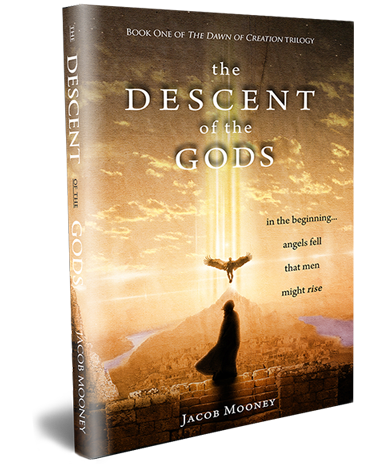
That posture is close to what I’ve tried to model at Chasing the Giants and in my novel-in-progress The Descent of the Gods: embrace the Bible’s supernatural worldview in Genesis 6, but refuse to turn it into a Christianized X-Files.
Personally, I spent years assuming my “weird” view of Genesis 6 must be fringe—until I realized it was actually the oldest, mainstream view among ancient Jews and early Christians. Discovering that history taught me to care more about Scripture and the long conversation of the church than about tribal labels. On that level, JWs and many of us in the broader Christian world have more in common than we might think.
Where Questions Remain: Scripture, Archaeology, and JW Assumptions About the Nephilim
Affirming the strengths of the JW interpretation doesn’t mean we stop asking hard questions. Their article is brief, and in its simplicity it also assumes more than Scripture says and ignores some important lines of evidence—especially for readers who come asking not only, “Who were the Nephilim?” but also, “What does history and archaeology say about giants in the Bible?”
1. Treating Genesis 6:1–4 as Straightforward Historical Reportage
JW.org simply assumes Genesis 6:1–4 is straight, literal narrative describing angels literally materializing bodies, literally marrying women, and literally fathering a race of giants.
That may be true; it may not. What’s missing is any discussion of:
- Genre: Genesis 1–11 has strong literary and symbolic features, even when it describes real events. Serious evangelical scholars debate how to weigh those features in Genesis 6.
- Brevity and ambiguity: Genesis 6:1–4 is deliberately sparse. The Bible gives only a few lines about the Nephilim in Genesis, then moves on. That should make us slow to fill in biological or historical details Scripture never spells out.
- Theological function: Genesis is building a pattern of rebellion and judgment (Genesis 3, 4, 6, 11). The text’s purpose may be more theological and moral than biological.
Jehovah’s Witnesses are right that Genesis 6 refers to real angelic rebellion and real consequences. But we need humility about how much detail we can reconstruct about the Nephilim from four verses.
For those wanting a fuller survey of scholarly exegesis on Genesis 6:1–4, the research section collects peer-reviewed work and careful analyses rather than internet speculation.
Conclusion: Holding on to What’s Ancient—and to What Matters Most
On the Nephilim, Jehovah’s Witnesses preserve a reading that is far more ancient and text-based than many Christians realize. They affirm that:
- “Sons of God” in Genesis 6 are angelic beings,
- those angels rebelled and “forsook their own proper dwelling” (Jude 6),
- Nephilim were mighty, violent figures associated with that rebellion,
- and God judged that world through the Flood.
On these points, they stand in substantial continuity with Genesis, Job, Jude, 2 Peter, the Second Temple Jewish tradition, and the first centuries of the church. For readers trying to make sense of the “Genesis 6 sons of God and Nephilim” story, that continuity may be surprising.
At the same time, their presentation:
- treats Genesis 6 as straightforward literal reportage without exploring genre,
- says more than Scripture explicitly gives us about Nephilim biology and history,
- and leaves archaeology and the absence of giant skeletal remains entirely unaddressed.
Those are real tensions Christians should acknowledge. The exact size and number of Nephilim, the relationship between Genesis 6 and later traditions like 1 Enoch, and how (or whether) we can correlate any of this with physical evidence—those remain areas of responsible debate among Bible-believing scholars.
But our response must not be driven by tribalism (“they’re JWs, so they must be wrong”) or by fascination with the bizarre. Instead, we are called to read Genesis 6 within the whole counsel of God and under the lordship of Christ.
The story of rebellious “sons of God” who abandoned their proper place is, in the end, a dark backdrop against which the light of the obedient Son shines brighter. Jesus entered our world not to corrupt it, but to bear its sin. He triumphed over rulers and authorities, putting them to open shame by the cross (Colossians 2:15). That victory—not the mysteries of the Nephilim—is the true center of Christian hope.
If you want to keep exploring this topic in a careful, non-sensational way—from Genesis 6 and the Nephilim, to giants like the Anakim and Rephaim, to how early Jews and Christians read these texts—the resources at Chasing the Giants are written with you in mind. And if you’re curious how all of this might look in story form, The Descent of the Gods is my attempt to bring Genesis 6 to life without watering it down or turning it into conspiracy.
Hold Genesis 6 with humility. Hold Christ with both hands.