In “It Ain’t Necessarily So: Giants and Biblical Literalism,” published by the National Center for Science Education (NCSE) in 1985, J.R. Cole takes aim at a certain kind of “biblical literalism” that uses giants to attack evolution. The NCSE exists to defend the teaching of evolution and critique creationist arguments, so Cole focuses on claims about “pre-flood human giants,” giant footprints, and oversized skeletons supposedly proving the Bible and disproving evolution.
The original article can be read on the NCSE website as part of their 1985 materials (text; issue context; see also their archival index and reference listings). Cole makes several valid points. He notes that the Hebrew behind “giant” is more complex than many popular treatments admit. He reminds readers that the Levant is one of the best-excavated regions on earth, with no confirmed oversized human skeletons. And he rightly warns that some “giant” evidence pushed in creationist circles is fraudulent or badly misinterpreted.
From there, Cole presses two key claims: first, that there is “no scientific evidence” for a race of huge pre-flood humans; second, that “there is no support for pre-flood giants in the Bible, either.” The first is almost certainly correct if we define “scientific evidence” as verifiable physical remains. The second is more complicated—because it depends on how we read short, enigmatic texts like Genesis 6:1–4 and Numbers 13:33, and how we weigh later Jewish and Christian interpretation.
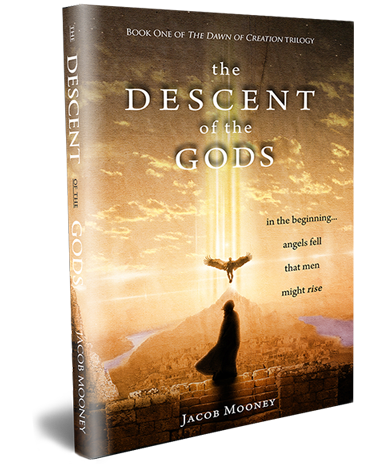
As someone who has spent over twenty years studying Genesis 6 and the Nephilim, I welcome Cole’s cautions about sloppy giant claims and bogus artifacts. Serious Christians should care deeply about truth, not “gotcha” evidence. That commitment to honest inquiry is one of the reasons I’ve been working on a novel about the Genesis 6 story, The Descent of the Gods, which is coming soon. But we do not have to choose between intellectual honesty and taking Scripture seriously. We can reject bad arguments for giants and still read the Bible’s “giant” passages carefully, in their own literary and historical context.
What Scripture Actually Says About Nephilim and “Giants”
When we step back from modern debates and let Scripture speak, two things stand out: the relevant passages are real but sparse, and some of the most heated modern claims go beyond what the text actually says.
Genesis 6:1–4 is the starting point:
“When man began to multiply on the face of the land and daughters were born to them, the sons of God saw that the daughters of man were attractive. And they took as their wives any they chose.
…The Nephilim were on the earth in those days, and also afterward, when the sons of God came in to the daughters of man and they bore children to them. These were the mighty men who were of old, the men of renown.” (ESV)
The description is strikingly brief. We are told that “sons of God” took “daughters of man” as wives, that the Nephilim “were on the earth in those days, and also afterward,” and that these figures are associated with “mighty men… men of renown.” We are not given height measurements or detailed descriptions of anatomy. Genesis 6 hints at something unusual and troubling that contributes to God’s decision to bring the flood, but it does not spell it all out.
Nephilim, Rephaim, Anakim, and Biblical Giant Language
The word Nephilim itself is debated. Many lexicons connect it to a Hebrew root meaning “to fall,” which is why some render it “fallen ones.” Others argue the morphology and later usage lean toward a meaning associated with size or overwhelming power. The text alone does not resolve the debate.
Elsewhere in the Old Testament, we meet other “giant” groups. The Rephaim (for example in Deuteronomy 2–3) are a people remembered for their great size and strength, associated with regions east of the Jordan. The Anakim are descendants of Anak, who are described in connection with great stature. Goliath in 1 Samuel 17 is an individual warrior whose height is emphasized.
Numbers 13:32–33 links some of these threads:
“All the people that we saw in it are of great height. And there we saw the Nephilim (the sons of Anak, who come from the Nephilim), and we seemed to ourselves like grasshoppers, and so we seemed to them.”
Here the spies speak of people of “great height,” explicitly call the Anakim “from the Nephilim,” and use the vivid simile “we seemed… like grasshoppers.” It is easy to see why many readers connect Nephilim with unusual size. At the same time, this report comes from fearful spies whose exaggeration is rebuked later in the narrative. We must account for literary features—fear, hyperbole, and Israel’s tendency to see obstacles as bigger than they are.
The Septuagint (the ancient Greek translation of the Old Testament) renders nephilim as gigantes—“giants.” That translation choice strongly influenced later Jewish and Christian imagination. But gigantes in Greek can also have connotations of mighty or earth-born figures, not just tall people. So while “giants” is not an unreasonable translation, it is not the only possible nuance.
Where can we agree with Cole? On this: the Bible does not clearly teach that all pre-flood humans were colossal. “Pre-flood human giants” as a universal race is not a required reading of Genesis. But where I would nuance his conclusion is here: Scripture does present unusual figures and groups—Nephilim, Rephaim, Anakim, and certain warriors—whose power and sometimes their stature set them apart, even if their exact size and nature remains unclear.
Sons of God, Nephilim, and the Supernatural Context
A major piece of the puzzle is the identity of the “sons of God.” My working assumption, based on the broader biblical and historical evidence, is the angelic view. In Job 1:6 and 38:7, “sons of God” clearly refers to heavenly beings. Jude 6 and 2 Peter 2:4–5 speak of angels who sinned, left their proper dwelling, and were judged in connection with the days of Noah.
Second Temple Jewish texts like 1 Enoch and Jubilees (non-canonical but historically important) consistently understand Genesis 6 this way. At the same time, I do not assume that Nephilim automatically equals “giants” in the modern sense. The term points to a notorious group of “mighty men of old,” associated with a transgressive crossing of heavenly and earthly boundaries. Size may have been part of their reputation, but Scripture never makes their height the theological center.
Their role in the story is about corruption, violence, and rebellion. If you want a fuller walkthrough of Genesis 6, the “sons of God,” and the Nephilim, I unpack the options and evidence in much more detail in my broader “Tracing the Giants” research on Chasing the Giants, where I also share more of my own journey in “My Story: Why I Study Genesis 6 and the Nephilim.”
Where the NCSE Critique Helps—and Where It Overreaches
Cole’s article deserves a fair reading. There are parts Christians can and should welcome, and places where his claims outrun the data—both scientific and biblical. Other researchers outside explicitly Christian circles have raised similar cautions about alleged giant evidence and misread biblical texts, as in the critical survey at Historical Blindness.
Strengths in Cole’s Analysis
Cole rightly presses for more precision about “giants.” He notes that Nephilim is not simply the Hebrew word for “tall person,” and that other terms—Rephaim, Anakim, etc.—have their own histories and nuances. He is right to resist a one-size-fits-all reading where every unfamiliar term simply becomes “giant” by default. Good exegesis demands more.
He also observes that the regions associated with the Rephaim and related groups have been intensively excavated and that archaeologists have not uncovered verifiable skeletons of humans far beyond known human variation. That matters. If someone claims 20–30 foot human skeletons were common in the ancient Near East, but no credible remains exist, Christians should not prop up their faith with such assertions.
He is also correct that many sensationalist photos, “giant footprint” stories, and internet claims are hoaxes or misunderstandings. Christians should be the first to discard fake evidence, not the last. I resonate with his skepticism toward pseudo-archaeology. Over the years I’ve spent far more time debunking bad Nephilim claims than promoting them. When believers tie the truth of Scripture to easily falsified YouTube artifacts, they do real damage to Christian credibility.
Mythic or Metaphorical Readings and Their Limits
Cole also suggests that some biblical “giant” material is better read as symbolism or exaggeration such as the spies’ “we seemed like grasshoppers” as fearful overstatement. There is something to this. Ancient Near Eastern storytelling often uses vivid imagery to make theological points. The spies in Numbers 13 do exaggerate; their report is rebuked, and their fear spreads unbelief.
But acknowledging exaggeration does not require us to flatten everything into metaphor. That the spies overreacted does not mean there was nothing intimidating about the people they saw. Sound interpretation allows for both: real historical situations described in a literary way to highlight theological meaning.
Where Cole’s Claims Go Too Far
Cole’s strongest—and most problematic—claim is that “there is no support for pre-flood giants in the Bible, either.” That needs careful untangling. If he means, “the Bible nowhere says all pre-flood humans were gigantic,” I would agree. If he means, “Genesis 6:1–4 never uses the English word ‘giant,’” that is trivially true.
But if he means, “there is nothing in Scripture that even textually supports the idea of unusual figures associated with the pre-flood world, later remembered as giants,” that is too strong. Genesis 6:4 explicitly states the Nephilim “were on the earth in those days, and also afterward,” and Numbers 13:33 explicitly links the Anakim to the Nephilim. That is textual support for a remembered group whose reputation included overwhelming power and, at least in later perception, great size.
Whether we translate Nephilim as “fallen ones” or “giants,” we cannot simply say the Bible has “no support” for such figures. The support is limited; it is not nonexistent. The article also ignores an entire layer of interpretive history: Second Temple literature like 1 Enoch and Jubilees, which heavily develop the idea of transgressive heavenly beings and their giant offspring, and early Jewish and Christian commentators (Philo, Josephus, Justin Martyr, Irenaeus, Tertullian, and others) who took Genesis 6 as describing a real supernatural rebellion linked to notorious mighty figures.
These texts are not Scripture and must not be treated as equal to the Bible. But they show how ancient readers, much closer to the language and cultural context, understood Genesis 6—and they almost universally saw something more than metaphor. Finally, Cole writes from an explicitly naturalistic frame. The NCSE’s approach assumes, methodologically at least, that unseen realities (angels, demons, spiritual rebellion) are not part of the explanatory toolbox. Scripture, by contrast, consistently assumes that the unseen realm is real and significant (Ephesians 6:12).
That difference in starting point explains why Cole treats giant and Nephilim traditions as either metaphor or legend, whereas the biblical writers and early Christians treated them as terse windows into real, if mysterious, events. I resonate with Cole’s desire to weed out hoaxes and stay honest about evidence. But I would urge him—and my readers—not to move from “we lack physical proof of 30-foot skeletons” to “therefore any biblical language about Nephilim or cosmic rebellion is purely symbolic.” That is not what the text itself or the early interpretive tradition suggests.
A Sane Christian Response to Skepticism About Giants
Critiques like Cole’s often trigger two unhealthy reactions among Christians: defensive doubling down (“they’re attacking the Bible; we must prove giants!”) or speculative obsession (“secret Nephilim DNA, hidden bones, global cover-up!”).
Neither honors Christ.
Some Christian claims about giants have been careless, exaggerated, or tied directly into conspiracy culture. Photoshopped skeletons, misidentified fossils, and sweeping claims about Nephilim bloodlines in modern politics do not glorify God.
They distract from the gospel and train believers to look for hidden codes instead of plain Scripture. We do ourselves no favors when we answer a legitimate scientific critique of bogus evidence by finding different bogus evidence. Christians should welcome careful archaeology and real scientific critique. If an artifact is exposed as fake, we should drop it. If the best evidence shows no population of humans far outside known size ranges in Canaan, we should not insist otherwise.
At the same time, honesty about physical evidence cuts both ways. The absence of giant skeletons does not, by itself, settle the meaning of a brief Hebrew term in an ancient theological narrative. Our task is to let Scripture speak in context, acknowledge where the text is genuinely ambiguous, and distinguish what is possible, plausible, and provable. Genesis 6 is not an isolated curiosity about giants. It is part of a pattern: human rebellion (Genesis 3–11), unseen-realm rebellion (Genesis 3; 6; compare Jude 6; 2 Peter 2:4–5), and God’s judgments and mercies leading to the call of Abraham.
The Bible’s concern is not to satisfy our curiosity about how tall the Nephilim were, but to show that evil and corruption ran deep—so deep that both heaven and earth were involved—and that God’s response, culminating in Christ, addresses both the visible and invisible. Paul reminds us: “For we do not wrestle against flesh and blood, but against the rulers, against the authorities, against the cosmic powers over this present darkness…” (Ephesians 6:12). And he assures us that Christ has already “disarmed the rulers and authorities and put them to open shame” (Colossians 2:15).
Whatever Genesis 6 records, its ultimate significance is as background to Jesus’ victory, not as a playground for speculation. When you encounter claims—whether from secular critics or Christian teachers—about giants, Nephilim, or Genesis 6, it helps to test every claim against Scripture in context and solid scholarship, not just popular videos or memes, and to refuse to build your faith on “giant proof” or secret knowledge. Root it in the clear gospel of Jesus Christ, and keep giants, Nephilim, and unseen-realm questions as secondary issues.
If you share Cole’s skepticism, you may not be convinced by talk of angels, Nephilim, or spiritual warfare. I understand that. My aim is not to drag you into speculative fringe, but to invite you to consider what the Bible is actually claiming: a God who is Lord of both the seen and unseen, and a crucified, risen Jesus who confronts evil at every level. You do not have to settle the Nephilim question before wrestling with Christ’s claims.
But if Genesis 6 and its reception history accomplish anything, they should at least make us pause before reducing the Bible to children’s stories or moral fables. It is dealing with a world far stranger and larger than our narrow materialist assumptions. For believers who want to go deeper in a level-headed way, I’ve shared more of my own journey—and how I learned to separate Scripture from sensationalism—in “My Story: Why I Study Genesis 6 and the Nephilim,” and in the broader “Debunking Sensationalist Claims” section on Chasing the Giants.
Conclusion: Sound Minds, Strange Texts, and a Sufficient Savior
When we step back, we can say several things at once. We can agree with the NCSE article that many giant claims in Christian circles are poorly supported. There is no good reason to believe that all pre-flood humans were enormous, or that there is a global conspiracy hiding warehouses of giant bones. We can also acknowledge that the Bible itself does not hinge its authority on proving a race of colossal pre-flood humans.
At the same time, we should resist the temptation to flatten Scripture into metaphor simply because its worldview includes the unseen. Genesis 6, Numbers 13, Deuteronomy 2–3, and related texts present real, if sparsely described, figures like the Nephilim, Rephaim, and Anakim. How tall they were is debated; that they function in the biblical story as part of a deeper pattern of rebellion and judgment is not. Honest Christians can differ on details while agreeing that the text points to more than myth.
Most importantly, we must correct both fear and speculation. God “has not given us a spirit of fear, but of power and love and a sound mind” (2 Timothy 1:7). A sound mind does not chase hoaxes or build faith on archaeological one-upmanship. Nor does it panic when secular critiques expose bad Christian arguments. Instead, it returns to what is clear: the holiness of God, the seriousness of sin—human and cosmic—and the sufficiency of Jesus Christ.
Genesis 6 is ultimately a story of failed “sons of God” who left their calling and brought corruption. The good news is that God sent His true Son, who did not fall, did not exploit, and did not come to take, but to give His life “that whoever believes in him should not perish but have eternal life” (John 3:16). Sound thinking about giants and Nephilim is just one small piece of living with that sound mind—anchored not in fear or hype, but in the crucified and risen Lord who has already triumphed over every power, seen and unseen.