Genesis 6:1–4 is one of the strangest texts in the Bible. It talks about “sons of God,” “daughters of man,” and the Nephilim—mighty men of old. Scripture gives us four short verses, then moves straight to Noah, violence, and the Flood.
Modern “Nephilim ministries” often do the opposite. They give you hours of video, colorful charts, secret bloodlines, and supposed photos of giant bones. The result is a whole worldview built on a few disputed words, a lot of guesswork, and more than a few hoaxes. If you want to see how wide the interpretive spectrum really is, compare responsible summaries from across traditions—from Southern Seminary, Ligonier, and Answers in Genesis to Catholic Productions and others (SBTS; Ligonier; Answers in Genesis; Catholic Productions).
This article is not an attack on the supernatural reading of Genesis 6. Chasing the Giants actually favors the angelic view: the “sons of God” were rebel heavenly beings, and the Nephilim were their hybrid offspring. The problem is not believing that. The problem is what happens when people stop letting Scripture set the boundaries and start letting speculation, conspiracies, and internet myths take over.
We will walk through four main areas:
- What “Nephilim nuts” miss about the way Genesis 6 works
- Key places where popular teaching quietly breaks away from the text
- How hype slides into hoaxes, pseudoscience, and damaged credibility
- How to recover the real, Christ-centered story Genesis 6 is telling
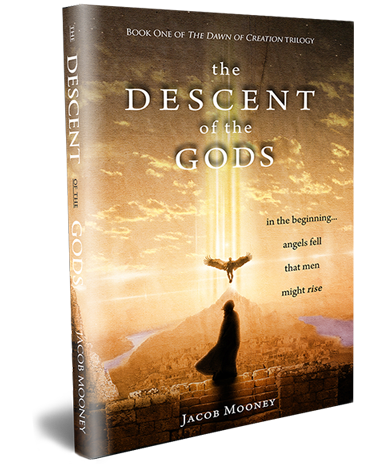
This is one of the reasons I’ve been working on a novel about the Genesis 6 story, which is coming soon. You can find out more at The Descent of the Gods.
What Sensational Nephilim Teaching Misses About Genesis 6
Genesis 6:1–4 is incredibly short:
When man began to multiply on the face of the land and daughters were born to them, the sons of God saw that the daughters of man were attractive. And they took as their wives any they chose.
Then the Lord said, “My Spirit shall not abide in man forever, for he is flesh: his days shall be 120 years.”
The Nephilim were on the earth in those days, and also afterward, when the sons of God came in to the daughters of man and they bore children to them. These were the mighty men who were of old, the men of renown. (Gen 6:1–4, ESV)
That is all. No heights in feet and inches. No DNA charts. No details about Ham’s wife carrying Nephilim DNA onto the ark. The New Testament confirms real spiritual rebellion (Jude 6; 2 Peter 2:4–5), but it also stays brief. Careful evangelical, Reformed, and academic treatments all stress this restraint, even when they disagree on specifics (Schrock; BibleInterp; Woodside Bible).
That brevity should make us humble and careful. Instead, a lot of modern teaching does the opposite.
Who We Mean by “Nephilim Nuts”
We are not talking about everyone who holds the angelic view. For almost 2,000 years, Jews and Christians widely read Genesis 6 that way, and there are serious scholars today (Michael Heiser, Amar Annus, and others) who defend a supernatural reading with solid research. You can see how wide the legitimate debate is just by comparing careful surveys from Reformed, Baptist, and independent scholars (OPC; Berean Bible Church).
By “Nephilim nuts,” we mean a pattern of overconfidence, category collapse (turning every tall person or scary nation into Nephilim), conspiracy gap-filling, and canon confusion (treating books like 1 Enoch as if they were inspired Scripture). All of this plays into the allure of hidden knowledge. It feels exciting to know something “the church has suppressed” or “the Smithsonian is hiding.” But that excitement can quietly replace a text-driven, Christ-centered faith with a fear-driven, secret-knowledge faith.
And this is why it matters for discipleship. When believers are discipled mostly by YouTube algorithms and sensational podcasts, the tone of their Christian life often becomes anxious, suspicious, and distracted. They learn to scan news headlines for Nephilim clues instead of fixing their eyes on Christ and learning how to love God and neighbor.
My Journey: Curiosity vs. Panic
When I (Jake) first stumbled on Genesis 6 as a teenager, I was shocked that my church almost never talked about it. I went to commentaries and then the early internet. A lot of what I found scared me—claims about secret elites, hybrid breeding programs, and hidden bones.
When I finally asked my pastors, they did something wise. They admitted they did not fully agree with each other, and then they encouraged me to keep studying and to weigh the evidence for myself. They trusted that Scripture could handle real questions.
That experience marked me. I learned there’s a big difference between reverent curiosity and panic-driven speculation. Genesis 6 opened a window into a bigger unseen realm, but it also forced me to ask: am I chasing truth, or just chasing a feeling of being “in the know”?
Where Popular Nephilim Teaching Breaks from the Biblical Text

Let’s look at a few claims that sound bold and confident but lean harder on imagination than on what the Bible actually says.
Linguistic Overreach: Does “Nephilim” Really Mean “Giants”?
Many English Bibles translate Nephilim as “giants.” The Greek Septuagint does use gigantes. There is certainly a giant tradition in later Jewish and Christian writings, and mainstream overviews normally acknowledge this while still noting ambiguity (Ligonier).
But the word itself is debated. Serious scholars still argue about its roots. Some derive it from the Hebrew verb npl (“to fall”) and read it as “fallen ones” or “those who cause others to fall”—violent warriors or tyrants. Others see a strong case that Nephilim is a loanword from an Aramaic term for “giant” connected with the constellation Orion.
The point is not that “giant” is wrong. The point is that etymology is not a concrete floor you can build a whole system on. The term sits in a web of ancient ideas about mighty warriors, violence, and divine-human overlap. Treating “giants” as a settled, technical definition and then building elaborate hybrid-biology doctrines on it is more rigid than the evidence allows.
Post-Flood Survival and the “Ham’s Wife” Rescue Theory
Genesis 6:4 says:
The Nephilim were on the earth in those days, and also afterward, when the sons of God came in to the daughters of man…
Those four words—“and also afterward”—do a lot of work in modern teaching. Many take them as slam-dunk proof that Nephilim survived the Flood or reappeared through a second angelic incursion. To make it all “fit,” some propose that Nephilim genes slipped onto the ark inside “Ham’s wife.”
But notice what the text does not say. It does not explain how “afterward” works or describe a second angelic descent. It does not name Ham’s wife, let alone her DNA. Studied evangelical discussions are very open about these uncertainties and offer multiple options rather than one dogmatic answer (Schrock; SBTS Equip).
Building a second-incursion doctrine or a Ham’s-wife bloodline is a massive theological and narrative leap that the biblical text simply does not support. The Bible is completely silent about a repeat angelic rebellion, and solving that silence with invented genetics is pure speculation, not exegesis.
“And also afterward” may be a narrative aside tying Genesis 6 to later giant-like figures in Israel’s memory, or a way of saying, “This kind of figure showed up again,” without spelling out the mechanism. Post-Flood Nephilim is possible, but it is not a forced reading, and any genetic fix (“Noah’s daughter-in-law carried Nephilim DNA”) goes far beyond Scripture.
Category Collapse: Turning Every Giant into Nephilim

Another common move is to equate Nephilim with every “big and scary” group in the Old Testament: the Anakim, Rephaim, Emim, Zamzummim, Goliath’s clan, and so on. The logic goes: Genesis 6 mentions Nephilim; Numbers 13 mentions Nephilim and Anakim; later texts mention tall warriors; therefore they’re all one single hybrid bloodline.
But the Bible uses different labels for a reason. Not every use of gibborim (“mighty men”) or every tall clan in Canaan is explicitly called Nephilim. You only get “everything is Nephilim” by reading that label back into texts that don’t use it. This “category collapse” turns Genesis into a single, tidy conspiracy story. It feels satisfying. But it flattens the Bible’s rich variety of evil—human tyranny, spiritual rebellion, and ordinary national enemies—into one exaggerated monster category.
Misreading Numbers 13 and the “Evil Report” of the Spies
This is where things get serious, because a lot of modern Nephilim systems lean hard on one passage:
The land, through which we have gone to spy it out, is a land that devours its inhabitants… And there we saw the Nephilim (the sons of Anak, who come from the Nephilim), and we seemed to ourselves like grasshoppers… (Num 13:32–33)
Many teachers treat this as a neutral field report, a kind of inspired anthropological note: “See? Post-Flood Nephilim DNA!” But the narrator calls it something else: “So they brought to the people of Israel a bad report of the land.” (Num 13:32)
“Bad” here carries the idea of false, slanderous, faithless. The entire narrative condemns the spies’ words as fueled by fear and unbelief. The Anakim were truly intimidating warriors. The frightened spies reached for the scariest name they knew—Nephilim—to justify their disobedience. It’s like calling a huge linebacker “a Goliath.” You’re not making a genetic claim. You’re making a fear claim.
I (Jake) used to read Numbers 13 as if the narrator were calmly confirming the spies’ description. Only later did I realize the text itself labels their words as an “evil report.” Building a whole post-Flood hybrid doctrine on the exaggerations of unbelieving men is the opposite of careful Bible reading.
Misusing Matthew 22:30 and Genesis 6:3
Two more verses often get pulled into stiff systems.
Matthew 22:30 says: “For in the resurrection they neither marry nor are given in marriage, but are like angels in heaven.” Matthew 22 is about resurrection life, not a full angelic biology manual. Jesus says resurrected humans will be like angels in not marrying. He also specifies “angels in heaven.” Jude 6, however, talks about angels who “did not stay within their own position of authority, but left their proper dwelling.” Treating Matthew 22:30 as a trump card that makes Genesis 6 “impossible” ignores that difference in context.
On the other side, some Nephilim teachers hand-wave Matthew 22 away instead of dealing with it honestly. A better approach is: use Matthew 22 for what it is teaching (marriage in the age to come) and Jude/2 Peter for what they are teaching (angels who sinned before the Flood). Don’t mash them into a rigid biology chart.
Genesis 6:3 is also debated. Does “120 years” mean a cap on human lifespan, or a countdown to the Flood? Good commentaries present both. Sensational teachers often pick one option as certain, then hang extremely precise timelines and Nephilim cycles on top of it. Again, the pattern is the same: contested verse to overconfident system.
When Nephilim Hype Becomes Hoaxes and Pseudoscience

Once someone has a huge system built on Genesis 6, they naturally want physical proof. When that proof doesn’t show up, the conversation slides from “here’s what the Bible says” to “here’s what science and museums are hiding from you.” This is where the damage to Christian credibility becomes obvious.
The Smithsonian “Giant Bones” Conspiracy
You’ve probably heard some version of this: thousands of giant skeletons (8–15 feet tall) were found in North America; the Smithsonian hauled them away and “lost” or destroyed them to protect evolution; a Supreme Court case even forced them to admit it. That last bullet point comes from a 2014 article on World News Daily Report—a self-described satire site that makes up fake news for clicks.
Fact-checkers at Reuters, AP, and Snopes have all traced the story: the “American Institution of Alternative Archaeology” in the article does not exist, there was no Supreme Court case, and there is no stash of destroyed giant bones (Snopes). Earlier “giant skeleton” reports from the 1800s mostly came from yellow journalism and misidentified megafauna—mastodon or mammoth bones mistaken for humans.
Once professional paleontology got involved, those errors were corrected. The headlines, however, lived on in folklore and now in internet videos. When you have to claim a vast institutional conspiracy to explain the lack of evidence for your theory, you’ve left the path of sober scholarship. At that point, the goal is not truth but the thrill of secret knowledge.
Paracas Skulls and Fake “Nephilim DNA”
Another popular exhibit is the elongated skulls from Paracas, Peru. You will hear claims that these skulls lack normal human sutures, that their brain capacity is far beyond human, and that anonymous labs have confirmed “non-human” or “Nephilim” DNA.
But bioarchaeologists and forensic anthropologists who actually work with these remains explain something far more ordinary. The skulls show artificial cranial modification—head-binding of infants using boards or cloth, a documented cultural practice on every continent. Cranial sutures can fuse or “disappear” with age or with pressure, a known medical phenomenon. Measured brain volumes fall within human ranges, not alien super-brains. The “Nephilim DNA” tests are unpublished, anonymous, and break basic ancient DNA protocols.
Using real human remains as props for YouTube speculation is not just bad science; it is an ethical problem. These were real people with real cultures. They deserve better than to be turned into props for Christian fringe media.
Rh-Negative Blood and “Fallen Angel Genetics”
Finally, a whole industry has sprung up around the idea that Rh-negative blood is evidence of angelic or alien ancestry. Because the mutation’s deep origin in human history is complex, some teachers claim, “Science can’t explain it, so it must be Nephilim.”
Geneticists disagree. The Rh-negative factor is a normal recessive trait, like blue eyes or red hair. These claims are “Aliens of the Gaps”—filling every tiny unknown with a supernatural story instead of doing basic homework.
The New Testament warns against this pattern: “nor to devote themselves to myths and endless genealogies” (1 Tim 1:4); “have nothing to do with irreverent, silly myths” (1 Tim 4:7); people will “turn away from listening to the truth and wander off into myths” (2 Tim 4:4). When Nephilim talk leans more on anonymous lab reports and debunked hoaxes than on careful reading of Scripture, we have wandered into exactly what Paul warned about.
Enoch, “Seed War” Language, and Mount Hermon: Background vs. Canon

A lot of modern Nephilim systems lean heavily on three ideas: the Book of Enoch, a genetic “seed war,” and Mount Hermon numerology. All three need a reset.
What 1 Enoch Is—and Is Not—for Nephilim Study
1 Enoch (especially the “Book of the Watchers,” chapters 1–36) is the most detailed ancient expansion of Genesis 6. It talks about 200 angels (“Watchers”) descending on Mount Hermon, taking wives, teaching forbidden arts, and fathering giants who ravage the earth.
We should say two things clearly. Enoch is ancient and important background. Fragments at Qumran show Jews were reading it before Jesus. Jude 14–15 even quotes from it. That tells us how some Jews in the Second Temple period imagined Genesis 6. Enoch is not Scripture for most of the church. It was never part of the Hebrew Bible. Most Christian traditions—from Augustine onward—saw problems in its authorship, transmission, and theology.
One of those problems is huge: in 1 Enoch 71:14, the text identifies Enoch himself as the “Son of Man” who will judge the world—a direct conflict with the New Testament’s claim that Jesus alone holds that title. Modern scholars have shown that older Christian translators who tried to smooth this out were simply wrong; the Ethiopic text really does say Enoch is that Son of Man.
So Enoch is useful background, like a window into ancient imagination, not a hidden Bible we’re supposed to use as a second authority. Jude’s quote does not make the whole book inspired. Paul quotes pagan poets in Acts 17, but we don’t treat their works as Scripture.
The “Seed War” and Genetic-Corruption Storyline
Another popular teaching says Genesis 3:15 (“I will put enmity between your seed and her seed”) is a literal genetic war. In this view, Satan tries to corrupt the human genome through Nephilim; Noah is “genetically pure in his generations”; the Flood is mainly about DNA, not human sin.
The problem is that the text does not say any of that. “Seed” (zera‘) in Scripture usually means descendants or line, not DNA. “Blameless” (tamim) in Genesis 6:9 is the same word used of Abraham’s integrity in Genesis 17:1. It describes moral character, not chromosomes. Genesis 6 itself gives the reason for the Flood clearly: “The Lord saw that the wickedness of man was great… the earth was filled with violence… all flesh had corrupted their way on the earth.” (Gen 6:5, 11–12)
Shifting the blame from human wickedness to “Nephilim genes” actually weakens the Bible’s own emphasis on human sin and God’s moral judgment. Scripture never says, “God had to wipe out bad DNA.” It says he judged evil deeds.
Nimrod, Mount Hermon, and Sensational Numerology

Nimrod in Genesis 10 is called a “mighty hunter” (gibbor), and some connect that with the “mighty men” of Genesis 6 to claim Nimrod was a Nephilim hybrid. Scripture, though, simply presents him as a human tyrant descended from Cush, a king-builder in Shinar.
Mount Hermon gets pulled in from Enoch, which says the Watchers descended there. From there, some teachers point out that Hermon is at “33°N, 33°E” on some modern maps and then tie that to Masonic symbolism and end-times plots. Two problems: Genesis 6 never names Hermon. The Bible does not locate the descent of the sons of God. Latitude and longitude are a modern coordinate system. Ancient writers did not think in degrees from Greenwich or Paris.
Pulling numerology out of modern map grids and reading it back into Genesis is a textbook example of seeing patterns where none were intended. Hermon, Nimrod, and Enoch’s Watchers may help us understand how ancient people told these stories, but they do not give us permission to turn the Bible into a secret code book.
Recovering the Real, Christ-Centered Story of Genesis 6
If we strip away the hoaxes, overconfident systems, and misuse of background literature, what remains is a surprisingly clear, powerful message.
What Genesis 6 Actually Emphasizes
Right after the Nephilim verse, the text says:
The Lord saw that the wickedness of man was great in the earth, and that every intention of the thoughts of his heart was only evil continually. (Gen 6:5)
…Now the earth was corrupt in God’s sight, and the earth was filled with violence. (Gen 6:11)
Whatever else is going on with the sons of God, daughters of men, and Nephilim, the narrator wants you to feel the weight of human evil and the seriousness of God’s judgment. The strange spiritual rebellion amplifies and symbolizes that evil; it does not erase human responsibility.
Modern Nephilim teaching often flips this: the more we obsess over hybrids and secret genetics, the less we talk about everyday sin—pride, lust, injustice, idolatry—that Scripture actually confronts us with.
Spiritual Rebellion Without Sci-Fi Genetics
The New Testament clearly affirms a rebellious spiritual realm. Jude 6 describes angels who “did not stay within their own position of authority.” Second Peter 2:4–5 speaks of angels who sinned, cast into “Tartarus,” tied to Noah’s day. Psalm 82 shows a heavenly council where some “sons of the Most High” are condemned for injustice.
These passages treat the unseen realm as real and morally accountable. But they never invite us to track hybrid bloodlines or to decode modern genetics. Their purpose is ethical and pastoral: if even heavenly beings are judged for rebellion, how much more must we heed God’s holiness?
From Failed “Sons of God” to the Faithful Son of Man
Genesis 6 shows “sons of God” who abused their status, crossed boundaries, and spread violence. In the Gospels, we meet another Son from heaven—the “Son of Man”—who does the opposite. He empties himself instead of grasping for advantage (Phil 2:6–8). He obeys the Father perfectly, even to death. He disarms “rulers and authorities” and “puts them to open shame” at the cross (Col 2:15). He breaks the fear of death and the devil (Heb 2:14–15).
When we spend more energy charting Nephilim than beholding Christ, we invert the Bible’s focus. The point of exposing rebellious powers is not to create a monster-lore hobby; it is to show why we need the faithful Son who never rebelled. Ephesians 6:12 reminds us that our struggle is against spiritual forces of evil, but the armor Paul gives us is not a Nephilim documentary playlist. It is truth, righteousness, the gospel, faith, salvation, the word of God, and prayer.
Conclusion: Leaving Myths, Keeping Mystery, Fixing Our Eyes on Christ

Genesis 6 is mysterious on purpose. The Bible opens a small window into a joint rebellion—heavenly and earthly—and then closes it and moves on to Noah, judgment, and a fresh start. The problem today is not that people are curious about that window. The problem is when curiosity turns into certainty where God has left ambiguity, and when that certainty gets reinforced by hoaxes, pseudoscience, and extra-biblical texts treated as hidden canon.
We have seen that the word Nephilim has real ancient “giant” associations but a debated etymology; “and also afterward” is far from a slam-dunk for post-Flood hybrids; Numbers 13 records an evil, fear-driven report, not a neutral genealogy; claims about Smithsonian cover-ups, Paracas “Nephilim skulls,” and Rh-negative angel-blood all collapse under basic fact-checking; and 1 Enoch, seed-war genetics, and Hermon numerology are interesting background, not second Scripture.
There are still real debates among faithful scholars—about the precise meaning of Nephilim, how to read Genesis 6:3, or how exactly Peter and Jude are using Enochic traditions. We do not have to resolve all of those to be faithful Christians. We can live with some mystery, as long as we let the clear parts of Scripture interpret the unclear parts, not the other way around.
In the end, Genesis 6 is part of a much bigger story: rebellion, judgment, and redemption. It shows that evil reaches into realms we do not see, and that human hearts are deeply corrupt. But it also sets the stage for the one true Son of God who came, not to take and corrupt, but to give and restore.
If Nephilim study leads you to deeper awe of God’s holiness, greater confidence in Christ’s victory, and a more sober, hopeful walk with him, it is serving its right purpose. If it leads you mostly into fear, pride in secret knowledge, and distrust of everyone outside your favorite YouTube channel, it has gone off the rails.
The Bible is enough. Christ is enough. The unseen realm is real, but it is already a realm where Jesus is Lord.