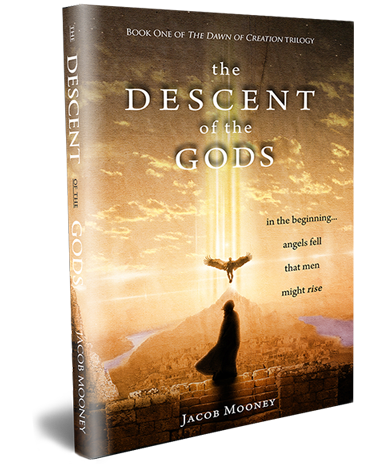
When I first stumbled into Genesis 6 as a teenager, it felt like I had found a crack in the floor of my Sunday School world. Who are these “sons of God”? Who are the Nephilim? Why does the Bible open that door and then move on so quickly?
Ancient Jews asked the same questions. One of the main places we see that is the Book of the Watchers (1 Enoch 1–36). It is not Scripture. But it is one of the clearest windows we have into how many Jews between the Old and New Testaments were reading Genesis 6.
Genesis 6: The Seed Text
Genesis 6:1–4 (ESV) gives the core:
When man began to multiply on the face of the land and daughters were born to them, the sons of God saw that the daughters of man were attractive. And they took as their wives any they chose.
… The Nephilim were on the earth in those days, and also afterward, when the sons of God came in to the daughters of man and they bore children to them. These were the mighty men who were of old, the men of renown.
We have:
- “sons of God” (Hebrew bene elohim)
- “daughters of man”
- “Nephilim” (connected with “mighty men,” “men of renown”)
The passage never pauses to define any of those terms. It simply shows a crossing of boundaries followed by God’s announcement of judgment and the flood.
As we’ve shown elsewhere on Chasing the Giants, the oldest and most widespread reading—held by most Second Temple Jews and the early church—is that the “sons of God” are heavenly beings, not human males. The same phrase in Job 1:6; 2:1; 38:7 clearly refers to angelic beings. That is the starting point for 1 Enoch.
The Book of the Watchers: A Second Temple Expansion
1 Enoch 1–36 (often called the Book of the Watchers) is an early Jewish work, probably third–second century BC, preserved mainly in Ethiopic but confirmed by Aramaic fragments from Qumran. It is not part of the biblical canon for most Christians, but Jude and 2 Peter clearly know its traditions.
In this book, the “sons of God” in Genesis 6 become “Watchers” (‘irin—wakeful ones). They are heavenly beings who abandon their proper place, descend to earth, and rebel.
Two leaders stand out:
- Semihazah – the main spokesman of the group
- Azazel (Asael) – the most notorious corrupter of humanity
Azazel’s Role in 1 Enoch
In 1 Enoch 6–8, we read that:
- Around two hundred Watchers swear an oath on Mount Hermon to descend and take human women (1 En. 6).
- They “took unto themselves wives, and each chose for himself one,” echoing Genesis 6:2’s “they took as their wives any they chose.”
- Their union produces giants, violent beings who ravage the earth (7:1–5).
Azazel, in particular, is singled out for teaching forbidden arts:
- Metalworking for weapons and armor
- Jewelry, cosmetics, and adornment to stir up lust
- Sorcery, enchantments, and occult practices (1 En. 8:1–2)
In other words, he is portrayed as the one who arms humanity for bloodshed and trains them in corruption.
Azazel’s Dramatic Punishment in 1 Enoch 10:4–8
God responds by sending archangels to judge the Watchers. Raphael receives Azazel as his specific assignment:
1 Enoch 10:4–6 (paraphrased from standard translations, following the study “The Punishment of Asael (1 En 10:4–8) and Mesopotamian Anti-Witchcraft Literature)”):
- Raphael is told:
- “Bind Azazel hand and foot.”
- “Cast him into the darkness.”
- “Open the desert that is in Dudael, and throw him there.”
- Jagged, sharp stones are heaped over him.
- His face is covered so that light cannot reach him.
- He is imprisoned there until the final judgment, when he will be thrown into the fire.
Then comes one of the most striking lines:
“The whole earth has been corrupted through the works that were taught by Azazel: to him ascribe all sin.” (1 En. 10:8)
In this Enochic retelling, Azazel becomes the focal point of human corruption and the object on whom sin is heaped, in order for the earth to be healed (10:7–8, 20–22).
How This Helps Explain Jude and 2 Peter
Jude 6 speaks of:
“the angels who did not stay within their own position of authority, but left their proper dwelling, [whom God] has kept in eternal chains under gloomy darkness until the judgment of the great day.”
2 Peter 2:4–5 adds:
“God did not spare angels when they sinned, but cast them into hell [Tartarus] and committed them to chains of gloomy darkness to be kept until the judgment; if he did not spare the ancient world, but preserved Noah…”
The overlap with 1 Enoch’s Watchers is clear:
- Angels who sinned in connection with Noah’s day
- Cast down, bound, kept in darkness, awaiting final judgment
Peter and Jude do not retell all of 1 Enoch, and they do not place Azazel’s name in Scripture. But the Enochic picture of a bound, chained, desert-imprisoned corrupter lies in the background of their language.
For me, discovering that Jude and Peter were drawing on this ancient stream was both unsettling and oddly comforting. It meant the questions Genesis 6 raised in my own mind were not modern oddities—the earliest Christians were wrestling with them too, while staying anchored in Scripture.
Azazel and the Scapegoat: What Leviticus 16 Actually Says
If you grew up in church, you may have heard about the “scapegoat” on the Day of Atonement as a symbol of Christ bearing our sins. That’s true and deeply important. But there’s a strange word hiding in that same passage—Azazel—and it sits right at the center of later Jewish debates.
The Day of Atonement: Two Goats, Two Destinies
Leviticus 16 describes Yom Kippur, the most sacred day in Israel’s calendar. At the heart of the ritual are two goats:
“And Aaron shall cast lots over the two goats, one lot for the LORD and the other lot for Azazel.” (Lev 16:8, ESV)
Key details (Lev 16:5–10, 20–22):
- One goat is “for YHWH.” It is sacrificed, and its blood is used to cleanse the sanctuary.
- The other goat is “for Azazel.”
- The high priest lays both hands on its head.
- He confesses over it “all the iniquities of the people of Israel… and all their sins.”
- Those sins are put on the goat.
- The goat is then sent away alive into the wilderness “to Azazel,” bearing the sins into a remote place.
The effect is clear: the camp is cleansed as sin and impurity are carried far away, out into the desolate wasteland.
What Does “Azazel” Mean in Leviticus 16?
Here’s where interpretation divides. The Hebrew text can be read several ways, and Scripture never pauses to define the term. Three main options have been proposed:
- Azazel as a place / rugged region
- Some see ‘aza’zel as a compound meaning something like “rugged cliff” or “remote rocky place.”
- On this view, the goat is simply “for removal to the rough wilderness.”
- Azazel as a personal supernatural being
- Others, including many on TheTorah.com, see Azazel as the name of a desert demon or wilderness deity, the opposite pole to YHWH in the ritual.
- In this reading, the goat is not a sacrifice to the demon but a ritual way of sending sin and impurity back into the realm of chaos and hostile spirits.
- Azazel as a ritual name for removal
- A middle view hears the term as liturgical language that hints at demonic exile without spelling out a full demonology.
- The focus remains on the removal of impurity from God’s people and sanctuary, not on feeding or honoring another god.
The text itself is deliberately terse. It clearly teaches:
- Sins are symbolically transferred onto the goat.
- The goat carries those sins away from the camp into a barren place.
- Israel is cleansed by this removal.
It does not explicitly give us a biography of Azazel or tie this figure directly to Genesis 6.
Later Jewish Traditions Fill in the Gaps
After the Old Testament period, Jewish writings start to color in the picture.
- Rabbinic Yoma (b. Yoma 67b) describes the goat being led to a rocky ravine called Beth-hadurey and pushed off a cliff, so that it is torn apart before it can wander back.
- Some traditions link this place to Dudael, the desert pit in 1 Enoch 10 where Azazel is bound.
- Targum Pseudo-Jonathan on Leviticus 16 mentions fallen angels like Uzza and Azael. It interprets the goat’s journey as connected to demonic forces, suggesting that sin is being sent back toward these rebellious beings.
By the time we reach the later rabbis, Azazel is often treated as:
- A hostile power associated with the wilderness
- An adversary or fallen angel whose realm lies outside the holy camp
But again, it is crucial to say: this is later interpretation, not the explicit teaching of Leviticus 16 itself.
When I first learned this, it didn’t undermine the connection between the scapegoat and Christ at all. If anything, it deepened it. The Bible has always pictured the wilderness as a place of testing, danger, and unclean spirits (see Leviticus 16; Isaiah 13:21; Matthew 12:43). That makes Jesus’ suffering “outside the camp” (Hebrews 13:11–13) and His victory over the powers even more pointed.
Desert Exile and Demonic Defeat: Shared Ancient Patterns, Not Direct Borrowing
The question many people ask next is:
Did 1 Enoch invent the figure of Azazel and then get read back into Leviticus?
Or did Leviticus 16 introduce Azazel, and Enoch just run wild with it?
The answer seems to be more complex—and more interesting.
Mesopotamian Anti-Witchcraft Rites: The Wider Background
The article “The Punishment of Asael (1 En 10:4–8) and Mesopotamian Anti-Witchcraft Literature” (available on Academia.edu) argues that 1 Enoch 10 is drawing on a much older pattern found in Mesopotamian rituals.
In those anti-witchcraft and exorcism rites, we often see:
- Figures representing witches, demons, or curses being bound.
- They are then cast into deserts, rivers, or pits—places on the cosmic edge.
- Stones are heaped over them or they are buried in darkness.
- The purpose is to transfer evil away from the community so that the land and people can be cleansed.
In other words, the basic shape is:
Bind the source of evil → send it into the wilderness or abyss → cover it → community is purified.
That is the same pattern we see, in different forms, in:
- Leviticus 16 (the goat carries Israel’s sins into the wilderness)
- 1 Enoch 10 (Azazel is bound and buried in the desert pit of Dudael, all sin ascribed to him)
These are not simple copies of each other. They are different ways of using a broader ancient Near Eastern logic: exile the impurity, remove the curse, defeat the hostile power.
Parallels Between Mesopotamian Rites, Leviticus 16, and 1 Enoch 10
Put side by side, the pattern stands out:
- Wilderness / Desert Realm
- Mesopotamian: demons or curses banished to wild, liminal spaces.
- Leviticus 16: goat for Azazel sent into “a remote area” in the wilderness.
- 1 Enoch 10: Azazel thrown into Dudael, a desert abyss.
- Binding and Covering
- Mesopotamian: binding figurines, burying them under stones or in darkness.
- 1 Enoch 10: “Bind Azazel hand and foot… cast him into the darkness… cover him with rough and jagged rocks.”
- Transfer of Sin/Impurity
- Mesopotamian: evil transferred to an object or figure and carried away.
- Leviticus 16: priest lays hands on the goat, confesses sins, they are carried out of the camp.
- 1 Enoch 10: “to him ascribe all sin,” so that the earth may be healed.
So what is the direction of influence?
Enoch Builds on Leviticus, Not the Other Way Around
Most scholars date the Azazel material in 1 Enoch 10 to the Second Temple period—centuries after the Pentateuch. That means:
- Leviticus 16 and its Day of Atonement rites are older.
- Mesopotamian anti-witchcraft imagery is older still.
The best explanation is that the author(s) of 1 Enoch:
- Knew Genesis 6 and its mysterious “sons of God.”
- Were living in a world where Levitical atonement rituals and Yom Kippur were central.
- Were surrounded by broader Near Eastern traditions about binding and banishing evil.
They took all of that and wove it into a vivid narrative:
- The desert where the scapegoat goes becomes the desert pit where Azazel is chained (Dudael, which some later rabbis associate with the scapegoat’s ravine).
- The goat bearing sins out of the camp becomes the fallen angel on whom “all sin” is ascribed.
- The goal—cleansing and restoring the earth—remains the same (compare Lev 16:30 with 1 En. 10:7–8, 20–22).
This is not Enoch “overriding” Scripture. It is Enoch reimagining Scriptural and cultural imagery to fill in the story hinted at in Genesis 6.
The Apocalypse of Abraham (another non-canonical Jewish work) does something similar. It portrays Azazel as a demoted celestial being, connected to stars and impurity, and reuses Yom Kippur and Enochic themes to explain his role.
Second Temple authors freely did this kind of interpretive creativity. Our job is to appreciate how it helps us hear Jude and Peter without mistaking it for inspired revelation.
From Dudael to the New Testament: Chained Angels, the Abyss, and Christ’s Victory
When you keep 1 Enoch’s Azazel story in the back of your mind, several New Testament passages start to sound less random.
Jude and 2 Peter: Watchers in Chains
We already saw Jude 6 and 2 Peter 2:4–5 echoing the Watchers tradition:
- Angels who did not stay within their assigned realm
- Sin associated with the days of Noah
- Judgment by chains, darkness, and confinement until the final day
Jude 7 then compares the angels’ sin with Sodom’s “sexual immorality and pursuit of strange flesh,” which mirrors 1 Enoch’s emphasis on the Watchers’ transgressive unions.
Peter uses the Greek term Tartarus—a word used in Greek mythology for the prison of the Titans. He is not endorsing pagan myths; he is repurposing familiar language to describe the real imprisonment of rebellious spirits.
1 Enoch 10’s image of Azazel and the Watchers bound in an underground pit of darkness with stones over them fits this imagery like a glove, even if Peter and Jude never mention Azazel by name.
Revelation and the Abyss
The book of Revelation draws on similar patterns:
- Revelation 9 describes an “abyss” opened, releasing tormenting beings.
- Revelation 20:1–3 shows an angel:“seizing the dragon, that ancient serpent, who is the devil and Satan, and binding him for a thousand years, and throwing him into the pit… and sealing it over him.”
Binding, abyss, sealed pit, future fiery judgment—these are the same motifs found in 1 Enoch 10 and 54 for Azazel and his hosts.
Again, Scripture does not require us to map every Enochic detail onto these passages. But it shows that the biblical writers and their readers lived in a symbolic world where:
- Rebellious spiritual beings could be chained.
- Pits, abysses, and deserts were places of confinement and exile.
- Final judgment would involve fire prepared for the devil and his angels (Matthew 25:41).
What the New Testament Actually Affirms
When we gather the data, we can say with confidence:
- Some angels sinned in a way connected with the days of Noah (2 Peter 2:4–5; Jude 6).
- God has already placed certain rebellious spirits under restraint, in “gloomy darkness,” awaiting final judgment.
- The cross and resurrection of Jesus Christ guarantee their final defeat:“He disarmed the rulers and authorities and put them to open shame, by triumphing over them in him.” (Colossians 2:15)
The New Testament writers likely knew 1 Enoch and similar traditions, and they used that shared imagery to preach a very clear message:
- False teachers and sinners will face judgment, just as the Watchers did.
- God has never lost control of the spiritual realm.
- Christ’s victory over sin and death guarantees the outcome.
We are not meant to reconstruct an exhaustive demonology out of these hints. That’s where a lot of modern teaching goes off the rails—turning Azazel and the Nephilim into the main show and Christ into a side note.
If you want a careful walk-through of Jude, 2 Peter, and the Watchers language, a good next step is to watch a solid biblical studies lecture such as Dr. Michael Heiser’s presentations on Jude and 2 Peter (for example, videos like the YouTube teaching “Jude and 2 Peter: The Angels Who Sinned”).
Why Azazel Matters for Christians—And Where We Stop
So where does this leave us? What can we say, and where should we be cautious?
What Seems Reasonably Clear
- Genesis 6 records a real heavenly rebellion.
- “Sons of God” in that context fits the angelic reading best.
- This rebellion is tied to the explosion of violence and corruption before the flood.
- Second Temple authors developed Azazel as a chief Watcher.
- In 1 Enoch, Azazel leads in corrupting humanity through forbidden knowledge and violence.
- He is bound in Dudael, the desert pit, buried under stones, and made to bear “all sin,” echoing both Near Eastern rituals and Yom Kippur language.
- Leviticus 16 and 1 Enoch share imagery of desert exile and sin-bearing.
- The scapegoat “for Azazel” carries Israel’s sins into the wilderness, cleansing the camp.
- Azazel in 1 Enoch is cast into the desert pit, with all sin written against him so that the earth may be healed.
- Both reflect a broader cultural pattern: remove impurity by sending it away into a liminal, demonic borderland.
- Jude and 2 Peter lean on the Watchers tradition as background.
- Their language about angels in chains, darkness, and judgment in Noah’s day tracks very closely with 1 Enoch.
- They use this tradition to warn about judgment and comfort believers with God’s justice.
What Remains Uncertain
We should also be honest about what the Bible does not clearly settle:
- The exact identity of Azazel in Leviticus 16
- Place name? Desert demon? Ritual shorthand? The text doesn’t spell it out.
- The precise literary relationship between Leviticus 16 and 1 Enoch 10
- 1 Enoch is clearly later and uses Yom Kippur-like imagery.
- But whether it consciously “reinterprets” the scapegoat is debated.
- The detailed mechanics of angelic sin and punishment
- How did spiritual beings take wives?
- How exactly does their imprisonment work?
- Scripture gives us theological realities, not a technical manual.
These are areas where we should hold our views with humility.
From Scapegoat to Savior: Christ as the True Sin-Bearer
The New Testament tells us how to read the Day of Atonement most deeply.
Hebrews 9–10 explains that:
- The earthly tabernacle and its sacrifices were shadows.
- Christ is the true high priest who entered “the greater and more perfect tent” (Heb 9:11).
- He did not bring the blood of goats, but His own blood, once for all (9:12).
Isaiah 53:6 foretold it:
“The LORD has laid on him the iniquity of us all.”
Paul reflects on that in 2 Corinthians 5:21:
“For our sake he made him to be sin who knew no sin, so that in him we might become the righteousness of God.”
In that sense:
- The scapegoat bearing sins into the wilderness
- Azazel buried under stones with all sin written against him
- The bound dragon in Revelation 20
…all become different angles on the same message:
God is determined to remove sin from His people and to judge the powers that corrupt His world.
But only Jesus is the true, sufficient, and final sin-bearer. Scripture never gives that atoning role to Azazel. 1 Enoch uses “to him ascribe all sin” in a narrative, symbolic way. The New Testament reserves real atonement language for Christ alone.
Pastoral Takeaway
The story of Azazel reminds us:
- Evil is not just human. There are real spiritual powers behind idolatry, violence, and deception (Ephesians 6:12).
- Those powers are finite. They are already judged and ultimately bound under Christ’s authority (Colossians 1:13–20; 2:15).
- Our hope is not in secret knowledge about fallen angels or giants, but in the crucified and risen Son of God.
My encouragement to you is this:
- Keep digging. It is good to ask hard questions about Genesis 6, Azazel, and the Watchers.
- Let extra-biblical texts like 1 Enoch serve as historical background, not as rival scriptures.
- Let the uncertainties push you deeper into the parts of God’s Word that are crystal clear—especially the gospel.
Conclusion: Bound in Dudael, Fulfilled in Christ
1 Enoch’s Azazel narrative is a rich Second Temple meditation on Genesis 6, impurity, and exile. It picks up patterns already at work in Leviticus 16 and in older Near Eastern rituals—binding, desert banishment, stone-covered pits, sin-bearing—and turns them into a dramatic story of a chief Watcher who corrupts and then carries away the world’s sin.
Leviticus 16’s scapegoat ritual, in turn, is not Enoch’s invention. It stands at the heart of Israel’s worship, a God-given picture of sin being carried away into the wilderness so God’s people and God’s house can be clean.
The overlap between Azazel’s binding in Dudael and the goat for Azazel on Yom Kippur is real and important. Both share deep symbolic patterns of:
- Exile into the desert realm
- Bearing away sin and impurity
- Anticipating the judgment of hostile spiritual powers
But Scripture points us beyond both images to a Person.
The New Testament takes the language of atonement and places it squarely on Jesus Christ. He is the high priest, the atoning sacrifice, and in a real sense the true scapegoat—driven outside the camp, bearing our shame and sin, so that we can be brought near to God.
We may never fully untangle the precise historical line from Mesopotamian anti-witchcraft rites to Leviticus 16 to 1 Enoch and on to Jude and 2 Peter. Scholars will continue to debate these relationships. That’s okay.
What we can know, and what matters most, is this:
- The rebellious powers behind Azazel and the Watchers are already on notice.
- Their time is limited.
- Their chains are sure.
- Christ has already triumphed over them.
So study Azazel. Learn the patterns of desert exile and demonic defeat. Let that deepen your awe at the Bible’s coherence. But don’t stop there.
Lift your eyes from the wilderness pit and fix them on the One who walked into the darkness for us, carried our iniquity away, and rose again to reign—Jesus, the true Son of God who never rebelled, and the only One who can truly say:
“Behold, I am making all things new.” (Revelation 21:5)